Meyers Erin E, Loetz Esteban C, Marks Michael J
Institute for Behavioral Genetics, 447 UCB, University of Colorado Boulder, Boulder, CO 80309, USA.
Institute for Behavioral Genetics, 447 UCB, University of Colorado Boulder, Boulder, CO 80309, USA; Department of Psychology and Neuroscience, 345 UCB, University of Colorado Boulder, Boulder, CO 80309, USA.
Pharmacol Biochem Behav. 2015 Mar;130:1-8. doi: 10.1016/j.pbb.2014.12.013. Epub 2015 Jan 3.
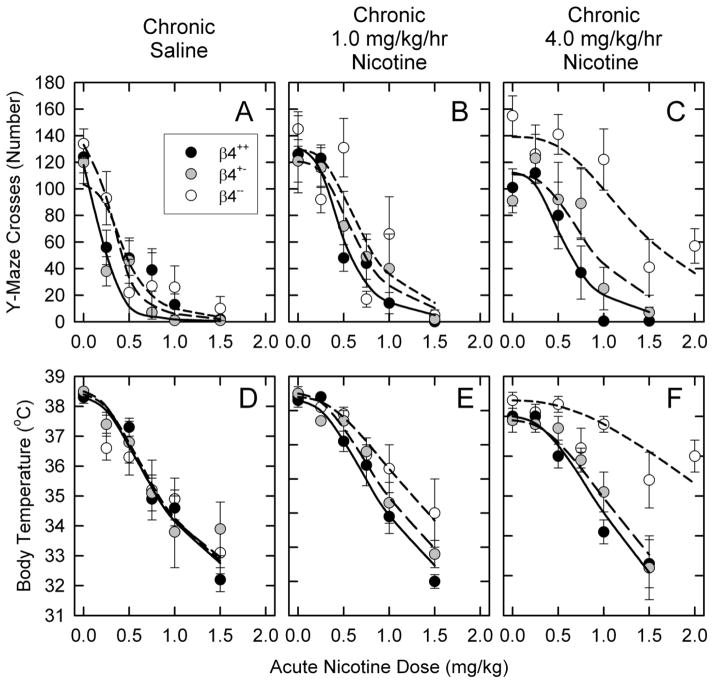
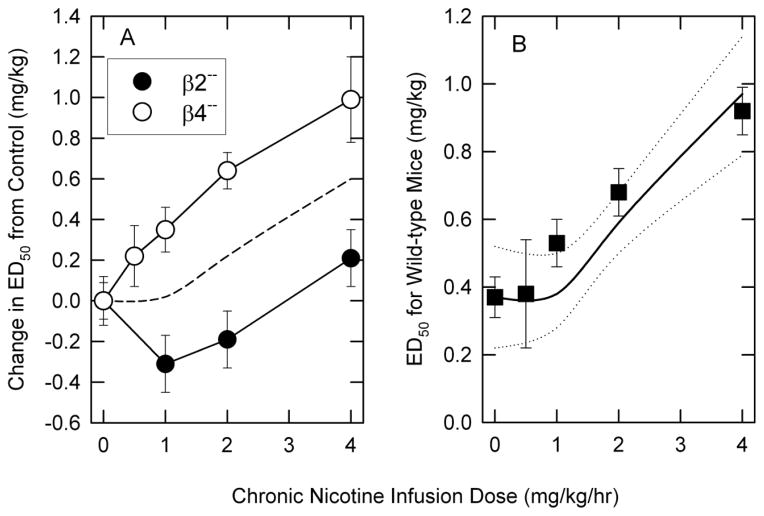
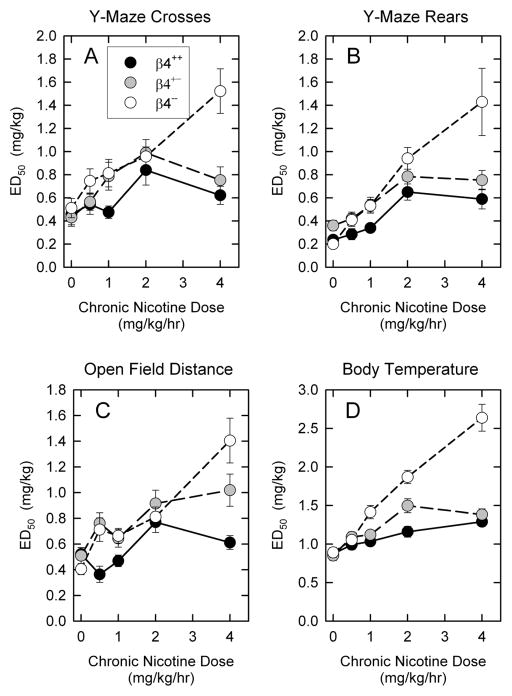
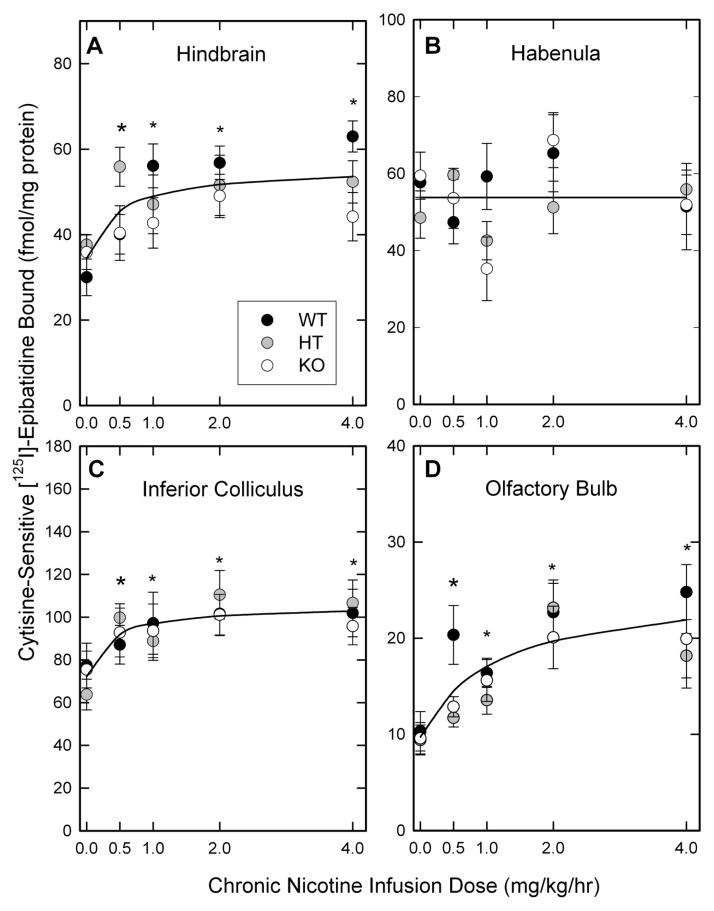
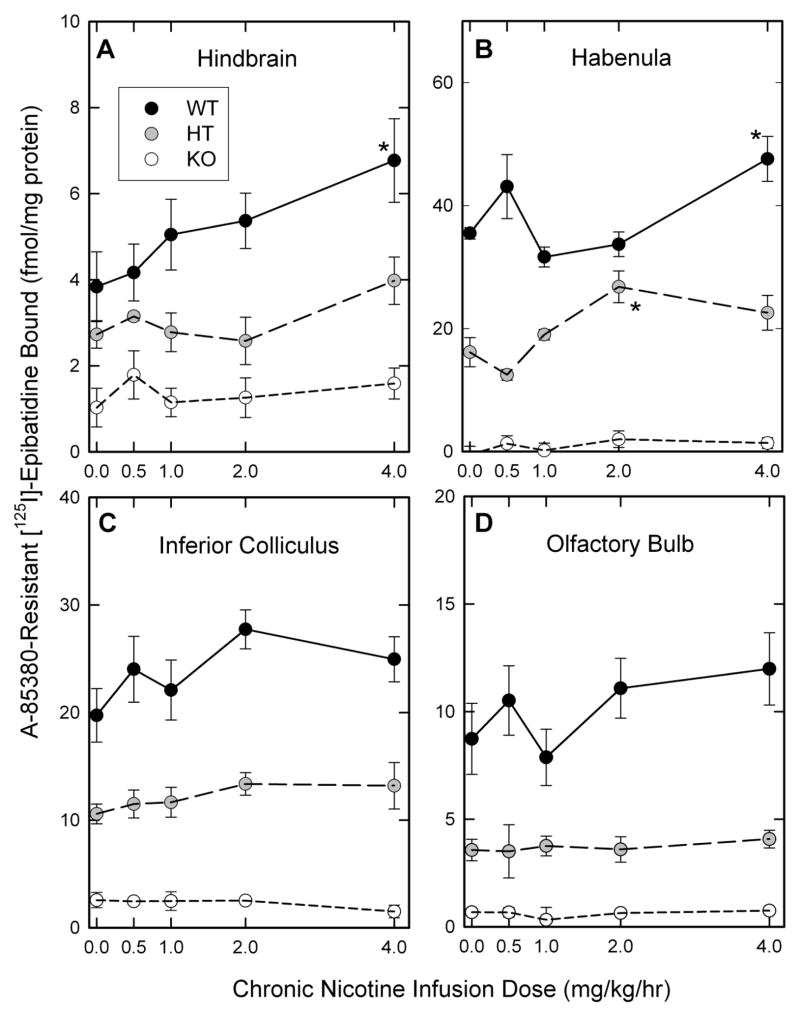
The role of neuronal nicotinic acetylcholine receptors (nAChR) containing the β4 subunit in tolerance development and nicotinic binding site levels following chronic nicotine treatment was investigated. Mice differing in expression of the β4-nAChR subunit [wild-type (β4(++)), heterozygote (β4(+-)) and null mutant (β4(--))] were chronically treated for 10 days with nicotine (0, 0.5, 1.0, 2.0 or 4.0mg/kg/h) by constant intravenous infusion. Chronic nicotine treatment elicited dose-dependent tolerance development. β4(--) mice developed significantly more tolerance than either β4(++) or β4(+-) mice which was most evident following treatment with 4.0mg/kg/h nicotine. Subsets of [(125)I]-epibatidine binding were measured in several brain regions. Deletion of the β4 subunit had little effect on initial levels of cytisine-sensitive [(125)I]-epibatidine binding (primarily α4β2-nAChR sites) or their response (generally increased binding) to chronic nicotine treatment. In contrast, β4 gene-dose-dependent decreases in expression 5IA-85380 resistant [(125)I]-epibatidine binding sites (primarily β4*-nAChR) were observed. While these β4*-nAChR sites were generally resistant to regulation by chronic nicotine treatment, significant increases in binding were noted for habenula and hindbrain. Comparison of previously published tolerance development in β2(--) mice (less tolerance) to that of β4(--) mice (more tolerance) supports a differential role for these receptor subtypes in regulating tolerance following chronic nicotine treatment.
研究了含有β4亚基的神经元烟碱型乙酰胆碱受体(nAChR)在慢性尼古丁治疗后的耐受性发展和烟碱结合位点水平中的作用。通过持续静脉输注,对β4-nAChR亚基表达不同的小鼠[野生型(β4(++))、杂合子(β4(+-))和无效突变体(β4(--))]进行为期10天的尼古丁(0、0.5、1.0、2.0或4.0mg/kg/h)慢性治疗。慢性尼古丁治疗引发了剂量依赖性的耐受性发展。β4(--)小鼠比β4(++)或β4(+-)小鼠产生了明显更多的耐受性,这在4.0mg/kg/h尼古丁治疗后最为明显。在几个脑区测量了[(125)I]-依博碱结合的亚组。β4亚基的缺失对胞嘧啶敏感的[(125)I]-依博碱结合(主要是α4β2-nAChR位点)的初始水平或它们对慢性尼古丁治疗的反应(通常是结合增加)影响很小。相反,观察到5IA-85380抗性的[(125)I]-依博碱结合位点(主要是β4*-nAChR)的表达呈β4基因剂量依赖性降低。虽然这些β4*-nAChR位点通常对慢性尼古丁治疗的调节有抗性,但在缰核和后脑观察到结合有显著增加。将先前发表的β2(--)小鼠(耐受性较低)与β4(--)小鼠(耐受性较高)的耐受性发展进行比较,支持了这些受体亚型在慢性尼古丁治疗后调节耐受性中的不同作用。