Li Qian, Blume Steven W, Huang Joanna C, Hammer Mette, Graf Thomas R
Retrospective Observational Studies, Evidera, 430 Bedford Street, Suite 300, Lexington, MA, 02420, USA,
Pharmacoeconomics. 2015 Jul;33(7):735-48. doi: 10.1007/s40273-014-0248-5.
Electronic medical records and insurance claims data from the Geisinger Health System were examined to assess the real-world healthcare costs of being overweight or obese at different glycemic stages, including normal glycemia, pre-diabetes (PreD), and type 2 diabetes (T2D).
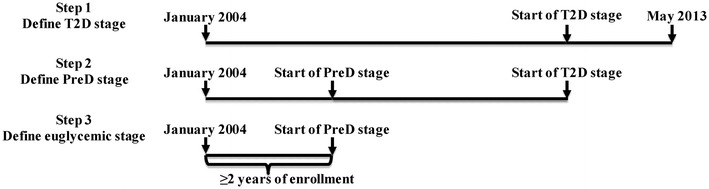
The medical history of the sample subjects was segmented into different glycemic stages via diagnosis codes, glycosylated hemoglobin A1c or fasting plasma glucose laboratory results, and use of antidiabetic drugs. Healthcare resource utilization captured by the claims and associated costs (in 2013 values) were examined for each glycemic stage. The association between costs and body mass index (BMI) was estimated by regressions, and adjusted for sociodemographics. We predicted the adjusted incremental annual costs associated with high BMI, relative to normal BMI (18.5-24.9 kg/m(2)).
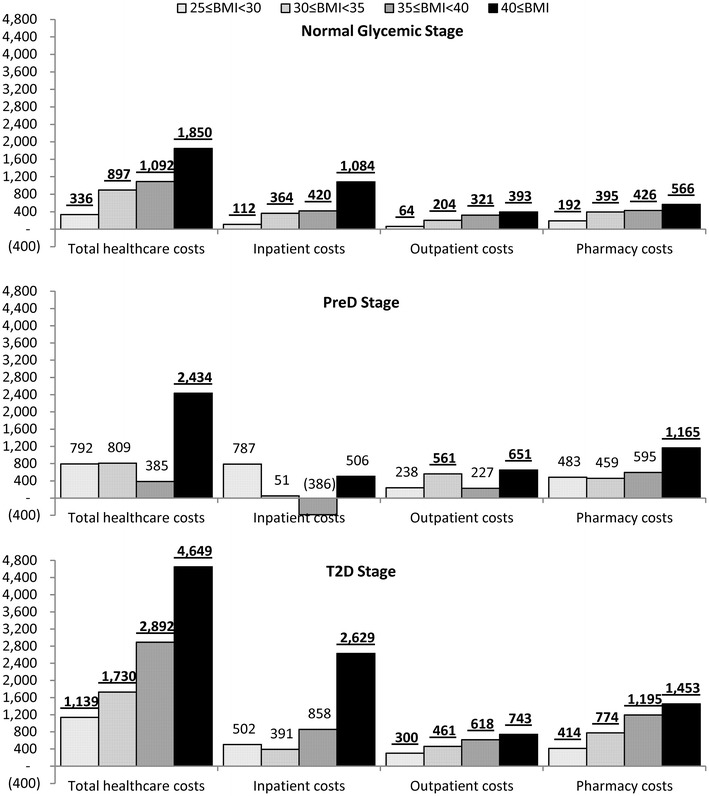
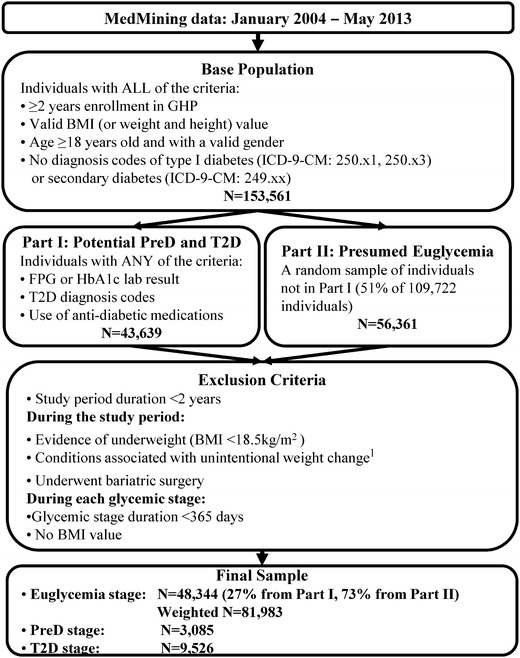
We identified 48,344 adults in normal glycemic stage, 3,085 in the PreD stage, and 9,526 in the T2D stage (mean age 46, 58, and 60 years, respectively; mean BMI 29, 32, and 33 kg/m(2), respectively). The adjusted incremental annual costs associated with high BMI relative to normal BMI ranged from $336 for overweight (25-29.9 kg/m(2)) to $1,850 for class III obesity (≥40 kg/m(2)) during normal glycemic stage; were only significant for class III ($2,434) during the PreD stage; and ranged from $1,139 for overweight to $4,649 for class III during the T2D stage (all p < 0.05).
Positive associations between healthcare costs and BMI levels were observed within each glycemic stage. Management of body weight is important in reducing the overall healthcare costs, especially for subjects with PreD or T2D.
对来自盖辛格医疗系统的电子病历和保险理赔数据进行了分析,以评估在不同血糖阶段(包括正常血糖、糖尿病前期(PreD)和2型糖尿病(T2D))超重或肥胖的实际医疗费用。
通过诊断代码、糖化血红蛋白A1c或空腹血糖实验室结果以及抗糖尿病药物的使用情况,将样本受试者的病史分为不同的血糖阶段。对每个血糖阶段的保险理赔所记录的医疗资源利用情况及相关费用(以2013年价值计算)进行了检查。通过回归分析估计费用与体重指数(BMI)之间的关联,并对社会人口统计学因素进行了调整。我们预测了相对于正常BMI(18.5 - 24.9 kg/m²),高BMI所带来的调整后年度增量费用。
我们确定了48344名处于正常血糖阶段的成年人、3085名处于糖尿病前期阶段的成年人以及9526名处于2型糖尿病阶段的成年人(平均年龄分别为46岁、58岁和60岁;平均BMI分别为29 kg/m²、32 kg/m²和33 kg/m²)。在正常血糖阶段,相对于正常BMI,高BMI所带来的调整后年度增量费用范围从超重(25 - 29.9 kg/m²)的336美元到III级肥胖(≥40 kg/m²)的1850美元;在糖尿病前期阶段,仅III级肥胖(2434美元)的费用有显著差异;在2型糖尿病阶段,范围从超重的1139美元到III级肥胖的4649美元(所有p < 0.05)。
在每个血糖阶段均观察到医疗费用与BMI水平之间存在正相关。体重管理对于降低总体医疗费用很重要,尤其是对于糖尿病前期或2型糖尿病患者。