Ameisen David, Deroulers Christophe, Perrier Valérie, Bouhidel Fatiha, Battistella Maxime, Legrès Luc, Janin Anne, Bertheau Philippe, Yunès Jean-Baptiste
Diagn Pathol. 2014;9 Suppl 1(Suppl 1):S3. doi: 10.1186/1746-1596-9-S1-S3. Epub 2014 Dec 19.
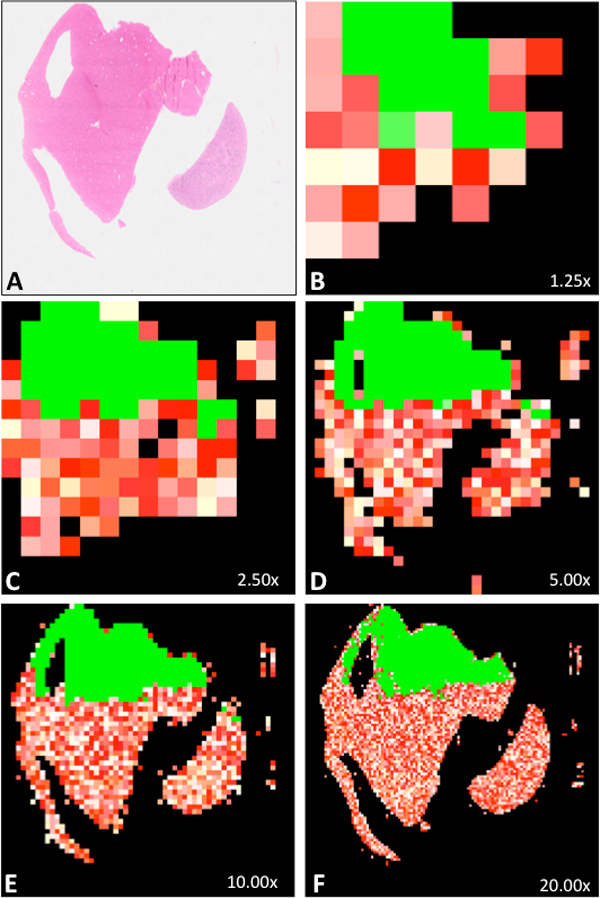
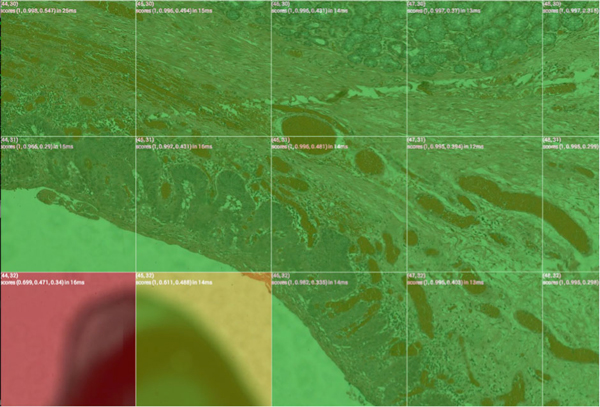
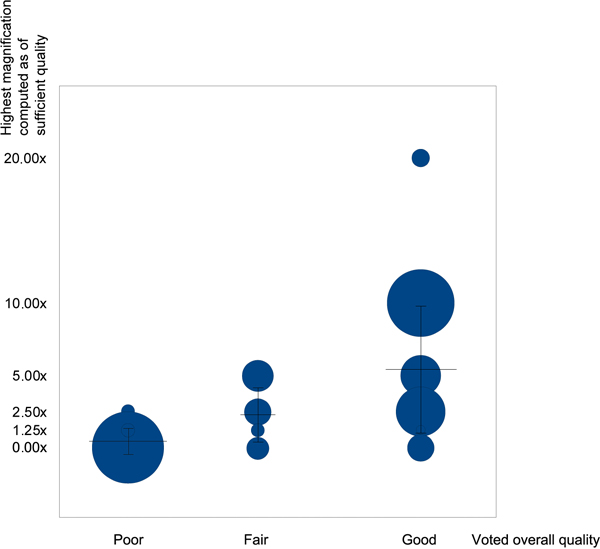
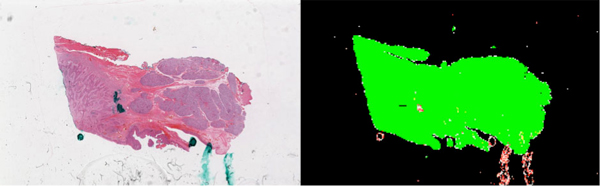
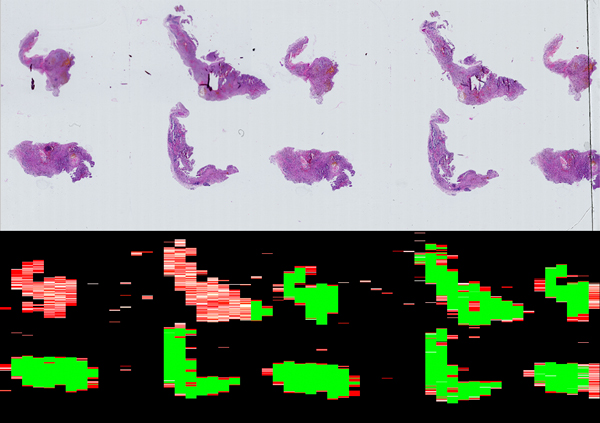
Since microscopic slides can now be automatically digitized and integrated in the clinical workflow, quality assessment of Whole Slide Images (WSI) has become a crucial issue. We present a no-reference quality assessment method that has been thoroughly tested since 2010 and is under implementation in multiple sites, both public university-hospitals and private entities. It is part of the FlexMIm R&D project which aims to improve the global workflow of digital pathology. For these uses, we have developed two programming libraries, in Java and Python, which can be integrated in various types of WSI acquisition systems, viewers and image analysis tools.
Development and testing have been carried out on a MacBook Pro i7 and on a bi-Xeon 2.7GHz server. Libraries implementing the blur assessment method have been developed in Java, Python, PHP5 and MySQL5. For web applications, JavaScript, Ajax, JSON and Sockets were also used, as well as the Google Maps API. Aperio SVS files were converted into the Google Maps format using VIPS and Openslide libraries.
We designed the Java library as a Service Provider Interface (SPI), extendable by third parties. Analysis is computed in real-time (3 billion pixels per minute). Tests were made on 5000 single images, 200 NDPI WSI, 100 Aperio SVS WSI converted to the Google Maps format.
Applications based on our method and libraries can be used upstream, as calibration and quality control tool for the WSI acquisition systems, or as tools to reacquire tiles while the WSI is being scanned. They can also be used downstream to reacquire the complete slides that are below the quality threshold for surgical pathology analysis. WSI may also be displayed in a smarter way by sending and displaying the regions of highest quality before other regions. Such quality assessment scores could be integrated as WSI's metadata shared in clinical, research or teaching contexts, for a more efficient medical informatics workflow.
由于显微载玻片现在可以自动数字化并整合到临床工作流程中,全玻片图像(WSI)的质量评估已成为一个关键问题。我们提出了一种无需参考的质量评估方法,该方法自2010年以来经过了全面测试,目前正在多所公立大学医院和私立机构实施。它是FlexMIm研发项目的一部分,该项目旨在改善数字病理学的整体工作流程。针对这些用途,我们用Java和Python开发了两个编程库,它们可以集成到各种类型的WSI采集系统、查看器和图像分析工具中。
在一台MacBook Pro i7和一台双至强2.7GHz服务器上进行了开发和测试。实现模糊评估方法的库已用Java、Python、PHP5和MySQL5开发。对于Web应用程序,还使用了JavaScript、Ajax、JSON和套接字以及谷歌地图应用程序编程接口(API)。使用VIPS和OpenSlide库将Aperio SVS文件转换为谷歌地图格式。
我们将Java库设计为一个服务提供者接口(SPI),第三方可以对其进行扩展。分析是实时计算的(每分钟30亿像素)。对5000张单幅图像、200幅NDPI WSI、100幅转换为谷歌地图格式的Aperio SVS WSI进行了测试。
基于我们的方法和库的应用程序可以在上游用作WSI采集系统的校准和质量控制工具,或用作在扫描WSI时重新获取切片的工具。它们也可以在下游用于重新获取低于手术病理分析质量阈值的完整玻片。通过先发送和显示质量最高的区域,WSI也可以以更智能的方式显示。这样的质量评估分数可以作为WSI的元数据集成到临床、研究或教学环境中共享,以实现更高效的医学信息工作流程。