Chen Xi, Zhouhua Wang, Jie Zhou, Xinlu Fu, Jinqiang Liang, Yuwen Qiu, Zhiying Huang
School of Pharmaceutical Sciences, Sun Yat-sen University, Guangzhou, People's Republic of China ; Pharmaceutical Department, The First Affiliated Hospital of Zhengzhou University, Zhengzhou, People's Republic of China.
School of Pharmaceutical Sciences, Sun Yat-sen University, Guangzhou, People's Republic of China.
Int J Nanomedicine. 2014 Dec 18;10:1-22. doi: 10.2147/IJN.S73538. eCollection 2015.
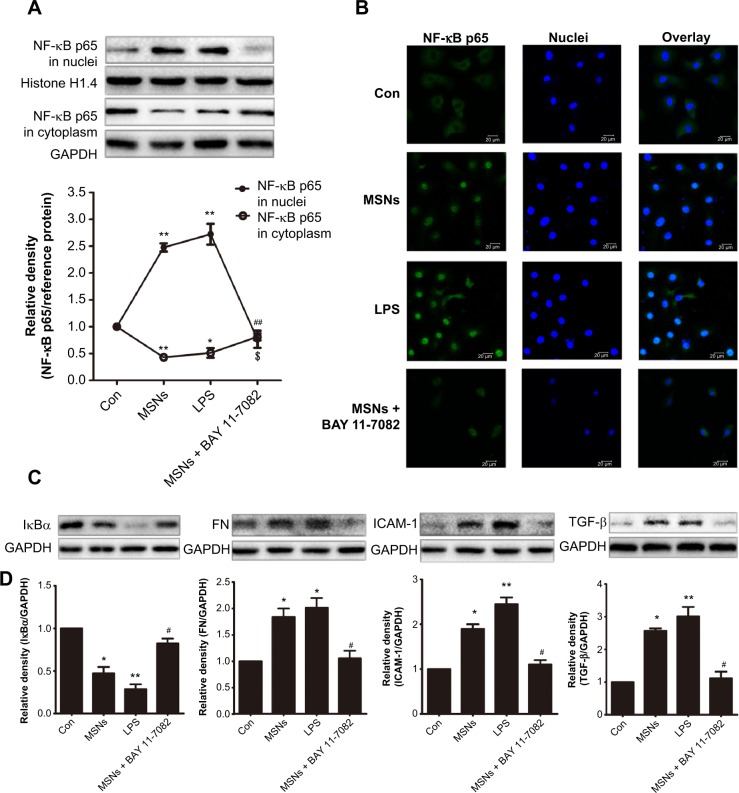
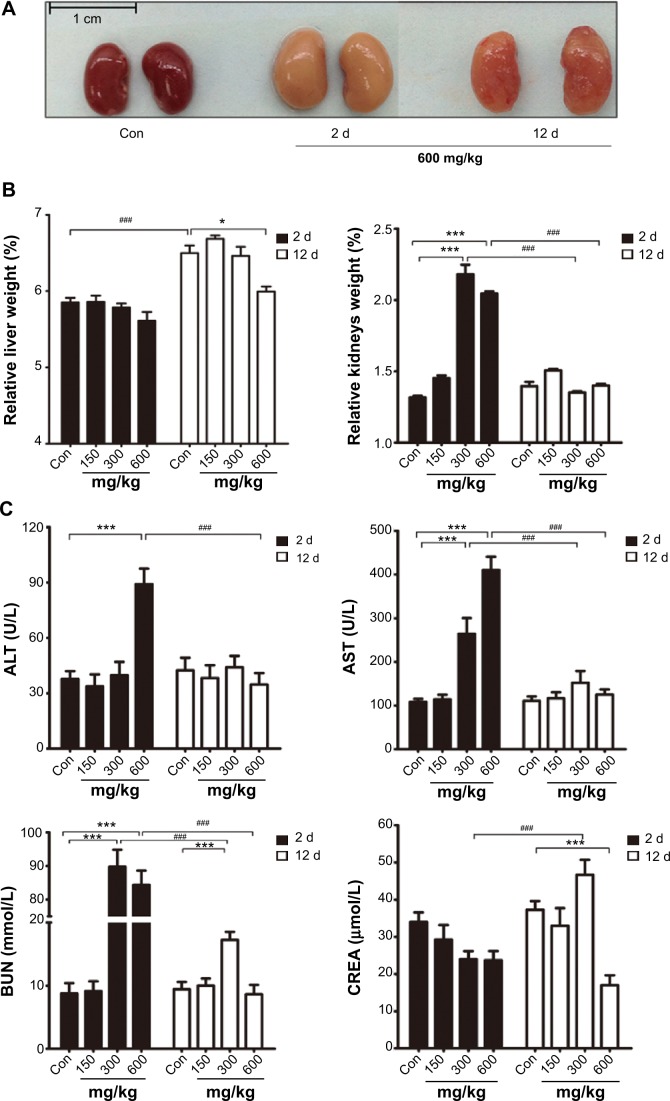
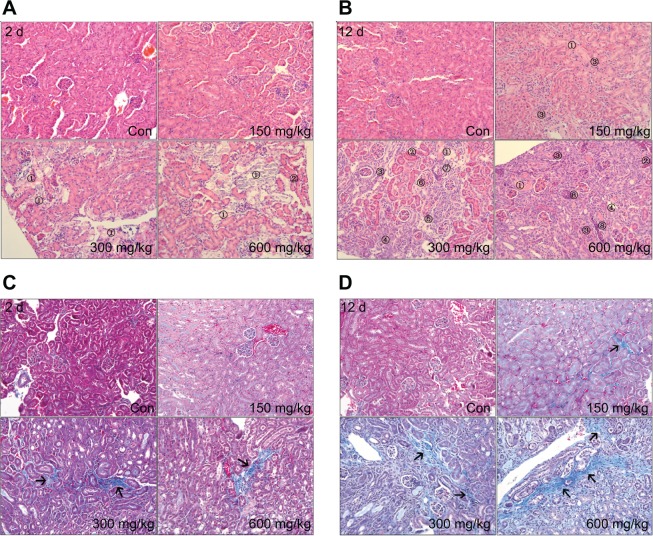
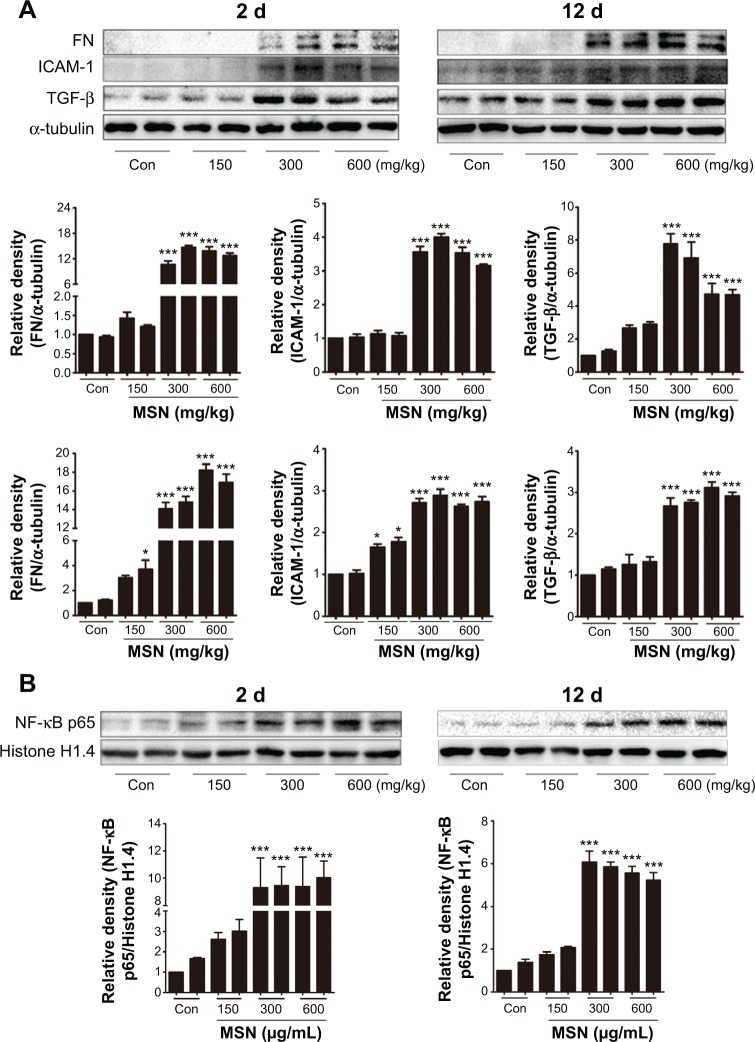
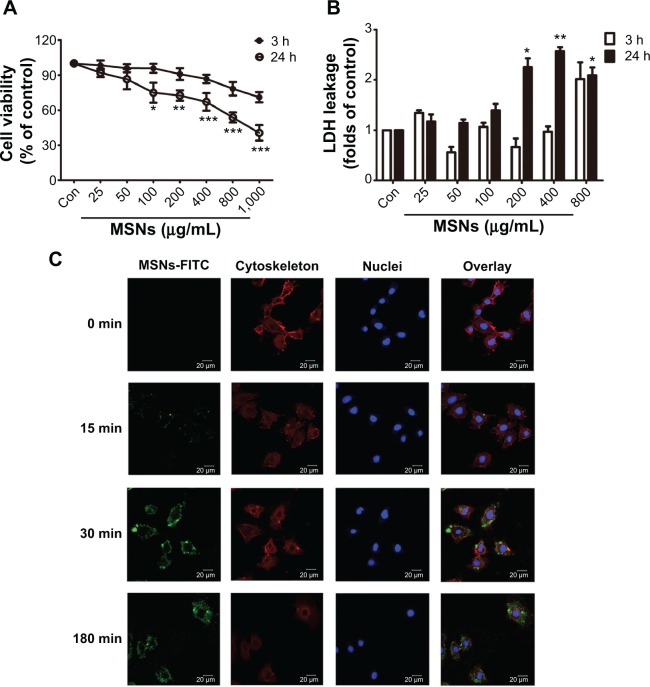
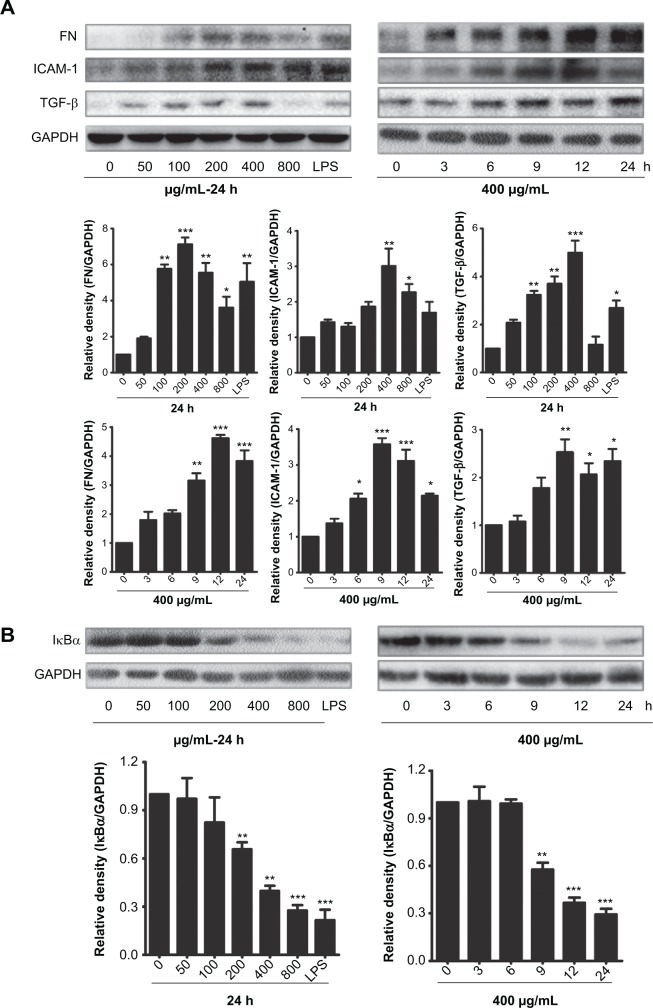
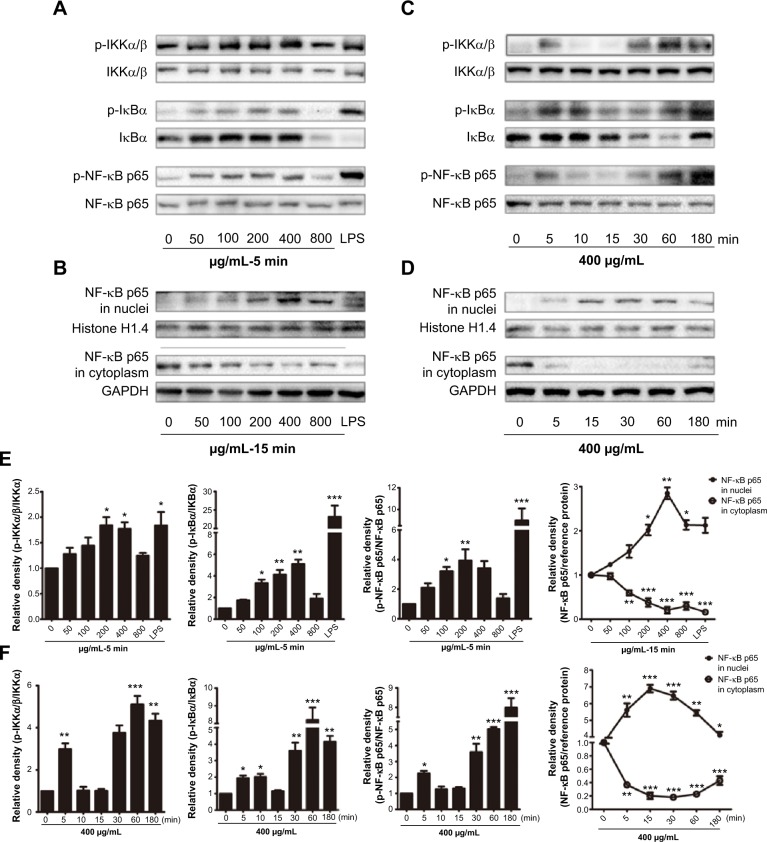
Previous studies have indicated that the nephrotoxicity induced by mesoporous silica nanoparticles (MSNs) is closely related to inflammation. Nuclear factor kappa B (NF-κB), a common rapid transcription factor associated with inflammation, plays an important role in the process of many kidney diseases. Acute toxicity assessment with a high-dose exposure is critical for the development of nanoparticle, as a part of standardized procedures for the evaluation of their toxicity. The present study was undertaken to observe the acute toxicity, predict the potential target organs of MSNs injury, and test the hypothesis that the NF-κB pathway plays a role in mediating the acute kidney injury and renal interstitial fibrosis in mice induced by MSNs. Balb/c mice were intraperitoneally injected with MSNs at concentrations of 150, 300, or 600 mg/kg. All of the animals were euthanized 2 and 12 days after exposure, and the blood and kidney tissues were collected for further studies. In vitro, the cytotoxicity, fibrosis markers, and NF-κB pathway were measured in a normal rat kidney cell line (NRK-52E). Acute kidney injury was induced by MSNs in mice after 2 days, some renal tubules regenerated and renal interstitial fibrosis was also observed. The expression of fibrosis markers and the nuclear translocation of NF-κB p65 in the kidney homogenates increased after exposure to MSNs. The in vitro study showed that MSNs cause cytotoxicity in NRK-52E cells and increased the expression of fibrosis markers. In addition, the NF-κB pathway could be induced, and inhibition of the NF-κB pathway could alleviate the fibrosis caused by MSNs. We conclude that inflammation is a major effector of the acute kidney toxicity induced by MSNs and results in renal interstitial fibrosis, which is mediated by the NF-κB signaling pathway.
先前的研究表明,介孔二氧化硅纳米颗粒(MSNs)诱导的肾毒性与炎症密切相关。核因子κB(NF-κB)是一种与炎症相关的常见快速转录因子,在许多肾脏疾病的发生过程中起重要作用。高剂量暴露的急性毒性评估对于纳米颗粒的研发至关重要,这是评估其毒性的标准化程序的一部分。本研究旨在观察急性毒性,预测MSNs损伤的潜在靶器官,并验证NF-κB通路在介导MSNs诱导的小鼠急性肾损伤和肾间质纤维化中起作用这一假说。将浓度为150、300或600mg/kg的MSNs腹腔注射到Balb/c小鼠体内。在暴露后2天和12天对所有动物实施安乐死,并采集血液和肾脏组织用于进一步研究。在体外,在正常大鼠肾细胞系(NRK-52E)中检测细胞毒性、纤维化标志物和NF-κB通路。2天后MSNs在小鼠中诱导了急性肾损伤,一些肾小管再生,同时也观察到了肾间质纤维化。暴露于MSNs后,肾脏匀浆中纤维化标志物的表达和NF-κB p65的核转位增加。体外研究表明,MSNs在NRK-52E细胞中引起细胞毒性,并增加纤维化标志物的表达。此外,NF-κB通路可被诱导,抑制NF-κB通路可减轻MSNs所致的纤维化。我们得出结论,炎症是MSNs诱导的急性肾毒性的主要效应器,并导致肾间质纤维化,这是由NF-κB信号通路介导的。