Hindle Samantha J, Bainton Roland J
Department of Anesthesia and Perioperative Care, University of California, San Francisco San Francisco, CA, USA.
Front Neurosci. 2014 Dec 16;8:414. doi: 10.3389/fnins.2014.00414. eCollection 2014.
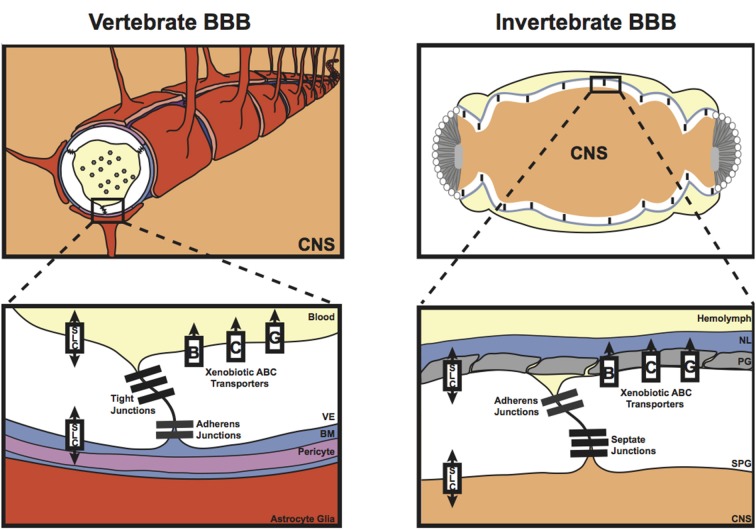
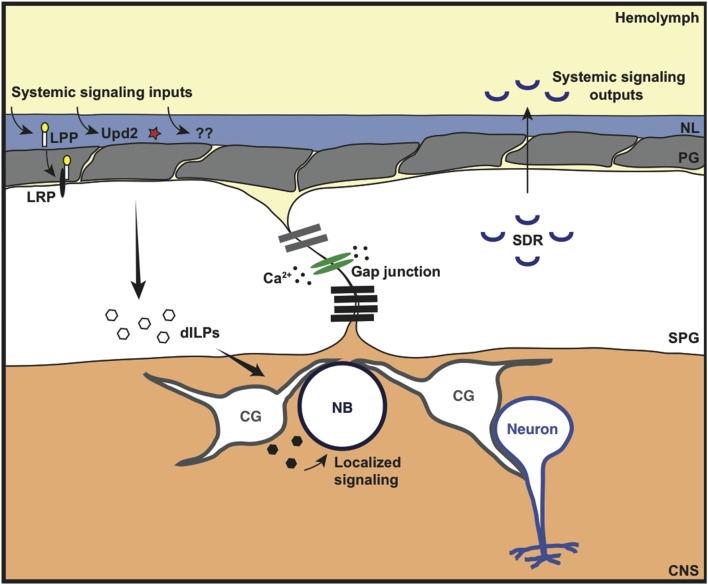
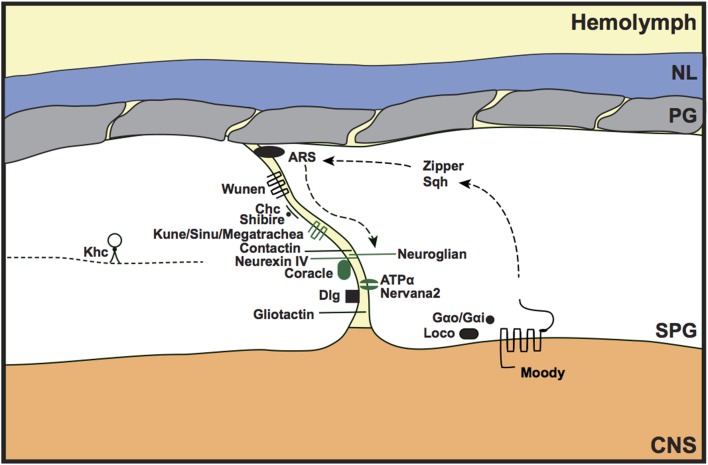
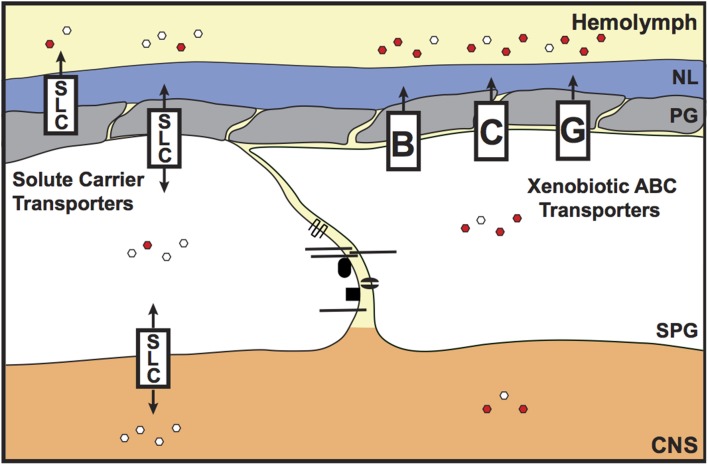
The invertebrate blood-brain barrier (BBB) field is growing at a rapid pace and, in recent years, studies have shown a physiologic and molecular complexity that has begun to rival its vertebrate counterpart. Novel mechanisms of paracellular barrier maintenance through G-protein coupled receptor signaling were the first demonstrations of the complex adaptive mechanisms of barrier physiology. Building upon this work, the integrity of the invertebrate BBB has recently been shown to require coordinated function of all layers of the compound barrier structure, analogous to signaling between the layers of the vertebrate neurovascular unit. These findings strengthen the notion that many BBB mechanisms are conserved between vertebrates and invertebrates, and suggest that novel findings in invertebrate model organisms will have a significant impact on the understanding of vertebrate BBB functions. In this vein, important roles in coordinating localized and systemic signaling to dictate organism development and growth are beginning to show how the BBB can govern whole animal physiologies. This includes novel functions of BBB gap junctions in orchestrating synchronized neuroblast proliferation, and of BBB secreted antagonists of insulin receptor signaling. These advancements and others are pushing the field forward in exciting new directions. In this review, we provide a synopsis of invertebrate BBB anatomy and physiology, with a focus on insights from the past 5 years, and highlight important areas for future study.
无脊椎动物血脑屏障(BBB)领域正在迅速发展,近年来的研究表明,其生理和分子复杂性已开始与脊椎动物的血脑屏障相媲美。通过G蛋白偶联受体信号传导维持细胞旁屏障的新机制是屏障生理学复杂适应性机制的首次证明。在此基础上,最近的研究表明,无脊椎动物血脑屏障的完整性需要复合屏障结构所有层的协调功能,这类似于脊椎动物神经血管单元各层之间的信号传导。这些发现强化了这样一种观念,即许多血脑屏障机制在脊椎动物和无脊椎动物之间是保守的,并表明在无脊椎动物模型生物中的新发现将对理解脊椎动物血脑屏障功能产生重大影响。在这方面,在协调局部和全身信号传导以决定生物体发育和生长方面的重要作用,正开始揭示血脑屏障如何能够调控整个动物的生理机能。这包括血脑屏障缝隙连接在协调神经母细胞同步增殖中的新功能,以及血脑屏障分泌的胰岛素受体信号拮抗剂的功能。这些进展以及其他方面正在将该领域推向令人兴奋的新方向。在这篇综述中,我们概述了无脊椎动物血脑屏障的解剖学和生理学,重点关注过去5年的见解,并突出了未来研究的重要领域。