Chan Ho Yin Edwin
Laboratory of Drosophila Research, School of Life Sciences, Faculty of Science, The Chinese University of Hong Kong Hong Kong, China ; Biochemistry Programme, School of Life Sciences, Faculty of Science, The Chinese University of Hong Kong Hong Kong, China.
Front Cell Neurosci. 2014 Dec 19;8:431. doi: 10.3389/fncel.2014.00431. eCollection 2014.
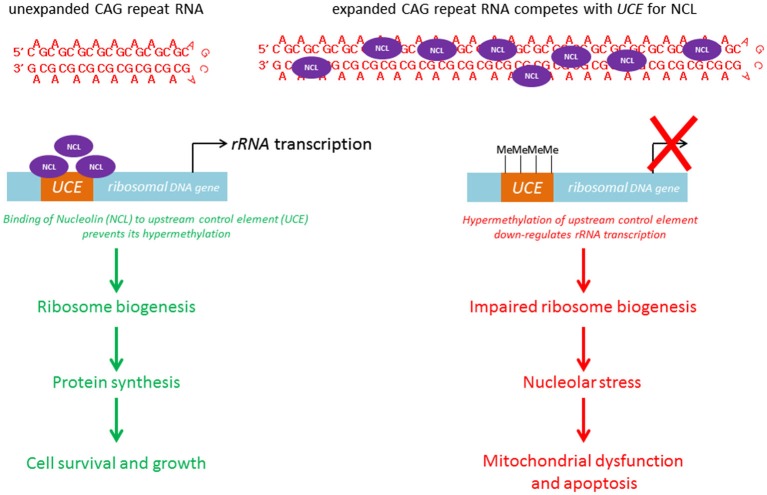
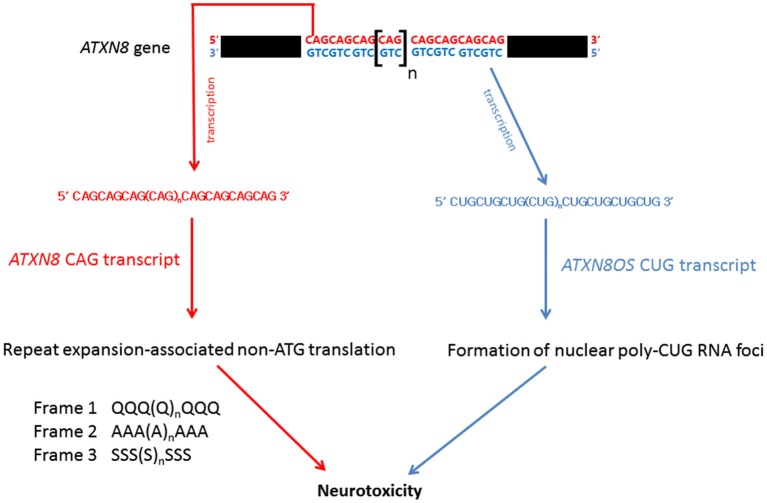
Gene transcription produces a wide variety of ribonucleic acid (RNA) species in eukaryotes. Individual types of RNA, such as messenger, structural and regulatory RNA, are known to play distinct roles in the cell. Recently, researchers have identified a large number of RNA-mediated toxicity pathways that play significant pathogenic roles in numerous human disorders. In this article, we describe various common RNA toxicity pathways, namely epigenetic gene silencing, nucleolar stress, nucleocytoplasmic transport, bi-directional gene transcription, repeat-associated non-ATG translation, RNA foci formation and cellular protein sequestration. We emphasize RNA toxicity mechanisms that involve nucleotide repeat expansion, such as those related to polyglutamine (polyQ) disorders and frontotemporal lobar degeneration-amyotrophic lateral sclerosis.
在真核生物中,基因转录产生多种核糖核酸(RNA)种类。已知个别类型的RNA,如信使RNA、结构RNA和调节RNA,在细胞中发挥着不同的作用。最近,研究人员已经确定了大量RNA介导的毒性途径,这些途径在许多人类疾病中发挥着重要的致病作用。在本文中,我们描述了各种常见的RNA毒性途径,即表观遗传基因沉默、核仁应激、核质运输、双向基因转录、重复相关的非ATG翻译、RNA病灶形成和细胞蛋白质隔离。我们强调涉及核苷酸重复扩增的RNA毒性机制,例如与聚谷氨酰胺(polyQ)疾病和额颞叶痴呆-肌萎缩侧索硬化相关的机制。