Grasso Carole, Fabre Marie-Sophie, Collis Sarah V, Castro M Leticia, Field Cameron S, Schleich Nanette, McConnell Melanie J, Herst Patries M
Malaghan Institute of Medical Research , Wellington , New Zealand.
School of Biological Sciences, Victoria University , Wellington , New Zealand.
Front Oncol. 2014 Dec 15;4:356. doi: 10.3389/fonc.2014.00356. eCollection 2014.
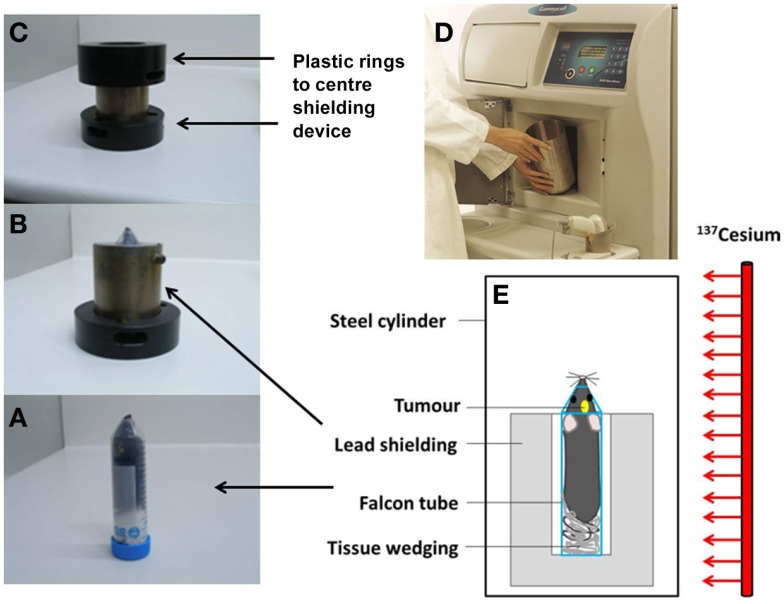
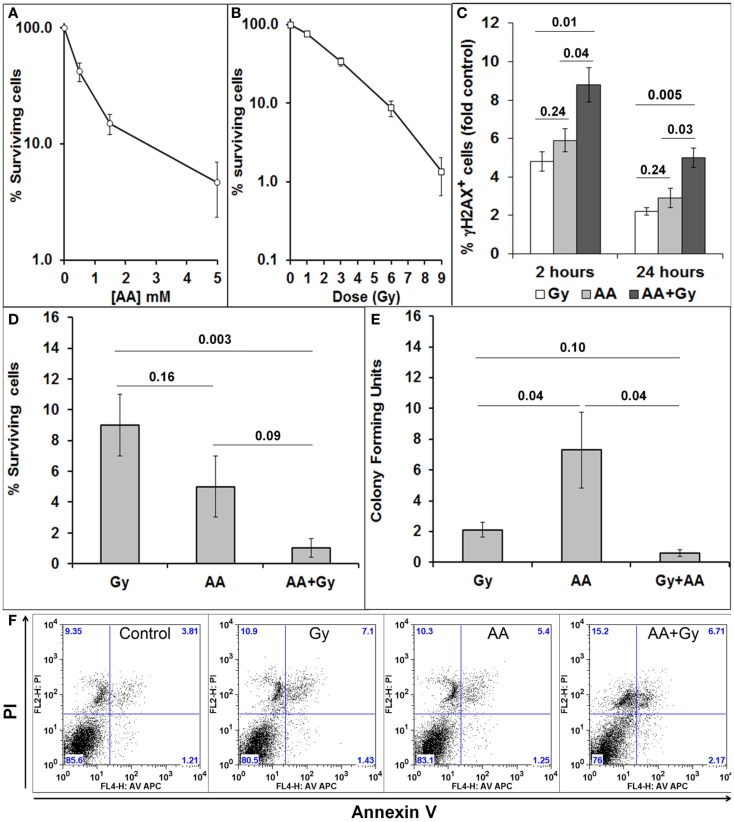
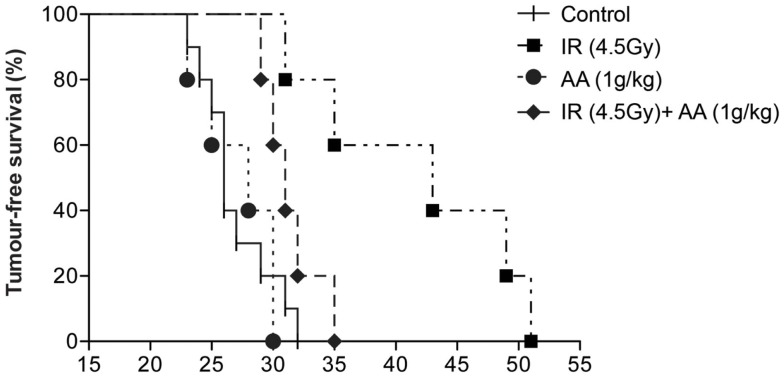
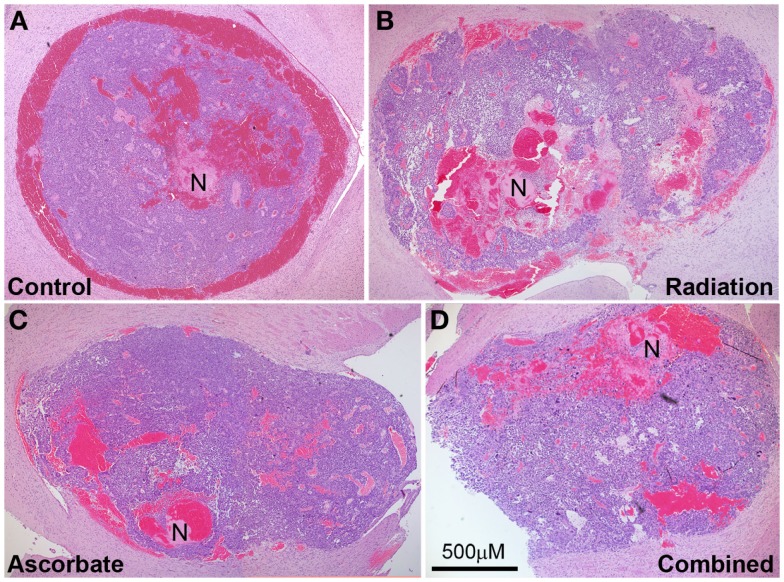
Pharmacological ascorbate is currently used as an anti-cancer treatment, potentially in combination with radiation therapy, by integrative medicine practitioners. In the acidic, metal-rich tumor environment, ascorbate acts as a pro-oxidant, with a mode of action similar to that of ionizing radiation; both treatments kill cells predominantly by free radical-mediated DNA damage. The brain tumor, glioblastoma multiforme (GBM), is very resistant to radiation; radiosensitizing GBM cells will improve survival of GBM patients. Here, we demonstrate that a single fraction (6 Gy) of radiation combined with a 1 h exposure to ascorbate (5 mM) sensitized murine glioma GL261 cells to radiation in survival and colony-forming assays in vitro. In addition, we report the effect of a single fraction (4.5 Gy) of whole brain radiation combined with daily intraperitoneal injections of ascorbate (1 mg/kg) in an intracranial GL261 glioma mouse model. Tumor-bearing C57BL/6 mice were divided into four groups: one group received a single dose of 4.5 Gy to the brain 8 days after tumor implantation, a second group received daily intraperitoneal injections of ascorbate (day 8-45) after implantation, a third group received both treatments and a fourth control group received no treatment. While radiation delayed tumor progression, intraperitoneal ascorbate alone had no effect on tumor progression. Tumor progression was faster in tumor-bearing mice treated with radiation and daily ascorbate than in those treated with radiation alone. Histological analysis showed less necrosis in tumors treated with both radiation and ascorbate, consistent with a radio-protective effect of ascorbate in vivo. Discrepancies between our in vitro and in vivo results may be explained by differences in the tumor microenvironment, which determines whether ascorbate remains outside the cell, acting as a pro-oxidant, or whether it enters the cells and acts as an anti-oxidant.
目前,功能医学从业者将药理维生素C用作一种抗癌治疗手段,可能会与放射治疗联合使用。在酸性、富含金属的肿瘤环境中,维生素C作为一种促氧化剂,其作用模式类似于电离辐射;两种治疗方法主要通过自由基介导的DNA损伤来杀死细胞。脑肿瘤多形性胶质母细胞瘤(GBM)对辐射具有很强的抗性;使GBM细胞对辐射敏感将提高GBM患者的生存率。在此,我们证明,在体外存活和集落形成试验中,单次剂量(6 Gy)的辐射与1小时的维生素C(5 mM)暴露相结合,可使小鼠胶质瘤GL261细胞对辐射敏感。此外,我们报告了在颅内GL261胶质瘤小鼠模型中,单次剂量(4.5 Gy)的全脑辐射与每日腹腔注射维生素C(1 mg/kg)的效果。将荷瘤C57BL/6小鼠分为四组:一组在肿瘤植入后8天接受单次4.5 Gy的脑部照射,第二组在植入后接受每日腹腔注射维生素C(第8 - 45天),第三组接受两种治疗,第四组为未治疗的对照组。虽然辐射延缓了肿瘤进展,但单独腹腔注射维生素C对肿瘤进展没有影响。接受辐射和每日维生素C治疗的荷瘤小鼠的肿瘤进展比单独接受辐射治疗的小鼠更快。组织学分析显示,接受辐射和维生素C联合治疗的肿瘤坏死较少,这与维生素C在体内的放射保护作用一致。我们体外和体内结果之间的差异可能是由肿瘤微环境的差异所解释的,肿瘤微环境决定了维生素C是留在细胞外作为促氧化剂,还是进入细胞并作为抗氧化剂发挥作用。