Gupta Kshama, Vuckovic Ivan, Zhang Song, Xiong Yuning, Carlson Brett L, Jacobs Joshua, Olson Ian, Petterson Xuan-Mai, Macura Slobodan I, Sarkaria Jann, Burns Terry C
Department of Neurologic Surgery, Mayo Clinic, Rochester, MN, United States.
Metabolomics Core Mayo Clinic, Rochester, MN, United States.
Front Oncol. 2020 May 5;10:535. doi: 10.3389/fonc.2020.00535. eCollection 2020.
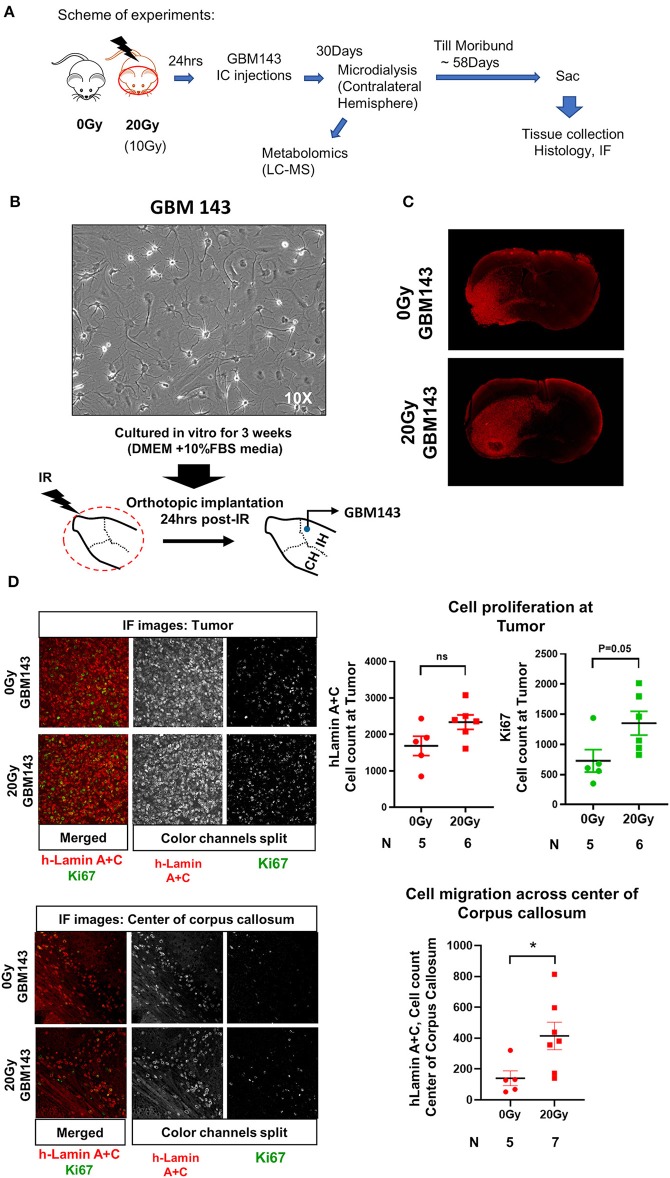
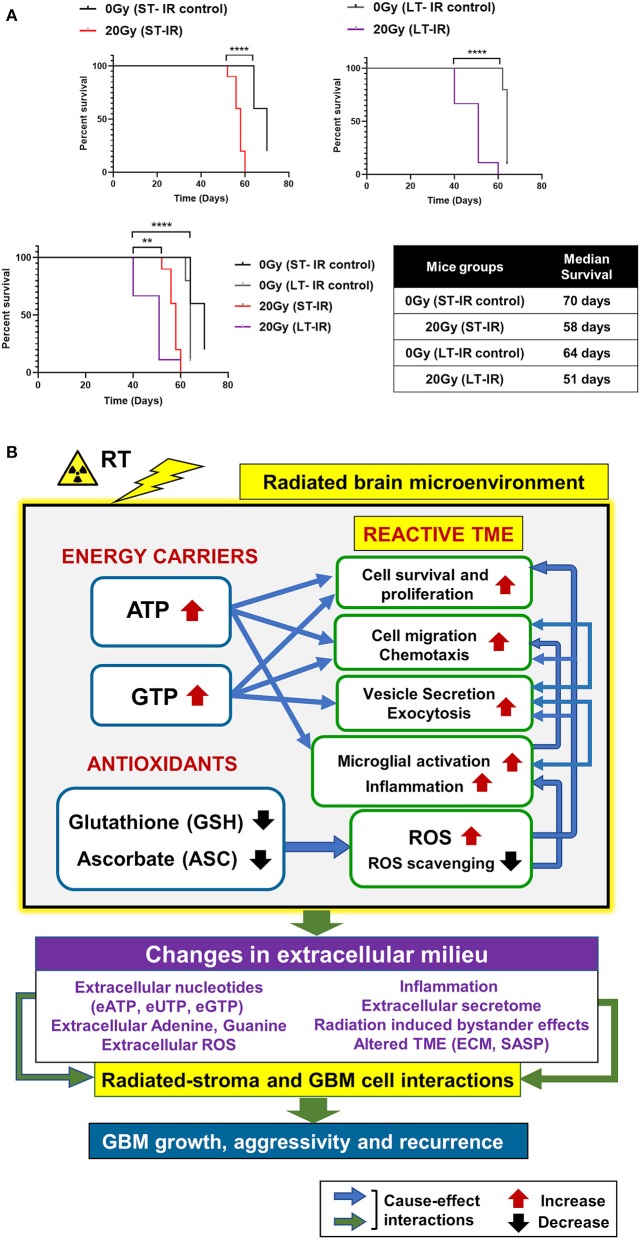
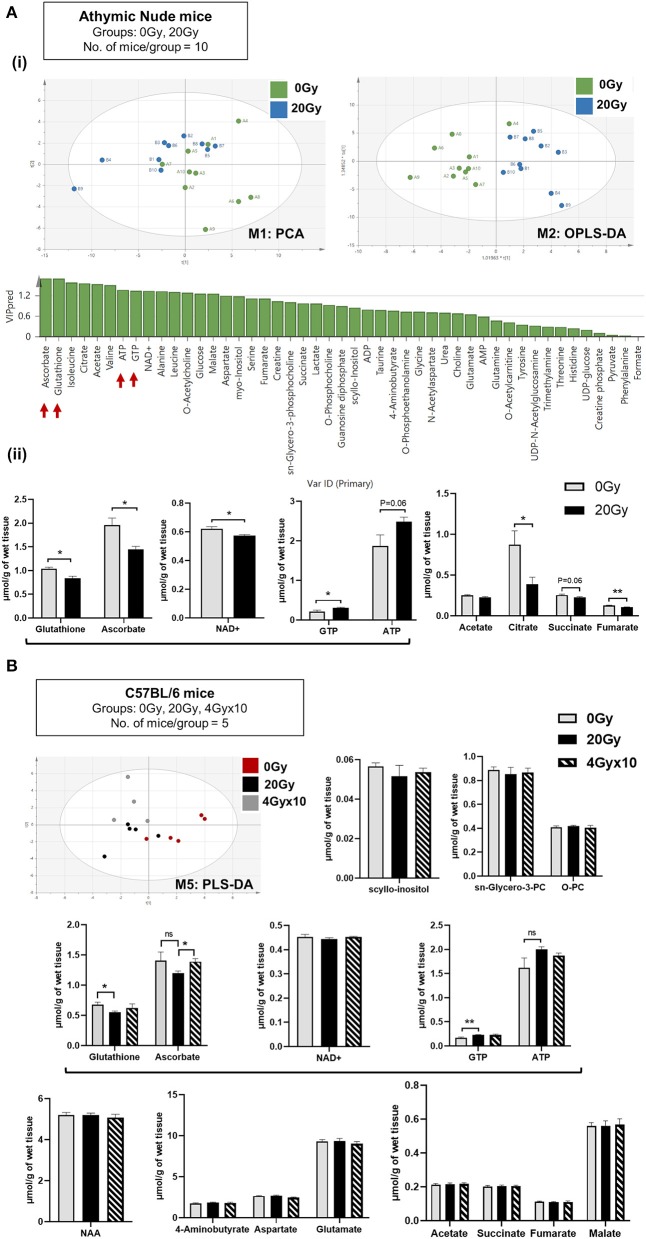
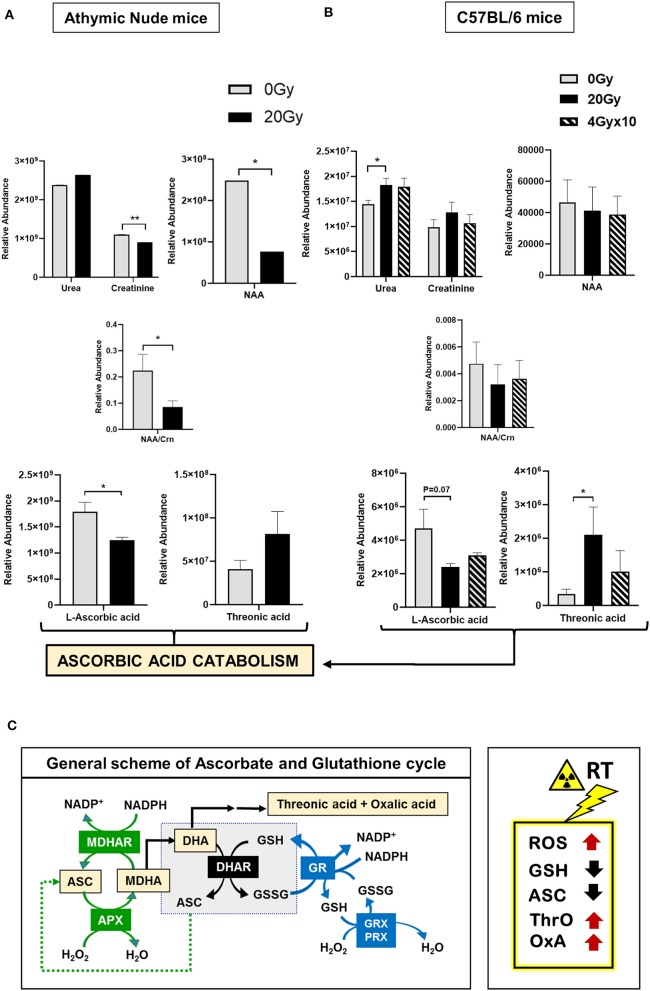
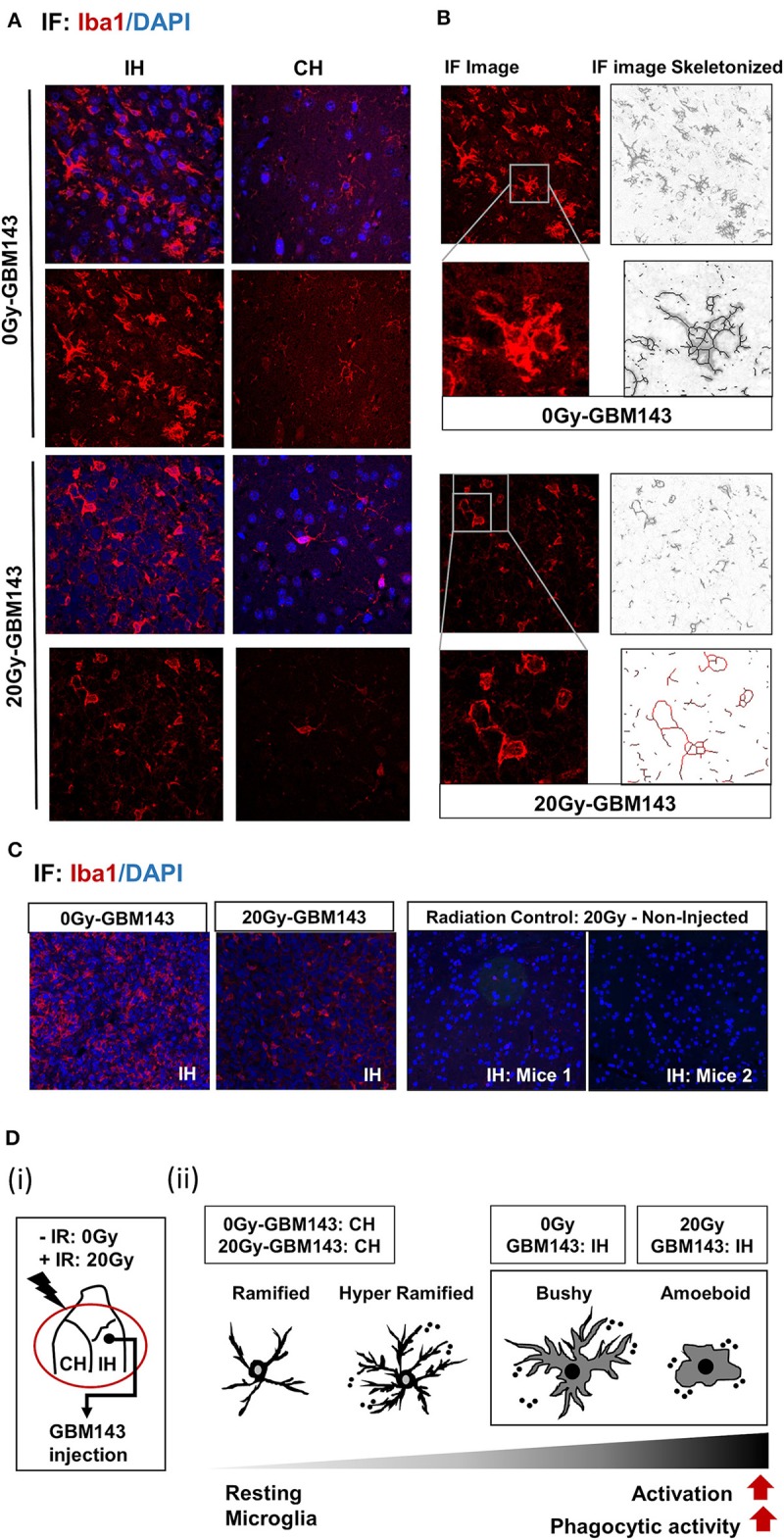
Glioblastoma (GBM) is uniformly fatal with a 1-year median survival, despite best available treatment, including radiotherapy (RT). Impacts of prior RT on tumor recurrence are poorly understood but may increase tumor aggressiveness. Metabolic changes have been investigated in radiation-induced brain injury; however, the tumor-promoting effect following prior radiation is lacking. Since RT is vital to GBM management, we quantified tumor-promoting effects of prior RT on patient-derived intracranial GBM xenografts and characterized metabolic alterations associated with the protumorigenic microenvironment. Human xenografts (GBM143) were implanted into nude mice 24 hrs following 20 Gy cranial radiation vs. sham animals. Tumors in pre-radiated mice were more proliferative and more infiltrative, yielding faster mortality ( < 0.0001). Histologic evaluation of tumor associated macrophage/microglia (TAMs) revealed cells with a more fully activated ameboid morphology in pre-radiated animals. Microdialyzates from radiated brain at the margin of tumor infiltration contralateral to the site of implantation were analyzed by unsupervised liquid chromatography-mass spectrometry (LC-MS). In pre-radiated animals, metabolites known to be associated with tumor progression (i.e., modified nucleotides and polyols) were identified. Whole-tissue metabolomic analysis of pre-radiated brain microenvironment for metabolic alterations in a separate cohort of nude mice using H-NMR revealed a significant decrease in levels of antioxidants (glutathione (GSH) and ascorbate (ASC)), NAD, Tricarboxylic acid cycle (TCA) intermediates, and rise in energy carriers (ATP, GTP). GSH and ASC showed highest Variable Importance on Projection prediction (VIPpred) (1.65) in Orthogonal Partial least square Discriminant Analysis (OPLS-DA); Ascorbate catabolism was identified by GC-MS. To assess longevity of radiation effects, we compared survival with implantation occurring 2 months vs. 24 hrs following radiation, finding worse survival in animals implanted at 2 months. These radiation-induced alterations are consistent with a chronic disease-like microenvironment characterized by reduced levels of antioxidants and NAD, and elevated extracellular ATP and GTP serving as chemoattractants, promoting cell motility and vesicular secretion with decreased levels of GSH and ASC exacerbating oxidative stress. Taken together, these data suggest IR induces tumor-permissive changes in the microenvironment with metabolomic alterations that may facilitate tumor aggressiveness with important implications for recurrent glioblastoma. Harnessing these metabolomic insights may provide opportunities to attenuate RT-associated aggressiveness of recurrent GBM.
胶质母细胞瘤(GBM)即便采用包括放疗(RT)在内的最佳可用治疗方案,其1年中位生存期仍表明该病具有致死性。既往放疗对肿瘤复发的影响尚不清楚,但可能会增加肿瘤的侵袭性。辐射性脑损伤中的代谢变化已得到研究;然而,此前放疗后的促肿瘤效应仍未得到研究。由于放疗对GBM的治疗至关重要,我们对既往放疗对患者来源的颅内GBM异种移植瘤的促肿瘤效应进行了量化,并对与促肿瘤微环境相关的代谢改变进行了表征。在20 Gy颅脑放疗24小时后,将人异种移植瘤(GBM143)植入裸鼠体内,与假手术动物进行对比。放疗前小鼠体内的肿瘤增殖性更强、浸润性更高,死亡率更快(<0.0001)。对肿瘤相关巨噬细胞/小胶质细胞(TAM)的组织学评估显示,放疗前动物体内的细胞具有更充分激活的阿米巴样形态。通过无监督液相色谱-质谱联用(LC-MS)分析植入部位对侧肿瘤浸润边缘处放疗后脑组织的微量透析液。在放疗前动物体内,鉴定出了已知与肿瘤进展相关的代谢物(即修饰核苷酸和多元醇)。使用H-NMR对另一组裸鼠放疗前脑微环境进行全组织代谢组学分析,以检测代谢改变,结果显示抗氧化剂(谷胱甘肽(GSH)和抗坏血酸(ASC))、NAD、三羧酸循环(TCA)中间体水平显著降低,能量载体(ATP、GTP)水平升高。在正交偏最小二乘判别分析(OPLS-DA)中,GSH和ASC显示出最高的投影变量重要性预测(VIPpred)(1.65);通过气相色谱-质谱联用(GC-MS)鉴定出抗坏血酸分解代谢。为了评估辐射效应的持续性,我们比较了放疗后2个月与24小时植入异种移植瘤后的生存期,发现2个月时植入动物的生存期更差。这些辐射诱导的改变与一种慢性疾病样微环境一致,其特征是抗氧化剂和NAD水平降低,细胞外ATP和GTP升高作为趋化因子,促进细胞运动和囊泡分泌,GSH和ASC水平降低加剧氧化应激。综上所述,这些数据表明电离辐射(IR)在微环境中诱导了肿瘤允许性变化,并伴有代谢组学改变,这可能会促进肿瘤侵袭性,对复发性胶质母细胞瘤具有重要意义。利用这些代谢组学见解可能为减轻复发性GBM放疗相关的侵袭性提供机会。