Department of Surgery, University of Iowa Hospitals and Clinics, Iowa City, Iowa.
Free Radical and Radiation Biology Program, Department of Radiation Oncology, University of Iowa Hospitals and Clinics, Iowa City, Iowa.
Cancer Res. 2018 Dec 15;78(24):6838-6851. doi: 10.1158/0008-5472.CAN-18-1680. Epub 2018 Sep 25.
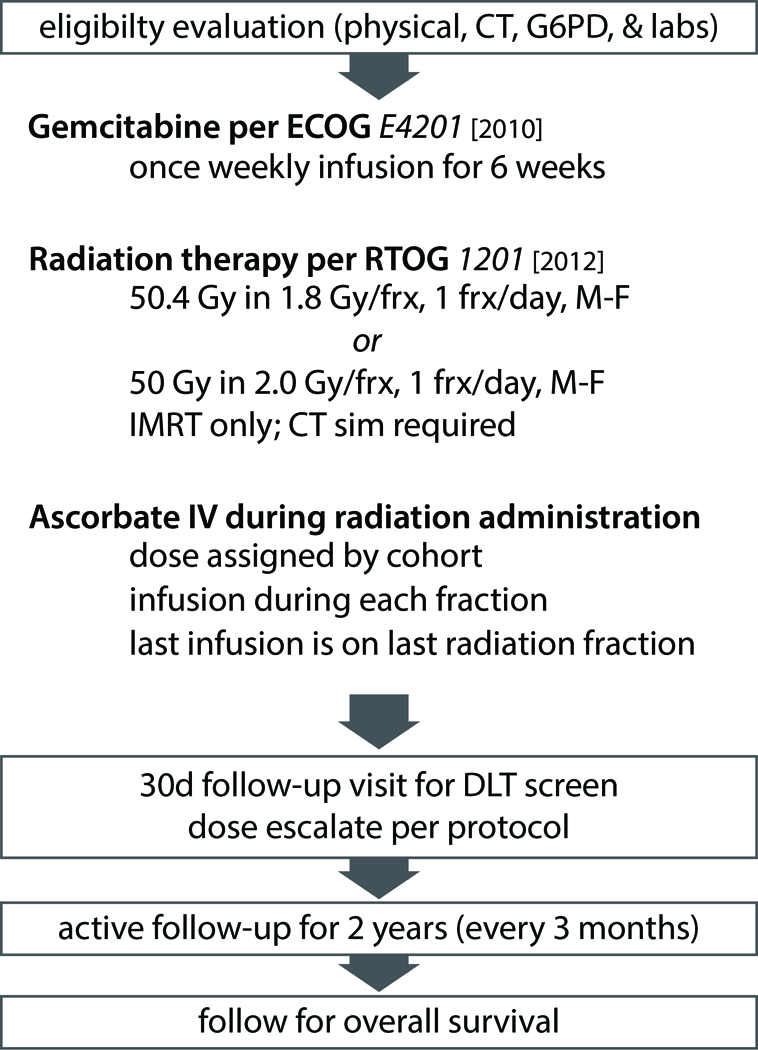
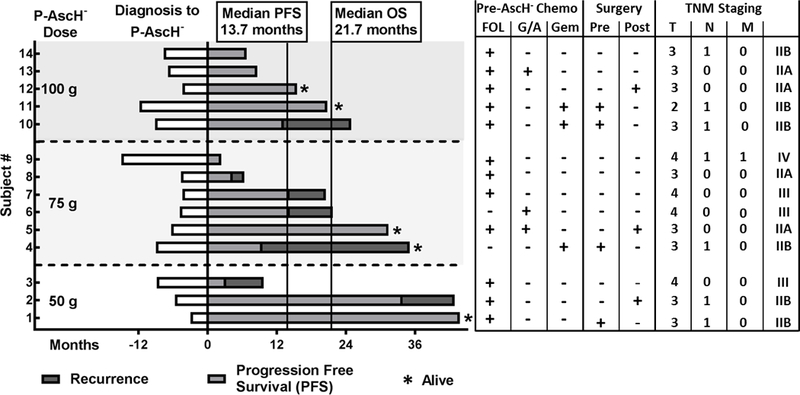
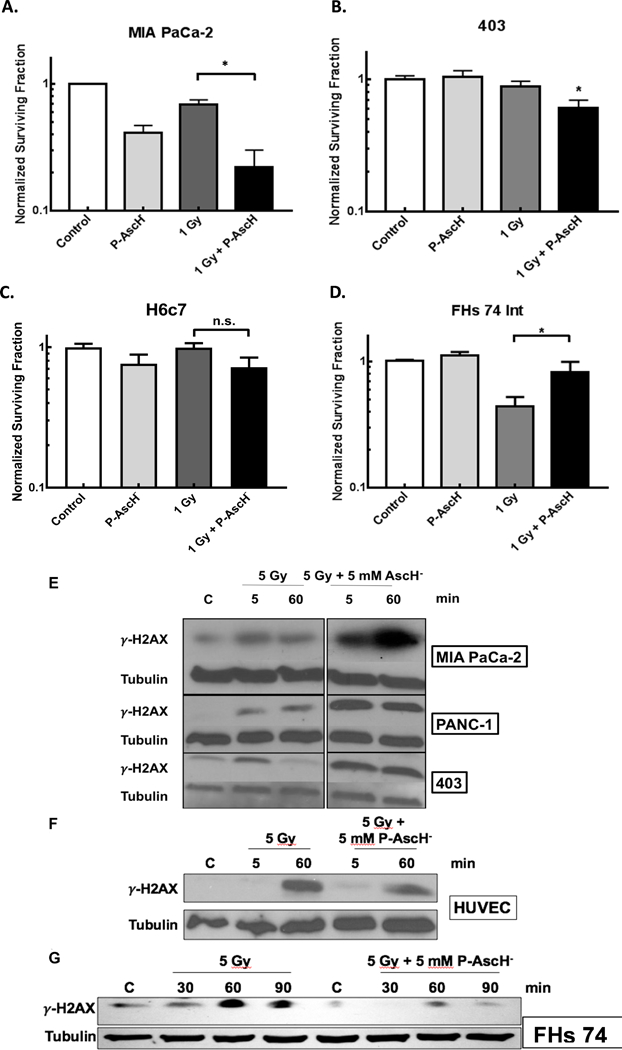
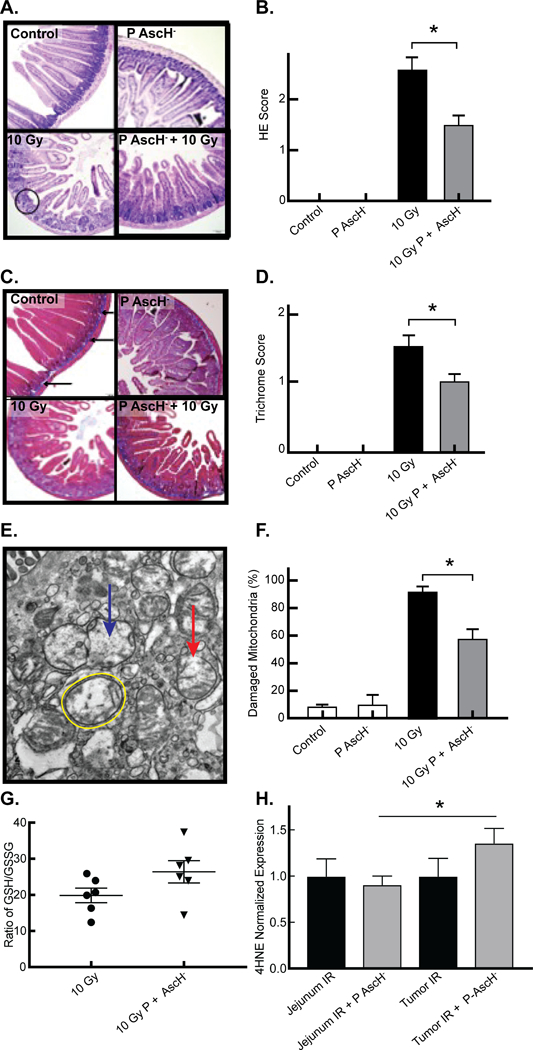
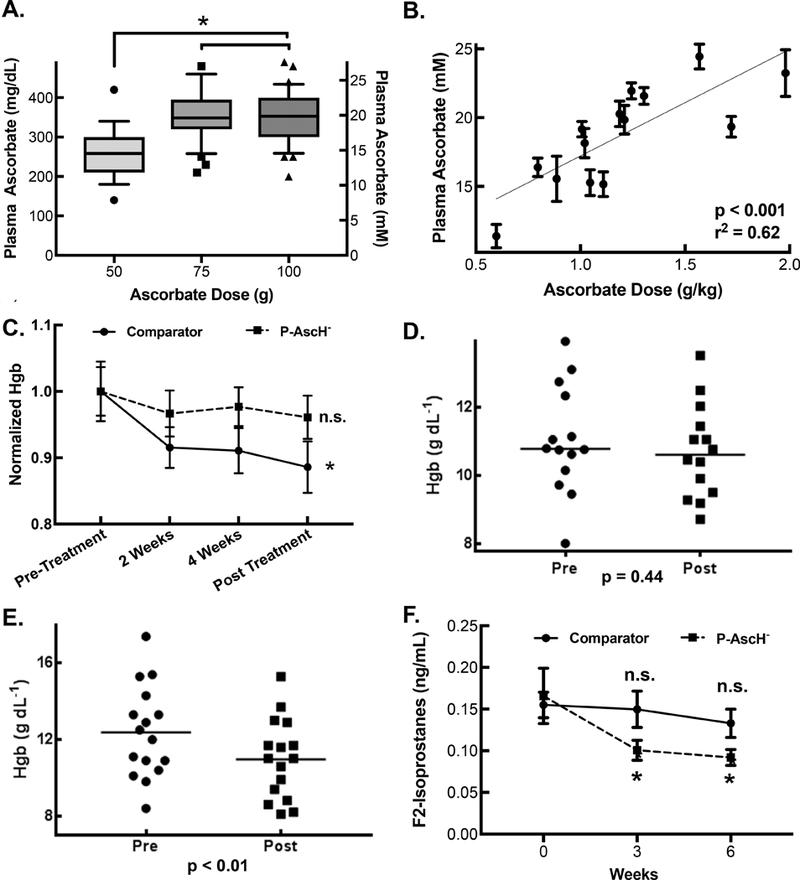
: Chemoradiation therapy is the mainstay for treatment of locally advanced, borderline resectable pancreatic cancer. Pharmacologic ascorbate (P-AscH, i.e., intravenous infusions of ascorbic acid, vitamin C), but not oral ascorbate, produces high plasma concentrations capable of selective cytotoxicity to tumor cells. In doses achievable in humans, P-AscH decreases the viability and proliferative capacity of pancreatic cancer via a hydrogen peroxide (HO)-mediated mechanism. In this study, we demonstrate that P-AscH radiosensitizes pancreatic cancer cells but inhibits radiation-induced damage to normal cells. Specifically, radiation-induced decreases in clonogenic survival and double-stranded DNA breaks in tumor cells, but not in normal cells, were enhanced by P-AscH, while radiation-induced intestinal damage, collagen deposition, and oxidative stress were also reduced with P-AscH in normal tissue. We also report on our first-in-human phase I trial that infused P-AscH during the radiotherapy "beam on." Specifically, treatment with P-AscH increased median overall survival compared with our institutional average (21.7 vs. 12.7 months, = 0.08) and the E4201 trial (21.7 vs. 11.1 months). Progression-free survival in P-AscH-treated subjects was also greater than our institutional average (13.7 vs. 4.6 months, < 0.05) and the E4201 trial (6.0 months). Results indicated that P-AscH in combination with gemcitabine and radiotherapy for locally advanced pancreatic adenocarcinoma is safe and well tolerated with suggestions of efficacy. Because of the potential effect size and minimal toxicity, our findings suggest that investigation of P-AscH efficacy is warranted in a phase II clinical trial. SIGNIFICANCE: These findings demonstrate that pharmacologic ascorbate enhances pancreatic tumor cell radiation cytotoxicity in addition to offering potential protection from radiation damage in normal surrounding tissue, making it an optimal agent for improving treatment of locally advanced pancreatic adenocarcinoma.
化学放射疗法是治疗局部晚期、边界可切除胰腺癌的主要方法。药物形式的抗坏血酸(P-AscH,即静脉输注抗坏血酸,维生素 C),而不是口服抗坏血酸,可产生能够选择性杀伤肿瘤细胞的高血浆浓度。在人类可达到的剂量下,P-AscH 通过过氧化氢 (HO) 介导的机制降低胰腺癌细胞的活力和增殖能力。在这项研究中,我们证明 P-AscH 可增敏胰腺癌细胞的放射敏感性,但可抑制正常细胞的辐射损伤。具体而言,P-AscH 增强了辐射诱导的肿瘤细胞而非正常细胞的克隆存活和双链 DNA 断裂减少,同时 P-AscH 也减少了正常组织中的辐射诱导的肠道损伤、胶原蛋白沉积和氧化应激。我们还报告了我们的首例人体 I 期试验,即在放射治疗“射束开启”期间输注 P-AscH。具体而言,与我们的机构平均值(21.7 与 12.7 个月, = 0.08)和 E4201 试验(21.7 与 11.1 个月)相比,P-AscH 治疗增加了中位总生存期。P-AscH 治疗组的无进展生存期也大于我们的机构平均值(13.7 与 4.6 个月, < 0.05)和 E4201 试验(6.0 个月)。结果表明,P-AscH 联合吉西他滨和放射治疗局部晚期胰腺腺癌是安全且耐受良好的,并且具有一定的疗效。由于潜在的疗效大小和最小的毒性,我们的研究结果表明,在 II 期临床试验中研究 P-AscH 的疗效是合理的。意义:这些发现表明,药物形式的抗坏血酸除了为正常周围组织提供潜在的辐射损伤保护外,还可增强胰腺肿瘤细胞的放射细胞毒性,使其成为改善局部晚期胰腺腺癌治疗的理想药物。