Plouguerné Erwan, da Gama Bernardo A P, Pereira Renato C, Barreto-Bergter Eliana
Laboratório de Produtos Naturais e Ecologia Química Marinha, Departamento de Biologia Marinha, Instituto de Biologia, Universidade Federal Fluminense Niterói, Brazil.
Laboratório de Química Biológica de Microrganismos, Departamento de Microbiologia Geral, Instituto de Microbiologia, Universidade Federal do Rio de Janeiro Rio de Janeiro, Brazil.
Front Cell Infect Microbiol. 2014 Dec 17;4:174. doi: 10.3389/fcimb.2014.00174. eCollection 2014.
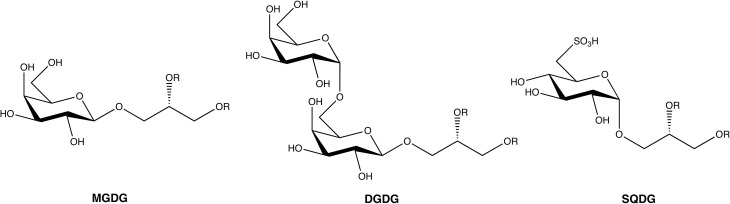
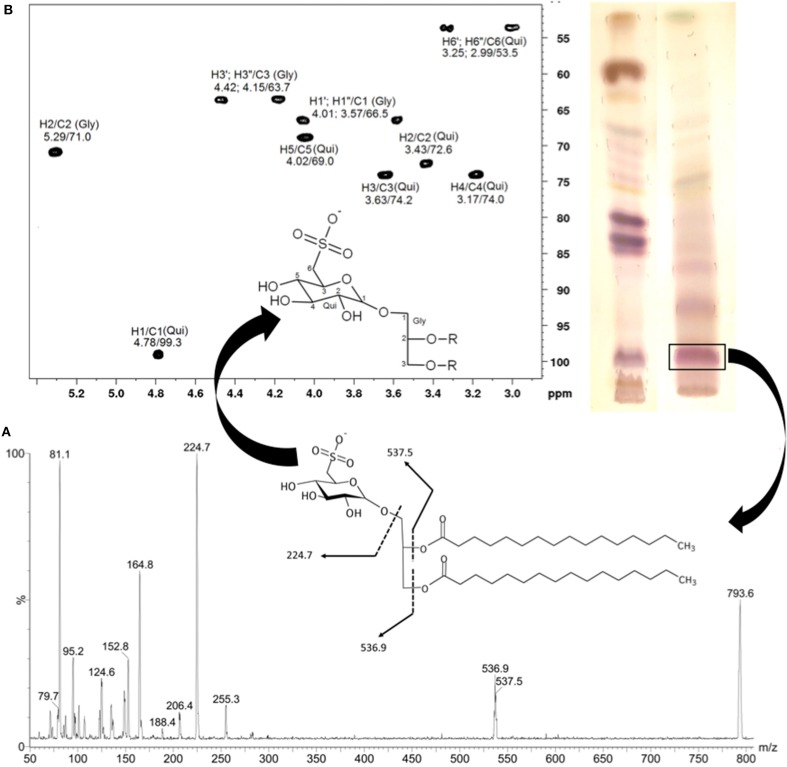
Marine macroalgae, or seaweeds, are a formidable source of natural compounds with diverse biological activities. In the last five decades it has been estimated that more than 3000 natural compounds were discovered from these organisms. The great majority of the published works have focused on terpenoids. In comparison, glycolipids are a neglected class of macroalgal secondary metabolites therefore remaining as a largely unknown reservoir of molecular diversity. Nevertheless, the interest regarding these compounds has been growing fast in the last decades as activities of ecological or pharmaceutical interest have been highlighted. This paper will review recent work regarding isolation and structural characterization of glycolipids from seaweeds and their prospective biological activities.
海洋大型藻类,即海藻,是具有多种生物活性的天然化合物的重要来源。据估计,在过去五十年里,从这些生物体中发现了3000多种天然化合物。绝大多数已发表的研究都集中在萜类化合物上。相比之下,糖脂是一类被忽视的大型藻类次生代谢产物,因此在很大程度上仍是一个未知的分子多样性宝库。然而,在过去几十年里,随着糖脂在生态或制药方面的活性受到关注,人们对这些化合物的兴趣迅速增长。本文将综述关于从海藻中分离糖脂及其结构表征以及它们潜在生物活性的近期研究工作。