Marchetti Francesco, Bishop Jack, Gingerich John, Wyrobek Andrew J
1] Environmental Health Science Research Bureau, Health Canada, Ottawa, Ontario, Canada, K1A 0K9 [2] Life Sciences Division, Lawrence Berkeley National Laboratory, Berkeley, California, USA 94720 [3] Biosciences Department, Lawrence Livermore National Laboratory, Livermore, California 94550, USA.
National Toxicology Program, National Institute of Environmental Health Sciences, Research Triangle Park, North Carolina 27709, USA.
Sci Rep. 2015 Jan 8;5:7689. doi: 10.1038/srep07689.
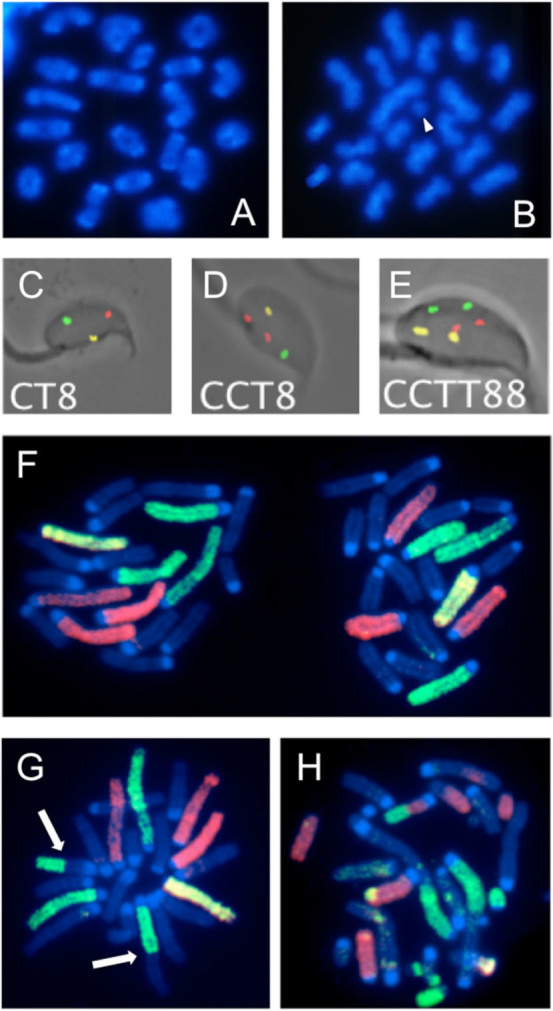
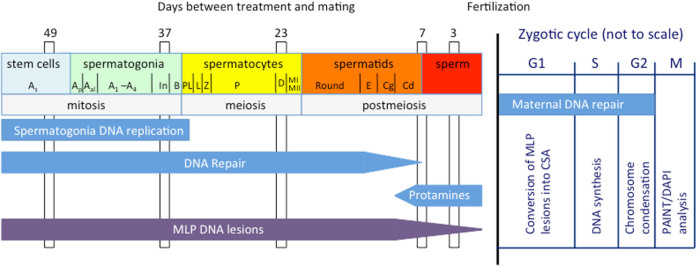
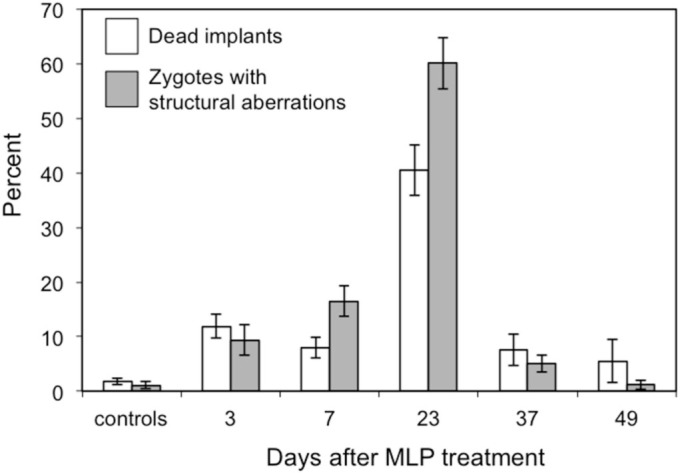
De novo point mutations and chromosomal structural aberrations (CSA) detected in offspring of unaffected parents show a preferential paternal origin with higher risk for older fathers. Studies in rodents suggest that heritable mutations transmitted from the father can arise from either paternal or maternal misrepair of damaged paternal DNA, and that the entire spermatogenic cycle can be at risk after mutagenic exposure. Understanding the susceptibility and mechanisms of transmission of paternal mutations is important in family planning after chemotherapy and donor selection for assisted reproduction. We report that treatment of male mice with melphalan (MLP), a bifunctional alkylating agent widely used in chemotherapy, induces DNA lesions during male mouse meiosis that persist unrepaired as germ cells progress through DNA repair-competent phases of spermatogenic development. After fertilization, unrepaired sperm DNA lesions are mis-repaired into CSA by the egg's DNA repair machinery producing chromosomally abnormal offspring. These findings highlight the importance of both pre- and post-fertilization DNA repair in assuring the genomic integrity of the conceptus.
在未受影响的父母的后代中检测到的新生点突变和染色体结构畸变(CSA)显示出优先的父系起源,且父亲年龄较大时风险更高。对啮齿动物的研究表明,从父亲遗传的可遗传突变可能源于父本受损DNA的父系或母系错配修复,并且在诱变暴露后整个生精周期都可能处于风险之中。了解父系突变的易感性和传播机制对于化疗后的计划生育以及辅助生殖的供体选择至关重要。我们报告称,用美法仑(MLP)治疗雄性小鼠,美法仑是一种广泛用于化疗的双功能烷化剂,在雄性小鼠减数分裂期间会诱导DNA损伤,随着生殖细胞在生精发育的DNA修复能力阶段进展,这些损伤会持续未修复。受精后,未修复的精子DNA损伤会被卵子的DNA修复机制错配修复为CSA,从而产生染色体异常的后代。这些发现凸显了受精前和受精后DNA修复在确保受精卵基因组完整性方面的重要性。