Guan Junjie, Zhang Jieyuan, Zhu Zhenzhong, Niu Xin, Guo Shangchun, Wang Yang, Zhang Changqing
Department of Orthopedics, Shanghai Jiao Tong University Affiliated Sixth People's Hospital, 600 Yishan Road, Shanghai, 200233, China.
Institute of Microsurgery on Extremities, Shanghai Jiao Tong University Affiliated Sixth People's Hospital, 600 Yishan Road, Shanghai, 200233, China.
Stem Cell Res Ther. 2015 Jan 7;6(1):5. doi: 10.1186/scrt539.
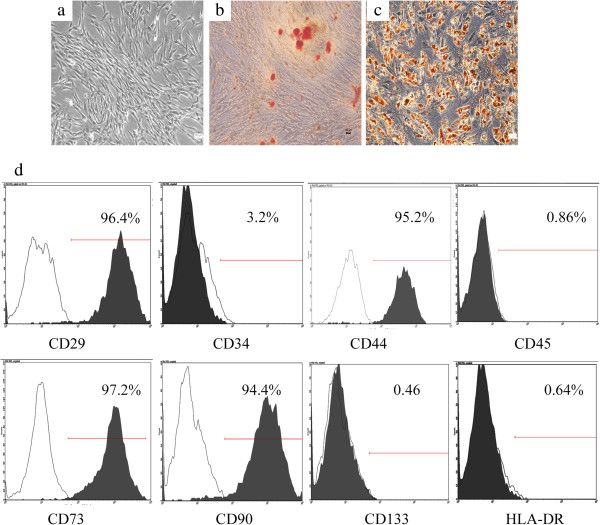
Urine-derived stem cells (USCs) have the ability to differentiate into osteogenic lineage. Previous studies have raised the possibility that USCs could be used for bone repair. To harness the power of USCs in promoting bone regeneration, methods must be developed to induce USCs to osteogenic lineage efficiently. The present study investigates the effect of lentivirus-encoded bone morphogenetic protein 2 (BMP2) gene transduction on the osteogenic potential of USCs.
USCs were isolated from voided urine and transduced with Lentiviral vector encoding BMP2. An in vitro study was performed to detect Lentiviral-BMP2 transduced USCs differentiated towards osteogenic lineage. Furthermore, Lentiviral-BMP2 transduced USCs were transplanted in vivo to examine the ectopic bone formation ability. After six weeks, retrieval samples were obtained for immunostaining and histological analysis.
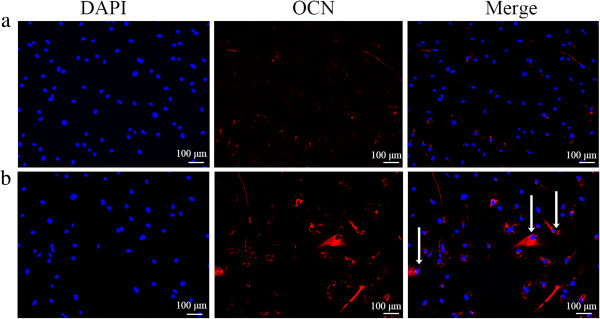
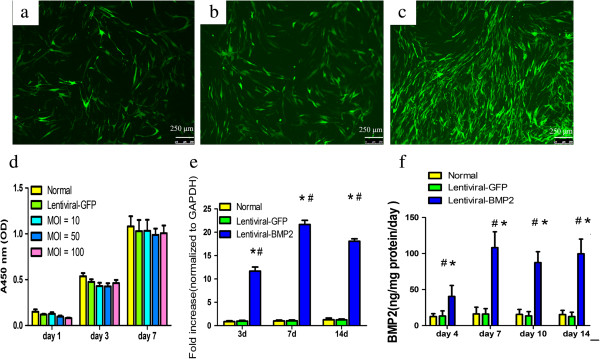
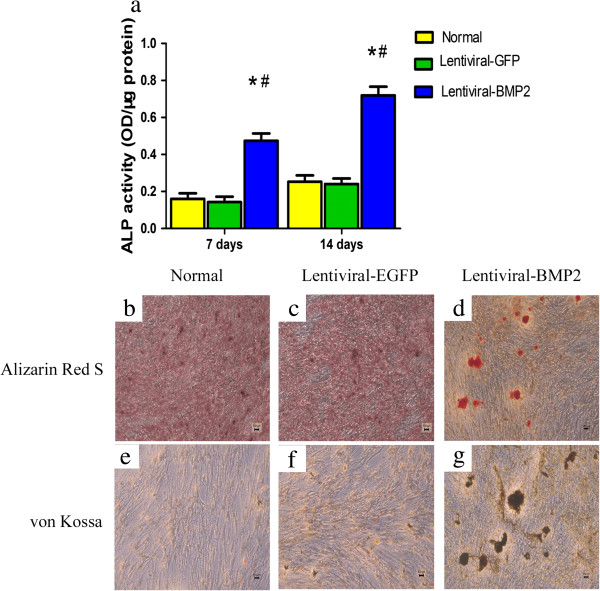
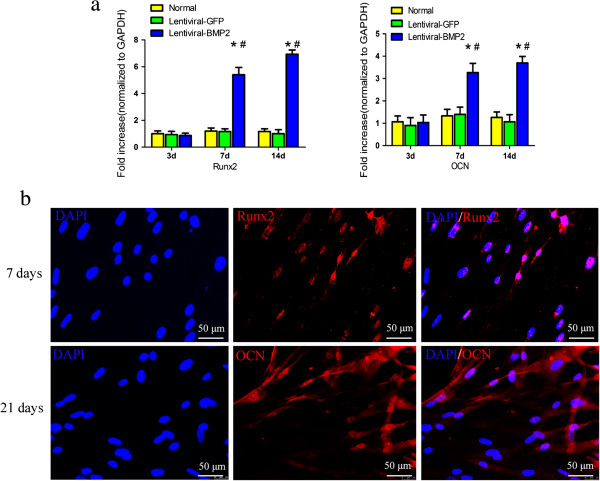
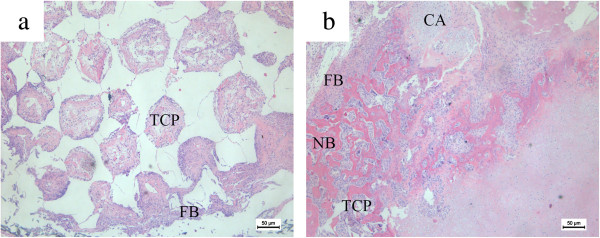
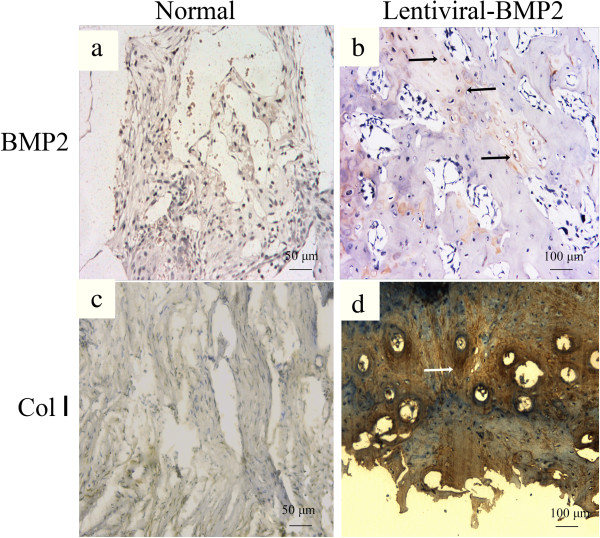
The results showed that the transduction efficiencies were over 90%, and transduced USCs had high expression levels of the BMP2 gene and secreted BMP2 protein. Alkaline activity and mineral deposition staining demonstrated that transduced USCs differentiate into osteogenic lineages without the addition of osteogenic supplements. Transduced USCs also showed high expression of bone-related markers, including runt-related protein-2 (Runx2) and osteocalcin (OCN), confirming this lentiviral-BMP2 construct provides sufficient stimuli for osteogenic differentiation. Histological analysis indicated that the transduced USCs induced robust new bone formation in nude mice. Six weeks after transplantation, human derived cells were observed to participate in bone formation.
These results demonstrate that BMP2 gene transduction provides an effective method to enhance the osteogenic potential of USCs.
尿液来源的干细胞(USCs)具有分化为成骨谱系的能力。先前的研究提出了USCs可用于骨修复的可能性。为了利用USCs促进骨再生的能力,必须开发有效诱导USCs向成骨谱系分化的方法。本研究调查慢病毒编码骨形态发生蛋白2(BMP2)基因转导对USCs成骨潜能的影响。
从排出的尿液中分离出USCs,并用编码BMP2的慢病毒载体进行转导。进行体外研究以检测慢病毒-BMP2转导的USCs向成骨谱系的分化情况。此外,将慢病毒-BMP2转导的USCs进行体内移植,以检查异位骨形成能力。六周后,获取取回的样本进行免疫染色和组织学分析。
结果显示转导效率超过90%,转导的USCs具有高表达水平的BMP2基因并分泌BMP2蛋白。碱性磷酸酶活性和矿化沉积染色表明,转导的USCs在不添加成骨补充剂的情况下可分化为成骨谱系。转导的USCs还显示出骨相关标志物的高表达,包括 runt相关蛋白2(Runx2)和骨钙素(OCN),证实这种慢病毒-BMP2构建体为成骨分化提供了足够的刺激。组织学分析表明,转导的USCs在裸鼠中诱导了强大的新骨形成。移植六周后,观察到人类来源的细胞参与了骨形成。
这些结果表明,BMP2基因转导提供了一种增强USCs成骨潜能的有效方法。