Vado Yerai, Puras Gustavo, Rosique Melania, Martin Cesar, Pedraz Jose Luis, Jebari-Benslaiman Shifa, de Pancorbo Marian M, Zarate Jon, Perez de Nanclares Guiomar
NanoBioCel Research Group, Laboratory of Pharmacy and Pharmaceutical Technology, Faculty of Pharmacy, University of the Basque Country UPV/EHU, 01006 Vitoria-Gasteiz, Araba, Spain.
Rare Diseases Research Group, Molecular (Epi) Genetics Laboratory, BioAraba Health Research Institute, Araba University Hospital-Txagorritxu, 01009 Vitoria-Gasteiz, Araba, Spain.
Pharmaceutics. 2021 May 11;13(5):696. doi: 10.3390/pharmaceutics13050696.
Mesenchymal stem cells (MSCs) are stem cells present in adult tissues. They can be cultured, have great growth capacity, and can differentiate into several cell types. The isolation of urine-derived mesenchymal stem cells (hUSCs) was recently described. hUSCs present additional benefits in the fact that they can be easily obtained noninvasively. Regarding gene delivery, nonviral vectors based on cationic niosomes have been used and are more stable and have lower immunogenicity than viral vectors. However, their transfection efficiency is low and in need of improvement.
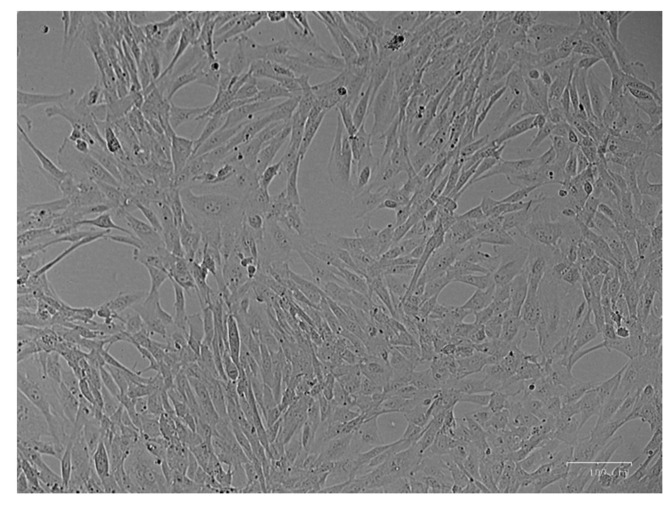
We isolated hUSCs from urine, and the cell culture was tested and characterized. Different cationic niosomes were elaborated using reverse-phase evaporation, and they were physicochemically characterized. Then, they were screened into hUSCs for transfection efficiency, and their internalization was evaluated.
GPxT-CQ at a lipid/DNA ratio of 5:1 (/) had the best transfection efficiency. Intracellular localization studies confirmed that nioplexes entered mainly via caveolae-mediated endocytosis.
In conclusion, we established a protocol for hUSC isolation and their transfection with cationic niosomes, which could have relevant clinical applications such as in gene therapy. This methodology could also be used for creating cellular models for studying and validating pathogenic genetic variants, and even for performing functional studies. Our study increases knowledge about the internalization of tested cationic niosomes in these previously unexplored cells.
间充质干细胞(MSCs)是存在于成体组织中的干细胞。它们可以进行培养,具有很强的增殖能力,并且能够分化为多种细胞类型。最近有文献报道了尿源性间充质干细胞(hUSCs)的分离方法。hUSCs具有额外的优势,即可以通过非侵入性的方式轻松获取。在基因递送方面,基于阳离子脂质体的非病毒载体已被使用,并且比病毒载体更稳定,免疫原性更低。然而,它们的转染效率较低,需要改进。
我们从尿液中分离出hUSCs,并对细胞培养进行了测试和表征。使用反相蒸发法制备了不同的阳离子脂质体,并对其进行了物理化学表征。然后,将它们筛选用于hUSCs的转染效率测试,并评估其内化情况。
脂质/DNA比例为5:1(/)的GPxT-CQ具有最佳的转染效率。细胞内定位研究证实,脂质体复合物主要通过小窝介导的内吞作用进入细胞。
总之,我们建立了一种hUSC分离及其用阳离子脂质体转染的方案,这可能在基因治疗等相关临床应用中具有重要意义。这种方法还可用于创建细胞模型,以研究和验证致病基因变异,甚至用于进行功能研究。我们的研究增加了对这些此前未被探索的细胞中测试的阳离子脂质体内化情况的了解。