DiBattista Joseph D, Feldheim Kevin A, Garant Dany, Gruber Samuel H, Hendry Andrew P
Redpath Museum and Department of Biology, McGill University Montréal, QC, Canada.
Field Museum, Pritzker Laboratory for Molecular Systematics and Evolution Chicago, IL, USA.
Evol Appl. 2011 Jan;4(1):1-17. doi: 10.1111/j.1752-4571.2010.00125.x. Epub 2010 Apr 6.
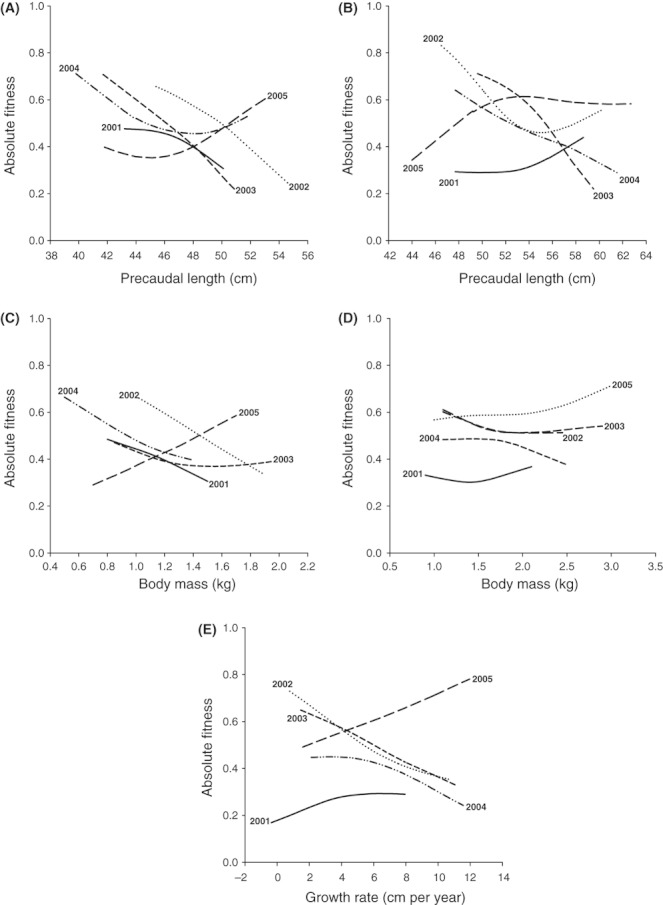
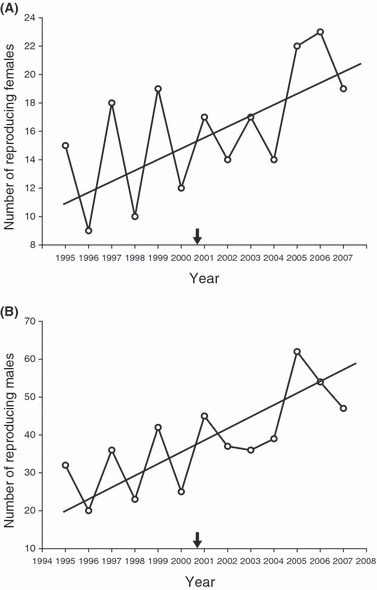
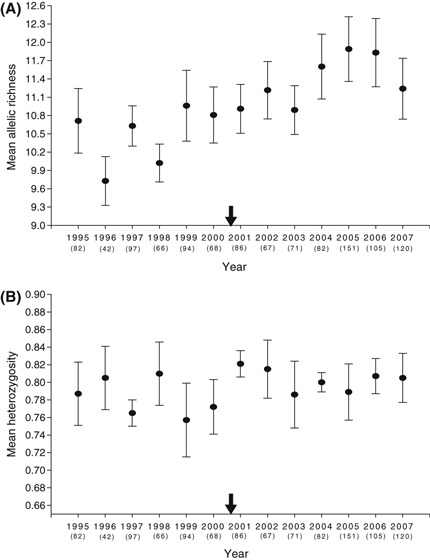
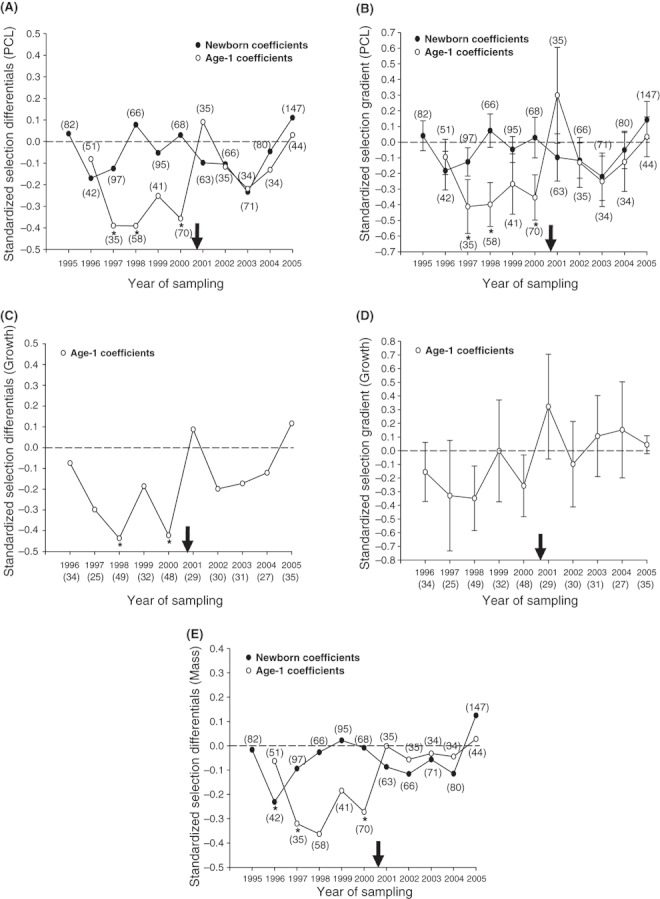
The level of genetic variation in natural populations influences evolutionary potential, and may therefore influence responses to selection in the face of future environmental changes. By combining long-term monitoring of marked individuals with genetic pedigree reconstruction, we assessed whether habitat loss influenced genetic variation in a lemon shark (Negaprion brevirostris) population at an isolated nursery lagoon (Bimini, Bahamas). We also tracked changes in the strength and direction of natural selection. Contrary to initial expectations, we found that after the habitat loss neutral genetic variation increased, as did additive genetic variance for juvenile morphological traits (body length and mass). We hypothesize that these effects might result from philopatric behavior in females coupled with a possible influx of male genotypes from other nursery sites. We also found changes in the strength of selection on morphological traits, which weakened considerably after the disturbance; habitat loss therefore changed the phenotypes favored by natural selection. Because such human-induced shifts in the adaptive landscape may be common, we suggest that conservation biologists should not simply focus on neutral genetic variation per se, but also on assessing and preserving evolutionary parameters, such as additive genetic variation and selection.
自然种群中的遗传变异水平会影响进化潜力,因此可能会影响面对未来环境变化时对选择的响应。通过将对有标记个体的长期监测与基因谱系重建相结合,我们评估了栖息地丧失是否影响了巴哈马群岛比米尼一个孤立育苗泻湖中的柠檬鲨(Negaprion brevirostris)种群的遗传变异。我们还追踪了自然选择强度和方向的变化。与最初的预期相反,我们发现栖息地丧失后,中性遗传变异增加,幼鱼形态特征(体长和体重)的加性遗传方差也增加。我们推测,这些影响可能是由于雌性的恋巢行为以及其他育苗场雄性基因型的可能流入所致。我们还发现了形态特征选择强度的变化,干扰后这种变化显著减弱;因此,栖息地丧失改变了自然选择所青睐的表型。由于这种人为引起的适应性景观变化可能很常见,我们建议保护生物学家不仅应简单地关注中性遗传变异本身,还应评估和保护进化参数,如加性遗传变异和选择。