Malekifard Farnaz, Tavassoli Mousa, Yakhchali Mohammad, Darvishzadeh Reza
Department of Pathobiology, Faculty of Veterinary Medicine, Urmia University, Urmia, Iran;
Department of Agronomy and Plant Breeding, Faculty of Agriculture, Urmia University, Urmia, Iran.
Vet Res Forum. 2014 Spring;5(2):129-33.
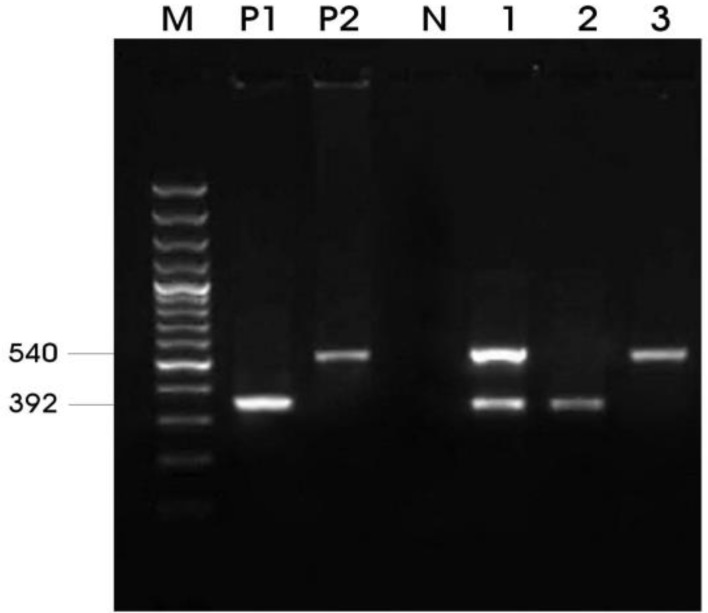
Equine piroplasmosis is a severe disease of horses caused by the intra-erythrocyte protozoan, Theileria equi and Babesia caballi. The aim of this study was to identify equine piroplasmosis based on molecular and morphometrical features in horses in suburb of Urmia, West Azerbaijan province, Iran. From April to September 2011, a total number of 240 blood samples were collected randomly from horses of 25 villages. The specimens were transferred to the laboratory and the blood smears stained with Geimsa, and the morphological and biometrical data of parasite in any infected erythrocyte were considered. Extracted DNA from each blood sample was used in multiplex PCR in order to confirm the presence of B. caballi and T. equi. Microscopic observation on 240 blood smears determined that 15 (6.25%) and 5 (2.80%) samples were infected by T. equi and B. caballi, respectively. The mixed infections occurred in 2 (0.83%) samples. The results of the PCR assays showed 26 (10.83%), 14 (5.83%) and 4 (1.66%) were distinguished as T. equi, B. caballi and mixed infection, respectively. Differences in infection rates were statistically nonsignificant between male and female horses and among different age groups. Our findings indicated that T. equi and B. caballi were prevalent in horse population.
马焦虫病是由红细胞内原生动物——马泰勒虫和驽巴贝斯虫引起的马的一种严重疾病。本研究的目的是基于伊朗西阿塞拜疆省乌尔米耶郊区马匹的分子和形态测量特征来鉴定马焦虫病。2011年4月至9月,从25个村庄的马匹中随机采集了总共240份血样。标本被送往实验室,血涂片用吉姆萨染色,并考虑任何感染红细胞内寄生虫的形态和生物测量数据。从每份血样中提取的DNA用于多重PCR,以确认驽巴贝斯虫和马泰勒虫的存在。对240份血涂片的显微镜观察确定,分别有15份(6.25%)和5份(2.80%)样本感染了马泰勒虫和驽巴贝斯虫。2份(0.83%)样本发生了混合感染。PCR检测结果显示,分别有26份(10.83%)、14份(5.83%)和4份(1.66%)被鉴定为马泰勒虫、驽巴贝斯虫和混合感染。雄性和雌性马匹以及不同年龄组之间的感染率差异在统计学上无显著意义。我们的研究结果表明,马泰勒虫和驽巴贝斯虫在马群中普遍存在。