Sobarzo Ariel, Eskira Yael, Herbert Andrew S, Kuehne Ana I, Stonier Spencer W, Ochayon David E, Fedida-Metula Shlomit, Balinandi Steven, Kislev Yaara, Tali Neta, Lewis Eli C, Lutwama Julius Julian, Dye John M, Yavelsky Victoria, Lobel Leslie
Department of Microbiology, Immunology and Genetics, Faculty of Health Sciences, Ben-Gurion University of the Negev, Beer-Sheva 8410501, Israel.
Virology Division-U.S. Army Medical Research Institute of Infectious Diseases, 1425 Porter St., Fort Detrick, Frederick, MD 21701, USA.
Viruses. 2015 Jan 6;7(1):37-51. doi: 10.3390/v7010037.
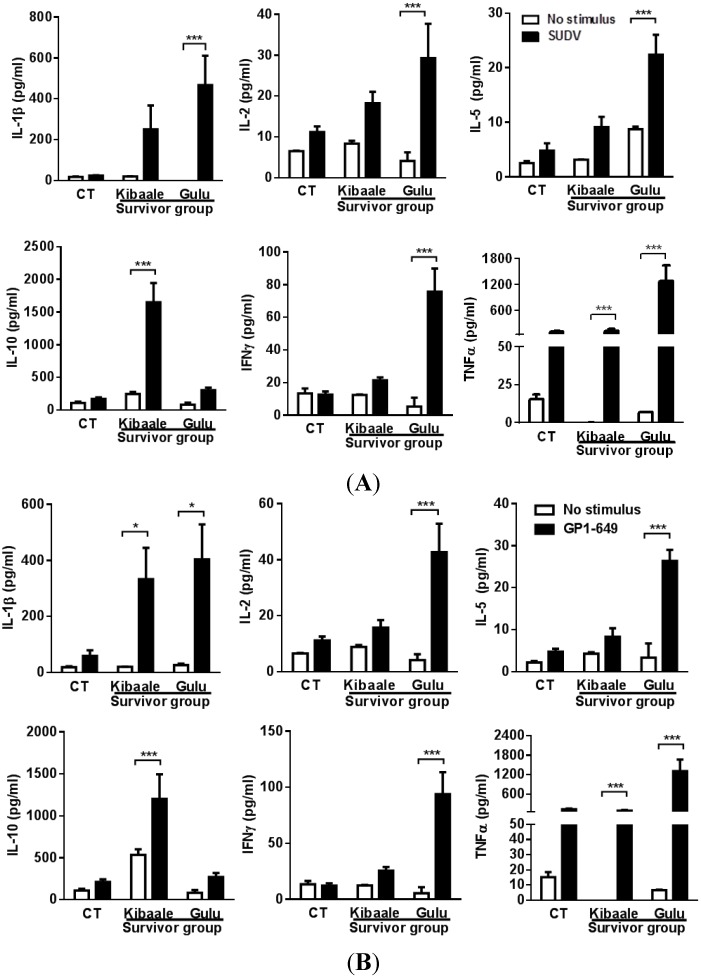
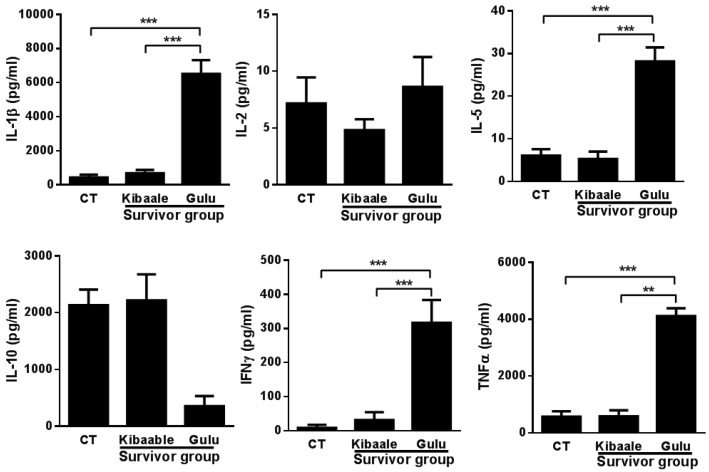
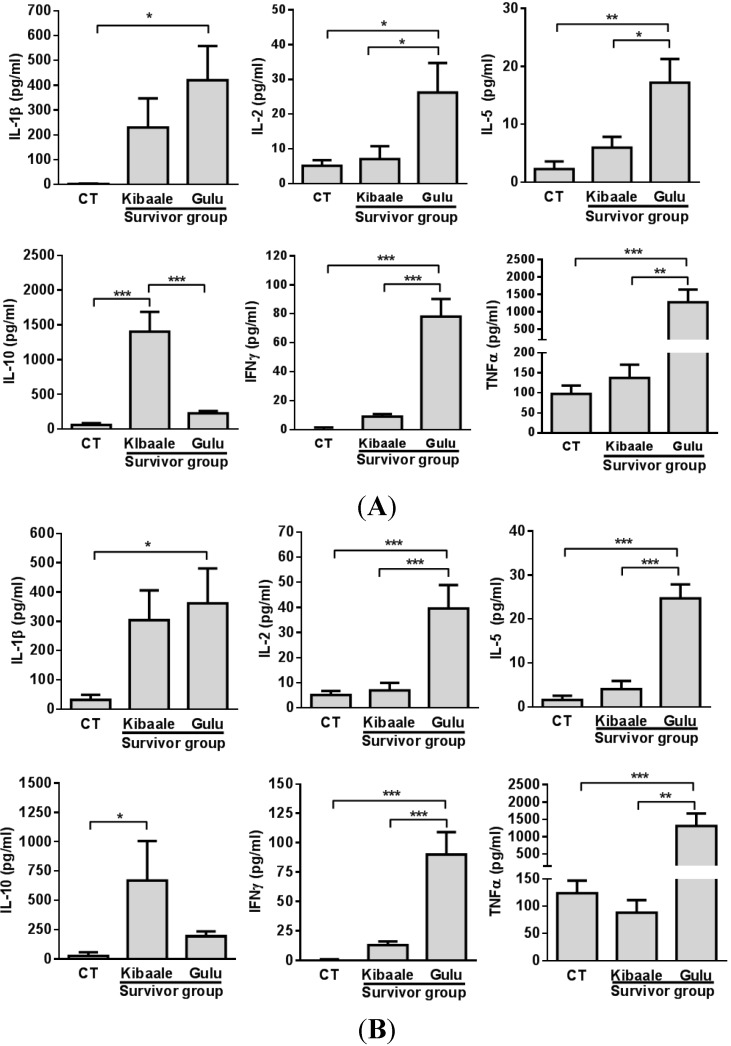
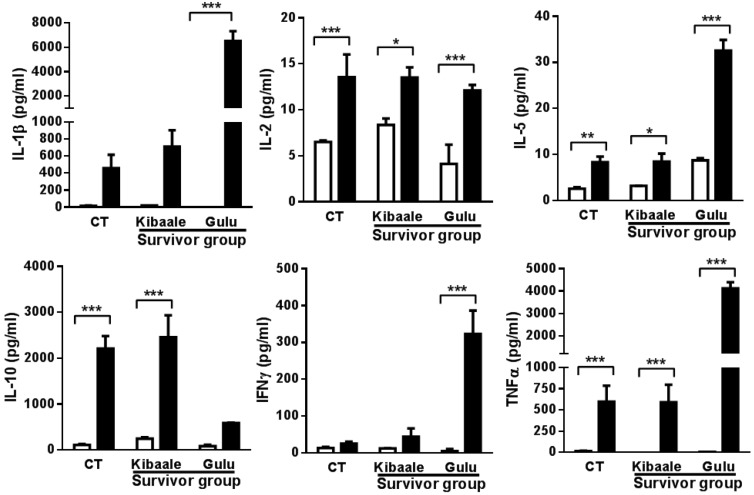
Recovery from ebolavirus infection in humans is associated with the development of both cell-mediated and humoral immune responses. According to recent studies, individuals that did not survive infection with ebolaviruses appear to have lacked a robust adaptive immune response and the expression of several early innate response markers. However, a comprehensive protective immune profile has yet to be described. Here, we examine cellular memory immune responses among survivors of two separate Ebolavirus outbreaks (EVDs) due to Sudan virus (SUDV) infection in Uganda-Gulu 2000-2001 and Kibaale 2012. Freshly collected blood samples were stimulated with inactivated SUDV, as well as with recombinant SUDV or Ebola virus (EBOV) GP (GP1-649). In addition, ELISA and plaque reduction neutralization assays were performed to determine anti-SUDV IgG titers and neutralization capacity. Cytokine expression was measured in whole blood cultures in response to SUDV and SUDV GP stimulation in both survivor pools, demonstrating recall responses that indicate immune memory. Cytokine responses between groups were similar but had distinct differences. Neutralizing, SUDV-specific IgG activity against irradiated SUDV and SUDV recombinant proteins were detected in both survivor cohorts. Furthermore, humoral and cell-mediated crossreactivity to EBOV and EBOV recombinant GP1-649 was observed in both cohorts. In conclusion, immune responses in both groups of survivors demonstrate persistent recognition of relevant antigens, albeit larger cohorts are required in order to reach greater statistical significance. The differing cytokine responses between Gulu and Kibaale outbreak survivors suggests that each outbreak may not yield identical memory responses and promotes the merits of studying the immune responses among outbreaks of the same virus. Finally, our demonstration of cross-reactive immune recognition suggests that there is potential for developing cross-protective vaccines for ebolaviruses.
人类从埃博拉病毒感染中恢复与细胞介导免疫反应和体液免疫反应的发展相关。根据最近的研究,未在埃博拉病毒感染中存活的个体似乎缺乏强大的适应性免疫反应以及几种早期先天反应标志物的表达。然而,全面的保护性免疫概况尚未得到描述。在此,我们研究了2000 - 2001年乌干达古卢和2012年基巴莱因苏丹病毒(SUDV)感染导致的两次独立埃博拉病毒疫情(EVD)幸存者中的细胞记忆免疫反应。用灭活的SUDV以及重组SUDV或埃博拉病毒(EBOV)糖蛋白(GP1 - 649)刺激新鲜采集的血样。此外,进行了酶联免疫吸附测定(ELISA)和蚀斑减少中和试验以确定抗SUDV IgG滴度和中和能力。在两个幸存者组中,测量了全血培养物中对SUDV和SUDV GP刺激的细胞因子表达,证明了表明免疫记忆的回忆反应。两组之间的细胞因子反应相似但存在明显差异。在两个幸存者队列中均检测到针对辐照SUDV和SUDV重组蛋白的中和性、SUDV特异性IgG活性。此外,在两个队列中均观察到对EBOV和EBOV重组GP1 - 649的体液和细胞介导的交叉反应性。总之,两组幸存者的免疫反应均显示出对相关抗原的持续识别,尽管需要更大的队列才能达到更高的统计学显著性。古卢和基巴莱疫情幸存者之间不同的细胞因子反应表明,每次疫情可能不会产生相同的记忆反应,并凸显了研究同一病毒不同疫情间免疫反应的价值。最后,我们对交叉反应性免疫识别的证明表明,开发针对埃博拉病毒的交叉保护性疫苗具有潜力。