Wan Zhongxiao, Mah Dorrian, Simtchouk Svetlana, Kluftinger Andreas, Little Jonathan P
School of Health and Exercise Sciences, University of British Columbia Okanagan, Kelowna, BC V1V 1V7, Canada.
Department of Surgery, University of British Columbia; General, Laparoscopic, Endocrine and Gastric Band Surgery, 203-3040 Tutt St., Kelowna, BC V1Y 2H5, Canada.
Int J Mol Sci. 2015 Jan 6;16(1):1221-31. doi: 10.3390/ijms16011221.
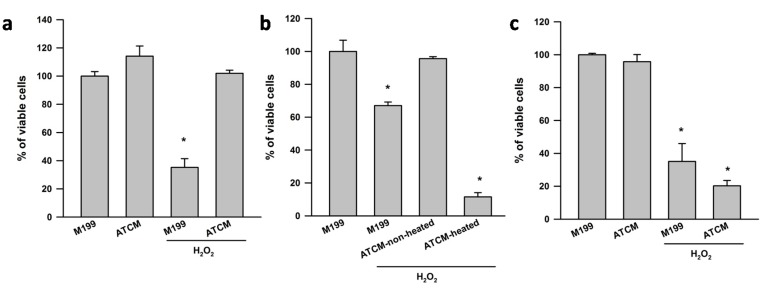
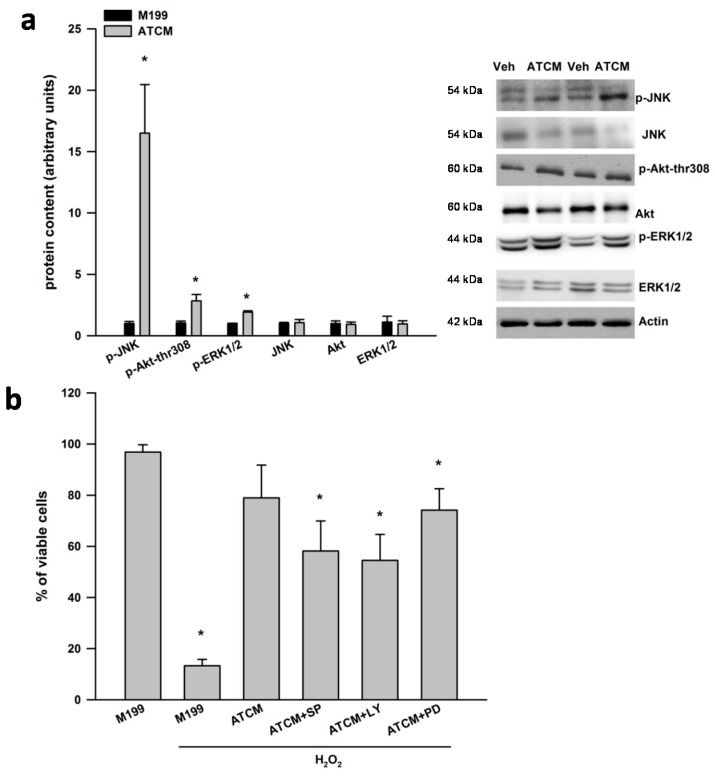
Adipose tissue secretes numerous hormone-like factors, which are known as adipokines. Adipokine receptors have been identified in the central nervous system but the potential role of adipokine signaling in neuroprotection is unclear. The aim of this study is to determine (1) Whether adipokines secreted from cultured adipose tissue of lean humans is protective against oxidative stress-induced neurotoxicity in human SH-SY5Y neuronal cells; and (2) To explore potential signaling pathways involved in these processes. Adipose tissue conditioned media (ATCM) from healthy lean subjects completely prevented H2O2 induced neurotoxicity, while this effect is lost after heating ATCM. ATCM activated the phosphorylation of ERK1/2, JNK and Akt at serine 308 in SH-SY5Y cells. PD98059 (25 µM), SP600125 (5 µM) and LY29400 (20 µM) partially blocked the protective effects of ATCM against H2O2 induced neurotoxicity. Findings demonstrate that heat-sensitive factors secreted from human adipose tissue of lean subjects are protective against H2O2 induced neurotoxicity and ERK1/2, JNK, and PI3K signaling pathways are involved in these processes. In conclusion, this study demonstrates preliminary but encouraging data to further support that adipose tissue secreted factors from lean human subjects might possess neuroprotective properties and unravel the specific roles of ERK1/2, JNK and PI3K in these processes.
脂肪组织分泌多种激素样因子,这些因子被称为脂肪因子。脂肪因子受体已在中枢神经系统中被鉴定出来,但脂肪因子信号传导在神经保护中的潜在作用尚不清楚。本研究的目的是确定:(1)来自瘦人培养脂肪组织分泌的脂肪因子是否对人SH-SY5Y神经元细胞中氧化应激诱导的神经毒性具有保护作用;以及(2)探索这些过程中涉及的潜在信号通路。来自健康瘦人的脂肪组织条件培养基(ATCM)完全预防了过氧化氢诱导的神经毒性,而加热ATCM后这种作用消失。ATCM激活了SH-SY5Y细胞中ERK1/2、JNK和丝氨酸308位点的Akt的磷酸化。PD98059(25μM)、SP600125(5μM)和LY29400(20μM)部分阻断了ATCM对过氧化氢诱导的神经毒性的保护作用。研究结果表明,瘦人脂肪组织分泌的热敏感因子对过氧化氢诱导的神经毒性具有保护作用,并且ERK1/2、JNK和PI3K信号通路参与了这些过程。总之,本研究展示了初步但令人鼓舞的数据,进一步支持了瘦人脂肪组织分泌的因子可能具有神经保护特性,并揭示了ERK1/2、JNK和PI3K在这些过程中的具体作用。