Rui Yehua, Tong Lingxia, Cheng Jinbo, Wang Guiping, Qin Liqiang, Wan Zhongxiao
Department of Nutrition and Food Hygiene, School of Public Health, Soochow University, Suzhou, PR China.
Department of Obstetrics and Gynecology, The Second Affiliated Hospital of Soochow University, Suzhou, PR China.
Food Nutr Res. 2017 Jun 7;61(1):1330096. doi: 10.1080/16546628.2017.1330096. eCollection 2017.
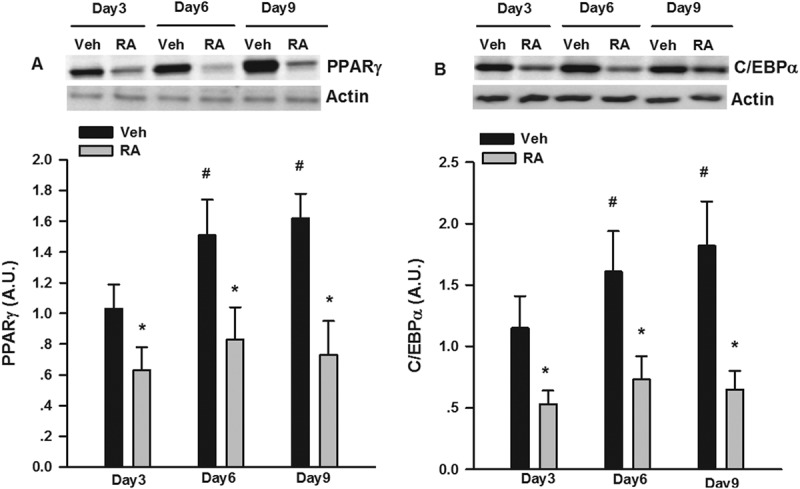
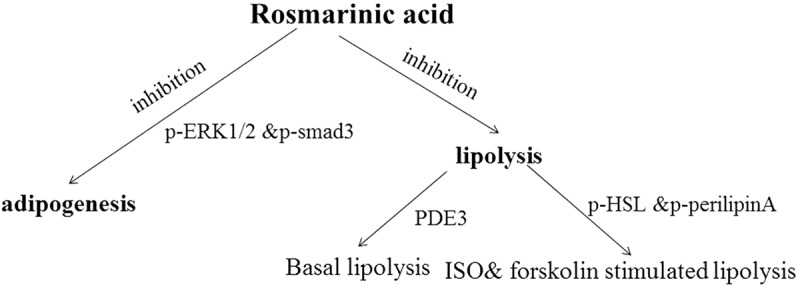
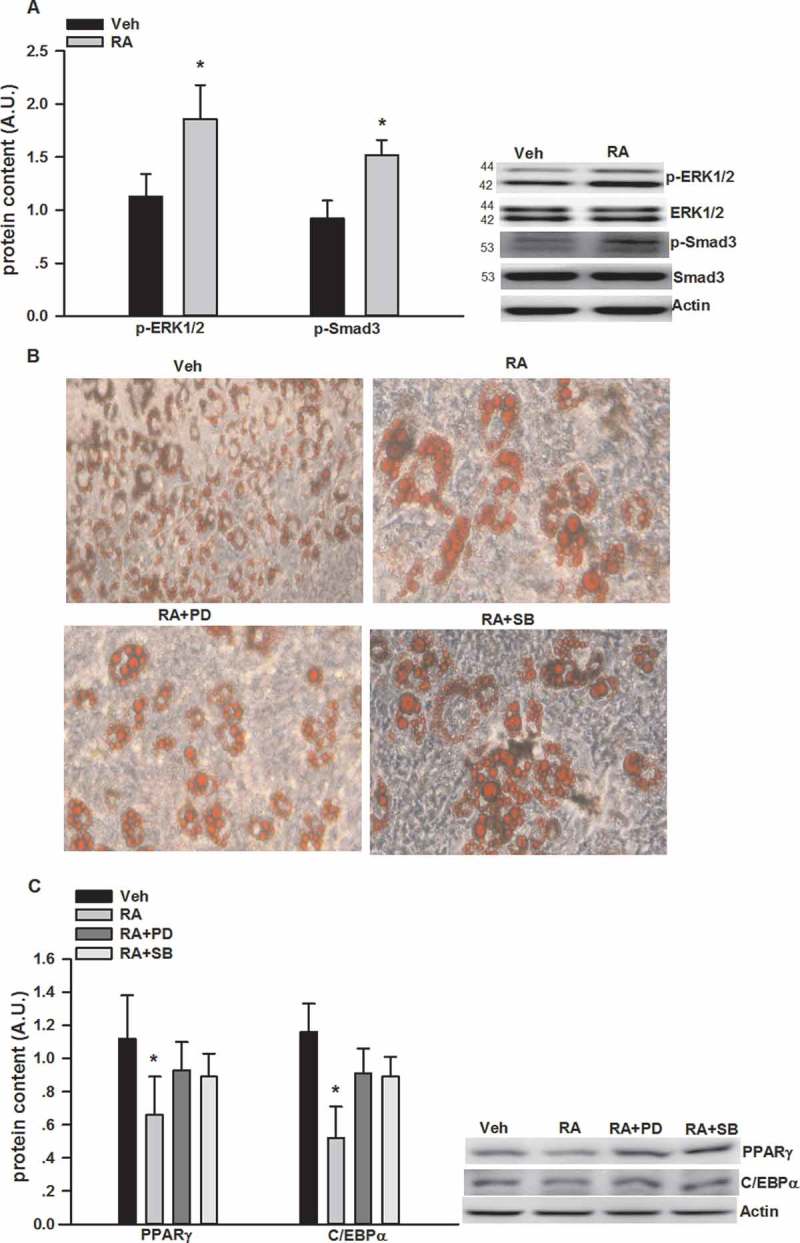
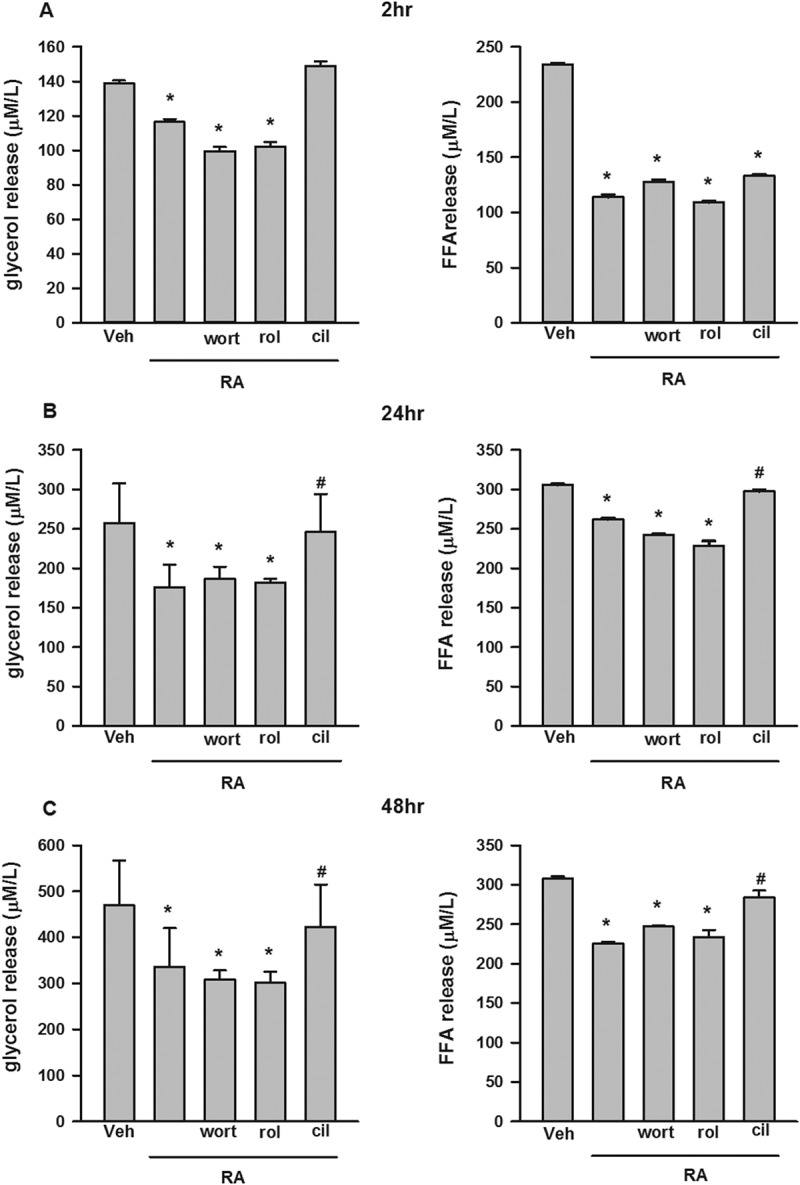
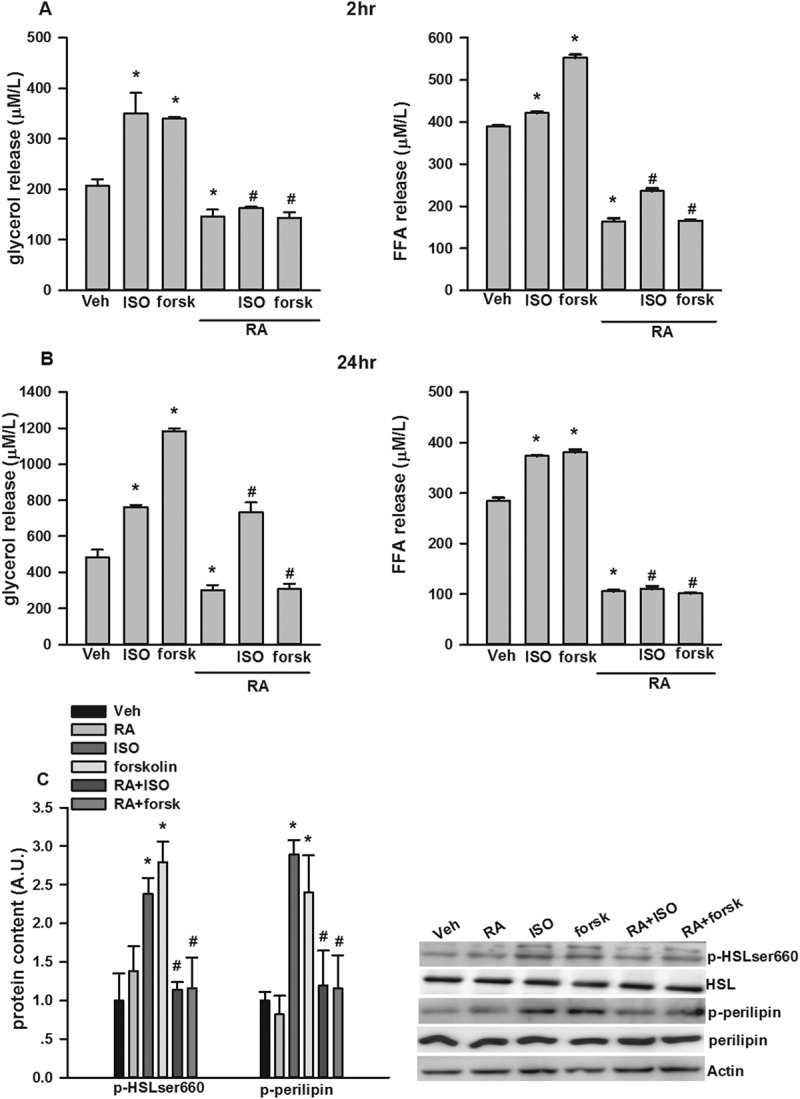
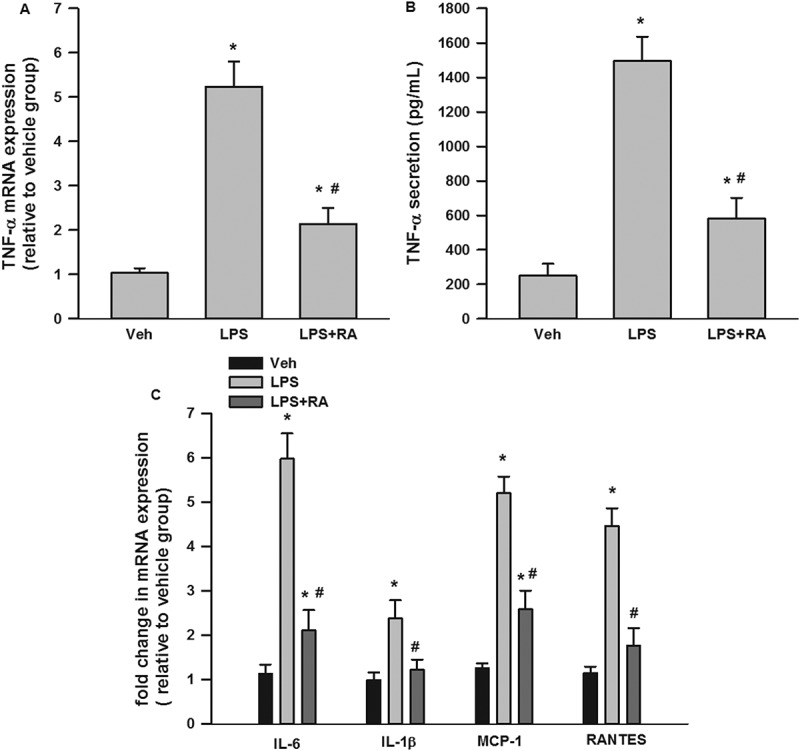
: Rosmarinic acid (RA) is a natural phenol carboxylic acid with many promising biological effects. It may be a suitable candidate for improving obesity-related adipose tissue dysfunction. : We aimed to investigate the therapeutic use of RA as an anti-obesity agent by measuring its effects on adipogenesis, lipolysis, and messenger RNA (mRNA) expression of major adipokines in 3T3-L1 adipocytes; and its effects on lipopolysaccharide (LPS)-induced tumor necrosis factor-α (TNF-α) secretion in macrophages and inflammatory mediators in 3T3-L1 adipocytes incubated with macrophage-conditioned medium (MCM). : 3T3-L1 preadipocytes were used to explore how RA affects adipogenesis, as well as the involvement of phosphorylated extracellular signal-regulated kinase-1/2 (p-ERK1/2) and mothers against decapentaplegic homolog 3 (p-Smad3). 3T3-L1 preadipocytes were also differentiated into mature adipocytes to explore how RA affects basal and isoproterenol- and forskolin-stimulated lipolysis; and how RA affects key adipokines' mRNA expression. RAW 264.7 macrophages were stimulated with LPS in the absence or presence of RA to explore RA's effects on TNF-α secretion. MCM was collected and 3T3-L1 adipocytes were incubated with MCM to explore RA's effects on interleukin-6 (IL-6), IL-1β, monocyte chemoattractant protein-1 (MCP-1), and RANTES mRNA expression. : During the preadipocyte differentiation process, RA suppressed peroxisome proliferator-activated receptor-γ and CCAAT/enhancer binding protein-α, and activated p-ERK1/2 and p-Smad3; inhibition of adipogenesis by RA was partially restored following treatment with p-ERK1/2 and p-Smad3 inhibitors. In mature adipocytes, RA inhibited basal lipolysis; phosphodiesterase-3 inhibitor reversed this. RA also inhibited isoproterenol- and forskolin-stimulated glycerol and free fatty acid release, and the phosphorylation of hormone-sensitive lipase and perilipin. RA had no effects on leptin, adiponectin, resistin, or visfatin mRNA expression. RA suppressed TNF-α mRNA expression and secretion in LPS-stimulated RAW 264.7 macrophages; and reduced LPS-MCM-induced IL-6, IL-1β, MCP-1, and RANTES mRNA expression in 3T3-L1 adipocytes. : RA exerts inhibitory effects on adipogenesis, lipolysis, and inflammation. RA could be a promising natural product for improving adipose mobilization in obesity.
迷迭香酸(RA)是一种具有多种潜在生物学效应的天然酚类羧酸。它可能是改善肥胖相关脂肪组织功能障碍的合适候选物。我们旨在通过测量RA对3T3-L1脂肪细胞中脂肪生成、脂肪分解和主要脂肪因子信使核糖核酸(mRNA)表达的影响,研究其作为抗肥胖药物的治疗用途;以及它对巨噬细胞中脂多糖(LPS)诱导的肿瘤坏死因子-α(TNF-α)分泌和与巨噬细胞条件培养基(MCM)共孵育的3T3-L1脂肪细胞中炎症介质的影响。使用3T3-L1前脂肪细胞来探究RA如何影响脂肪生成,以及磷酸化细胞外信号调节激酶-1/2(p-ERK1/2)和抗五聚体蛋白3(p-Smad3)的参与情况。3T3-L1前脂肪细胞也分化为成熟脂肪细胞,以探究RA如何影响基础、异丙肾上腺素和福斯高林刺激的脂肪分解;以及RA如何影响关键脂肪因子的mRNA表达。在有无RA的情况下,用LPS刺激RAW 264.7巨噬细胞,以探究RA对TNF-α分泌的影响。收集MCM并将3T3-L1脂肪细胞与MCM共孵育,以探究RA对白细胞介素-6(IL-6)、IL-1β、单核细胞趋化蛋白-1(MCP-1)和调节激活正常T细胞表达和分泌因子(RANTES)mRNA表达的影响。在前脂肪细胞分化过程中,RA抑制过氧化物酶体增殖物激活受体-γ和CCAAT/增强子结合蛋白-α,并激活p-ERK1/2和p-Smad3;用p-ERK1/2和p-Smad3抑制剂处理后,RA对脂肪生成的抑制作用部分恢复。在成熟脂肪细胞中,RA抑制基础脂肪分解;磷酸二酯酶-3抑制剂可逆转此作用。RA还抑制异丙肾上腺素和福斯高林刺激的甘油和游离脂肪酸释放,以及激素敏感性脂肪酶和 perilipin的磷酸化。RA对瘦素、脂联素、抵抗素或内脏脂肪素mRNA表达无影响。RA抑制LPS刺激的RAW 264.7巨噬细胞中TNF-α mRNA表达和分泌;并降低LPS-MCM诱导的3T3-L1脂肪细胞中IL-6、IL-1β、MCP-1和RANTES mRNA表达。RA对脂肪生成、脂肪分解和炎症具有抑制作用。RA可能是一种有前景的天然产物,可改善肥胖中的脂肪动员。