Zhang Hong, Chang Jessica T, Guo Bin, Hansen Malene, Jia Kailiang, Kovács Attila L, Kumsta Caroline, Lapierre Louis R, Legouis Renaud, Lin Long, Lu Qun, Meléndez Alicia, O'Rourke Eyleen J, Sato Ken, Sato Miyuki, Wang Xiaochen, Wu Fan
a State Key Laboratory of Biomacromolecules; Institute of Biophysics; Chinese Academy of Sciences ; Beijing , China.
Autophagy. 2015;11(1):9-27. doi: 10.1080/15548627.2014.1003478.
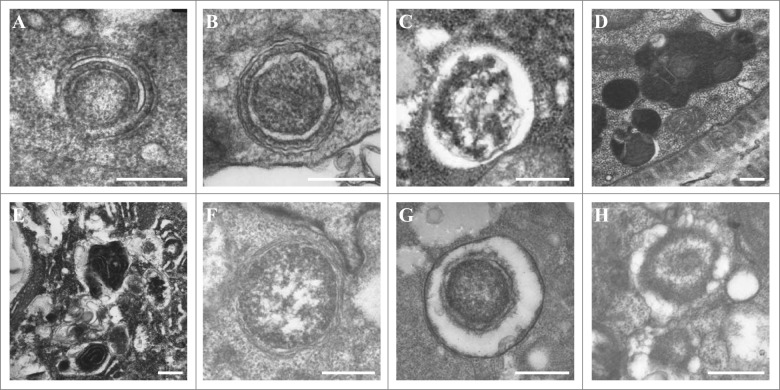
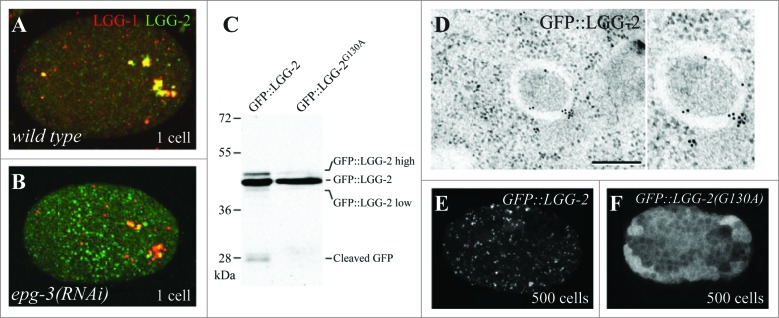
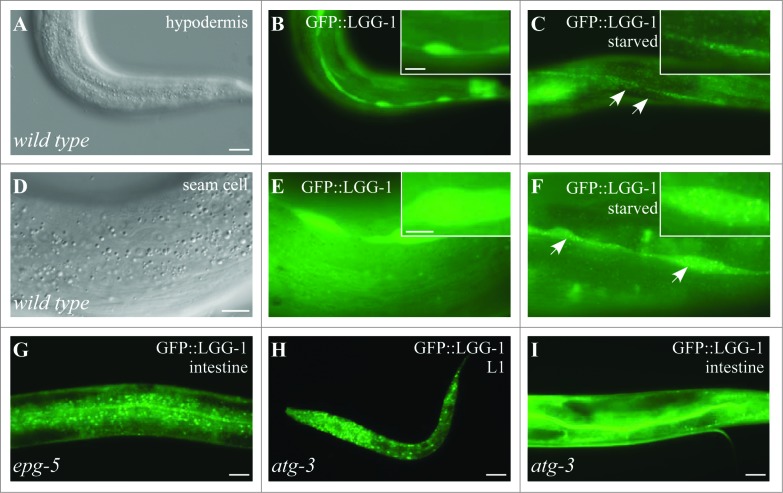
The cellular recycling process of autophagy has been extensively characterized with standard assays in yeast and mammalian cell lines. In multicellular organisms, numerous external and internal factors differentially affect autophagy activity in specific cell types throughout the stages of organismal ontogeny, adding complexity to the analysis of autophagy in these metazoans. Here we summarize currently available assays for monitoring the autophagic process in the nematode C. elegans. A combination of measuring levels of the lipidated Atg8 ortholog LGG-1, degradation of well-characterized autophagic substrates such as germline P granule components and the SQSTM1/p62 ortholog SQST-1, expression of autophagic genes and electron microscopy analysis of autophagic structures are presently the most informative, yet steady-state, approaches available to assess autophagy levels in C. elegans. We also review how altered autophagy activity affects a variety of biological processes in C. elegans such as L1 survival under starvation conditions, dauer formation, aging, and cell death, as well as neuronal cell specification. Taken together, C. elegans is emerging as a powerful model organism to monitor autophagy while evaluating important physiological roles for autophagy in key developmental events as well as during adulthood.
自噬的细胞循环过程已通过酵母和哺乳动物细胞系中的标准检测方法得到了广泛的表征。在多细胞生物中,众多外部和内部因素在生物体个体发育的各个阶段对特定细胞类型的自噬活性产生不同影响,这增加了在这些后生动物中分析自噬的复杂性。在这里,我们总结了目前可用于监测线虫秀丽隐杆线虫自噬过程的检测方法。测量脂化的Atg8直系同源物LGG-1的水平、对特征明确的自噬底物(如生殖系P颗粒成分)和SQSTM1/p62直系同源物SQST-1的降解、自噬基因的表达以及对自噬结构的电子显微镜分析,这些方法的组合目前是评估秀丽隐杆线虫自噬水平最具信息量且处于稳态的方法。我们还回顾了自噬活性的改变如何影响秀丽隐杆线虫中的各种生物学过程,如饥饿条件下的L1存活、滞育形成、衰老和细胞死亡,以及神经元细胞特化。综上所述,秀丽隐杆线虫正在成为一种强大的模式生物,可用于监测自噬,同时评估自噬在关键发育事件以及成年期的重要生理作用。