
成纤维细胞生长因子相关癌蛋白INT-2的检测与特性分析
Detection and characterization of the fibroblast growth factor-related oncoprotein INT-2.
作者信息
Dixon M, Deed R, Acland P, Moore R, Whyte A, Peters G, Dickson C
机构信息
Imperial Cancer Research Fund Laboratories, Lincoln's Inn Fields, London, United Kingdom.
出版信息
Mol Cell Biol. 1989 Nov;9(11):4896-902. doi: 10.1128/mcb.9.11.4896-4902.1989.
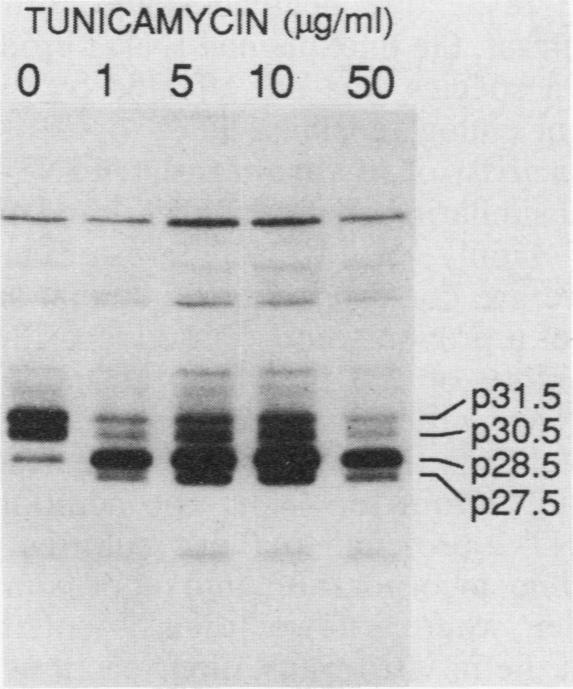
Products of the fibroblast growth factor-related proto-oncogene int-2 have been detected by using a monoclonal antibody and polyclonal antisera raised against synthetic peptides predicted from the DNA sequence. COS-1 monkey cells transfected with int-2 DNA linked to the simian virus 40 early promoter contained at least four int-2-specific proteins, presumably representing modified forms of the expected 27-kilodalton primary translation product. The level of expression was increased approximately six- to eightfold by mutation of sequences around the presumed initiation codon, negating their capacity to encode a short oligopeptide in the +1 reading frame. Both tunicamycin inhibition and in vitro translation experiments indicated that some of the modifications correspond to asparagine-linked glycosylation, for which the sequence predicts a single site. In line with the similarities between INT-2 and other fibroblast growth factors, the in vitro translation products functioned as weak mitogens for mammary epithelial cells.
利用一种单克隆抗体和针对根据DNA序列预测的合成肽产生的多克隆抗血清,检测到了成纤维细胞生长因子相关原癌基因int-2的产物。用与猿猴病毒40早期启动子相连的int-2 DNA转染的COS-1猴细胞含有至少四种int-2特异性蛋白,推测它们代表预期的27千道尔顿初级翻译产物的修饰形式。通过假定起始密码子周围序列的突变,表达水平增加了约六至八倍,消除了它们在+1阅读框中编码短寡肽的能力。衣霉素抑制实验和体外翻译实验均表明,某些修饰与天冬酰胺连接的糖基化有关,该序列预测有一个单一的糖基化位点。与INT-2和其他成纤维细胞生长因子之间的相似性一致,体外翻译产物对乳腺上皮细胞起弱促有丝分裂原的作用。



 Zotero 插件