Dinglas Victor D, Huang Minxuan, Sepulveda Kristin A, Pinedo Mariela, Hopkins Ramona O, Colantuoni Elizabeth, Needham Dale M
Outcomes After Critical Illness and Surgery (OACIS) Group, Johns Hopkins University, 1830 E Monument Street, 5th floor, 21205 Baltimore, MD, USA.
BMC Med Res Methodol. 2015 Jan 9;15:5. doi: 10.1186/1471-2288-15-5.
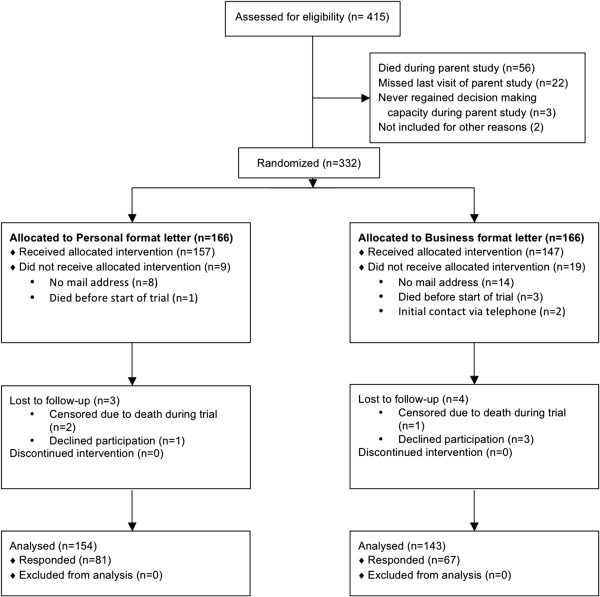
Effective strategies for contacting and recruiting study participants are critical in conducting clinical research. In this study, we conducted two sequential randomized controlled trials of mail- and telephone-based strategies for contacting and recruiting participants, and evaluated participant-related variables' association with time to survey completion and survey completion rates. Subjects eligible for this study were survivors of acute lung injury who had been previously enrolled in a 12-month observational follow-up study evaluating their physical, cognitive and mental health outcomes, with their last study visit completed at a median of 34 months previously.
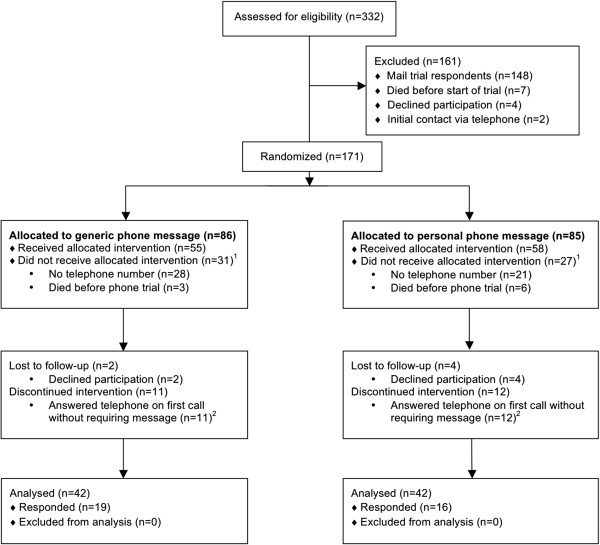
Eligible subjects were contacted to complete a new research survey as part of two randomized trials, initially using a randomized mail-based contact strategy, followed by a randomized telephone-based contact strategy for non-responders to the mail strategy. Both strategies focused on using either a personalized versus a generic approach. In addition, 18 potentially relevant subject-related variables (e.g., demographics, last known physical and mental health status) were evaluated for association with time to survey completion.
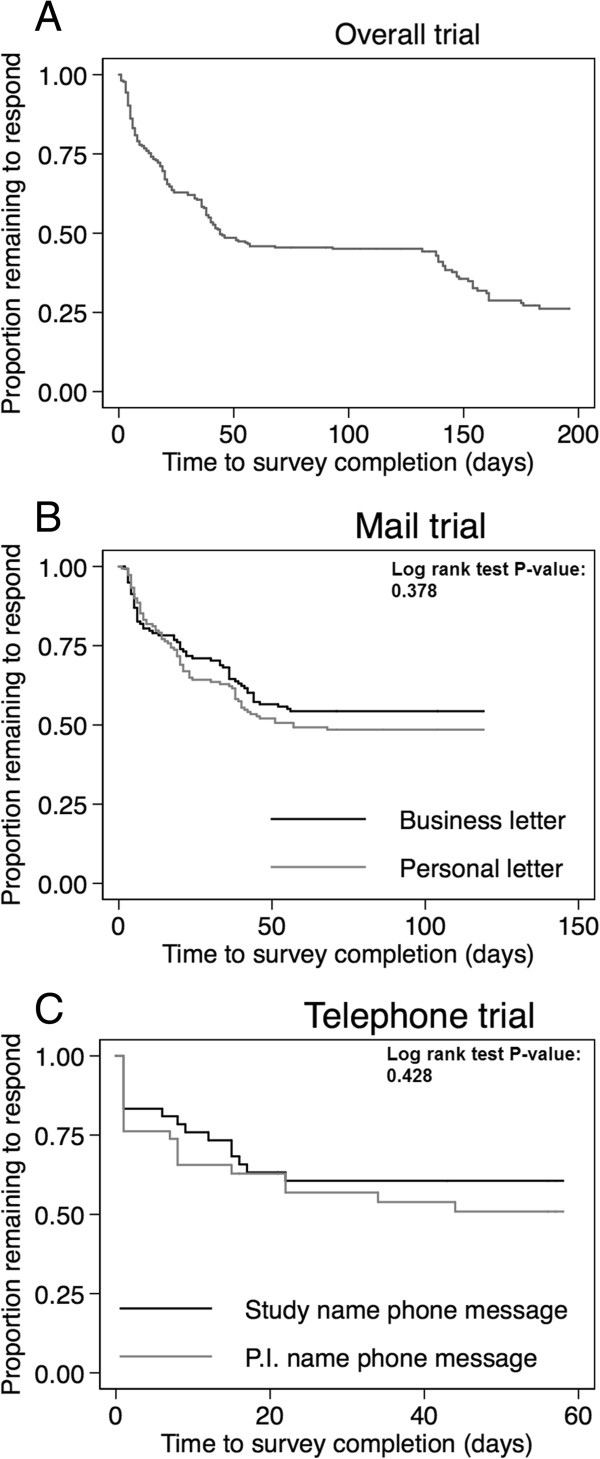
Of 308 eligible subjects, 67% completed the survey with a median (IQR) of 3 (2, 5) contact attempts required. There was no significant difference in the time to survey completion for either randomized trial of mail- or phone-based contact strategy. Among all subject-related variables, age ≤40 years and minority race were independently associated with a longer time to survey completion.
We found that age ≤40 years and minority race were associated with a longer time to survey completion, but personalized versus generic approaches to mail- and telephone-based contact strategies had no significant effect. Repeating both mail and telephone contact attempts was important for increasing survey completion rate.
NCT00719446.
在开展临床研究时,联系和招募研究参与者的有效策略至关重要。在本研究中,我们先后进行了两项随机对照试验,分别采用邮寄和电话策略来联系和招募参与者,并评估了与参与者相关的变量与完成调查所需时间及调查完成率之间的关联。符合本研究条件的受试者为急性肺损伤幸存者,他们此前参加了一项为期12个月的观察性随访研究,评估其身体、认知和心理健康状况,最后一次研究访视在中位数时间34个月前完成。
作为两项随机试验的一部分,我们联系符合条件的受试者以完成一项新的研究调查,最初采用基于邮寄的随机联系策略,随后对于未回应邮寄策略的受试者采用基于电话的随机联系策略。两种策略都侧重于采用个性化方法与通用方法。此外,我们评估了18个可能相关的受试者相关变量(如人口统计学特征、最后已知的身体和心理健康状况)与完成调查所需时间的关联。
在308名符合条件的受试者中,67%完成了调查,完成调查所需的中位数(四分位间距)为3(2,5)次联系尝试。基于邮寄或电话的联系策略的两项随机试验在完成调查所需时间上均无显著差异。在所有与受试者相关的变量中,年龄≤40岁和少数族裔与完成调查所需时间较长独立相关。
我们发现年龄≤40岁和少数族裔与完成调查所需时间较长有关,但基于邮寄和电话的联系策略采用个性化方法与通用方法并无显著效果。重复邮寄和电话联系尝试对于提高调查完成率很重要。
NCT00719446。