Zhi Xu, Lamperska Katarzyna, Golusinski Paweł, Schork Nicholas J, Luczewski Lukasz, Kolenda Tomasz, Golusinski Wojciech, Masternak Michal M
Department of Obstetrics and Gynecology, Center for Reproductive Medicine, Peking University Third Hospital, Beijing, China. College of Medicine, Burnett School of Biomedical Sciences, University of Central Florida, Orlando, FL, USA.
Deptartment of Cancer Genetics, Greater Poland Cancer Centre, Poznan, Poland.
Oncotarget. 2015 Jan 1;6(1):547-55. doi: 10.18632/oncotarget.2772.
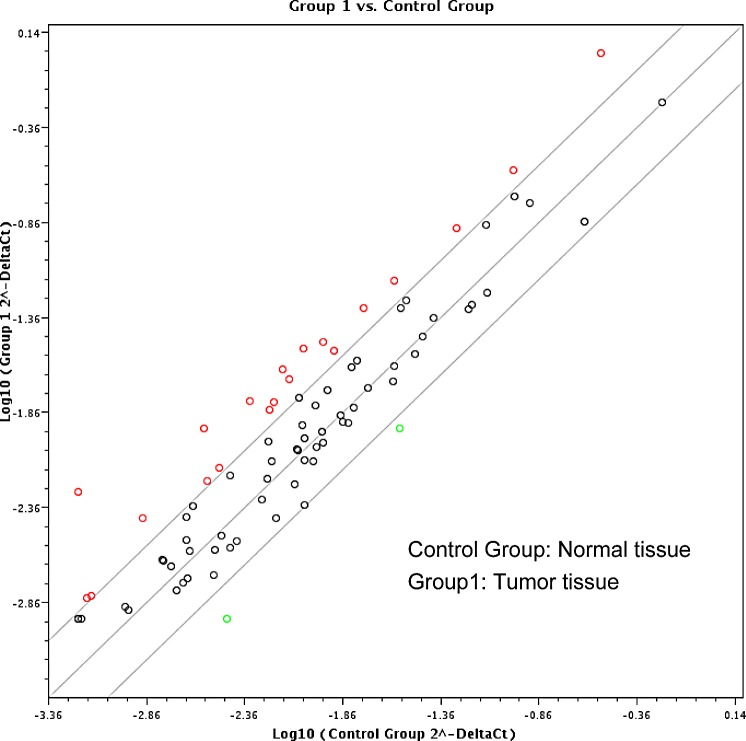
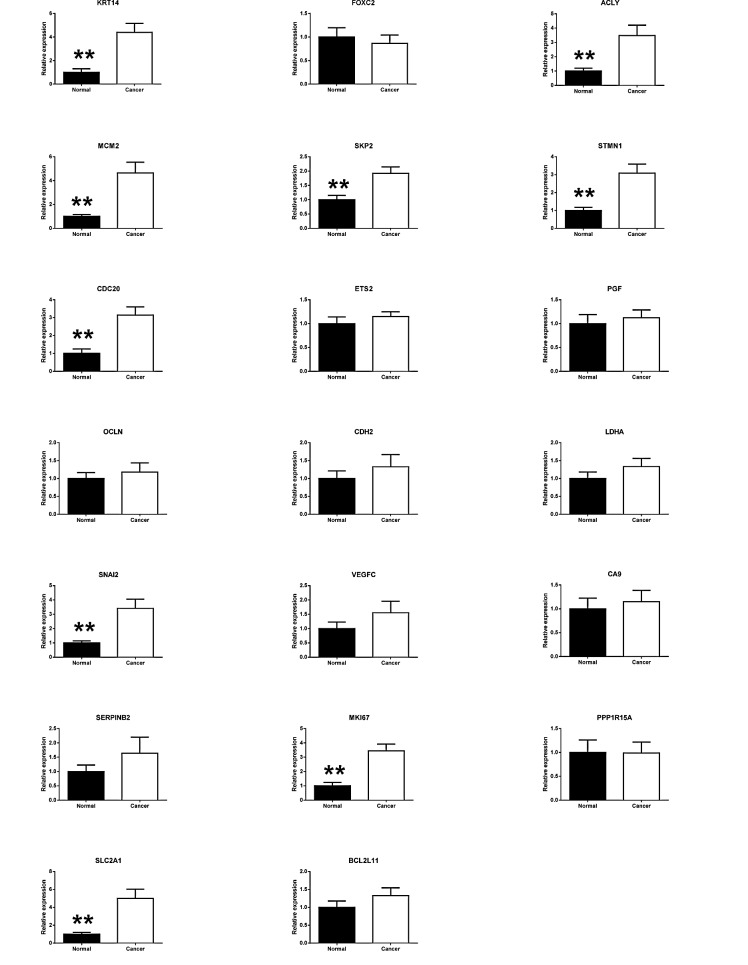
The squamous cell carcinomas represent about 90 % of all head and neck cancers, ranking the sixth most common human cancer. Approximately 450,000 of new cases of head and neck squamous cell carcinoma (HNSCC) are diagnosed every year. Unfortunately, because of diagnosis at the advanced stages and early metastasis to the lymph nodes, the HNSCC is associated with very high death rate. Identification of signature biomarkers and molecularly targeted therapies could provide more effective and specific cancer treatment, prevent recurrence, and increase survival rate. We used paired tumor and adjacent normal tissue samples to screen with RT² Profiler™ PCR Array Human Cancer PathwayFinderTM . Total of 20 up-regulated genes and two down-regulated genes were screened out. Out of 22 genes, 12 genes were subsequently validated to be significantly altered in the HNSCC; the samples were from all 41 patients. Five year survival and recurrence selected genes that could represent the biomarkers of survival and recurrence of the disease. We believe that comprehensive understanding of the unique genetic characteristics of HNSCC could provide novel diagnostic biomarkers and meet the requirement for molecular-targeted therapy for the HNSCC.
鳞状细胞癌约占所有头颈癌的90%,是第六大常见人类癌症。每年约有45万例新的头颈鳞状细胞癌(HNSCC)病例被诊断出来。不幸的是,由于HNSCC多在晚期被诊断出来且早期就会转移至淋巴结,其死亡率非常高。识别标志性生物标志物和分子靶向疗法可以提供更有效、更具特异性的癌症治疗,预防复发并提高生存率。我们使用配对的肿瘤组织和癌旁正常组织样本,通过RT² Profiler™ PCR Array Human Cancer PathwayFinderTM进行筛选。共筛选出20个上调基因和2个下调基因。在这22个基因中,随后对来自41例患者的样本进行验证,发现有12个基因在HNSCC中发生了显著改变。五年生存率和复发情况筛选出了可代表该疾病生存和复发生物标志物的基因。我们相信,全面了解HNSCC独特的遗传特征可为其提供新的诊断生物标志物,并满足HNSCC分子靶向治疗的需求。