Gu Ai-Di, Zhang Song, Wang Yunqi, Xiong Hui, Curtis Thomas A, Wan Yisong Y
Lineberger Comprehensive Cancer Center, University of North Carolina at Chapel Hill, Chapel Hill, NC 27599, USA; Department of Microbiology and Immunology, University of North Carolina at Chapel Hill, Chapel Hill, NC 27599, USA.
Lineberger Comprehensive Cancer Center, University of North Carolina at Chapel Hill, Chapel Hill, NC 27599, USA; Department of Microbiology and Immunology, University of North Carolina at Chapel Hill, Chapel Hill, NC 27599, USA; Jiangsu Center for the Collaboration and Innovation of Cancer Biotherapy, Cancer Institute, Xuzhou Medical College, Xuzhou, Jiangsu 221002, China.
Immunity. 2015 Jan 20;42(1):68-79. doi: 10.1016/j.immuni.2014.12.019. Epub 2014 Dec 25.
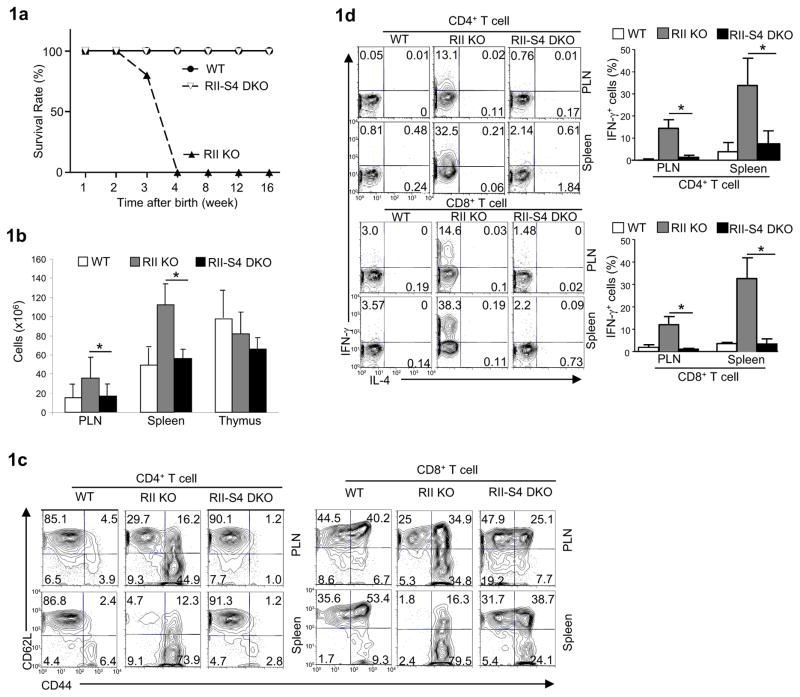
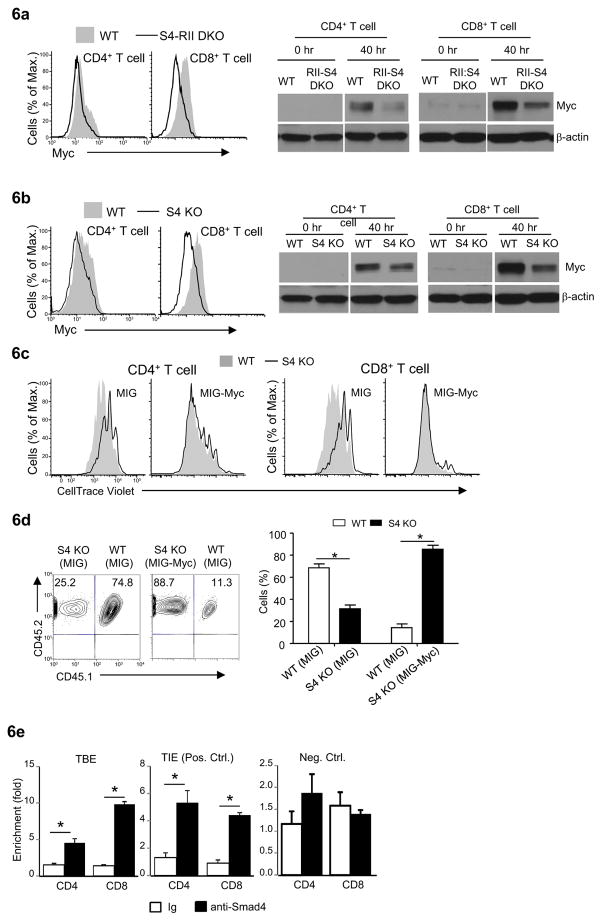
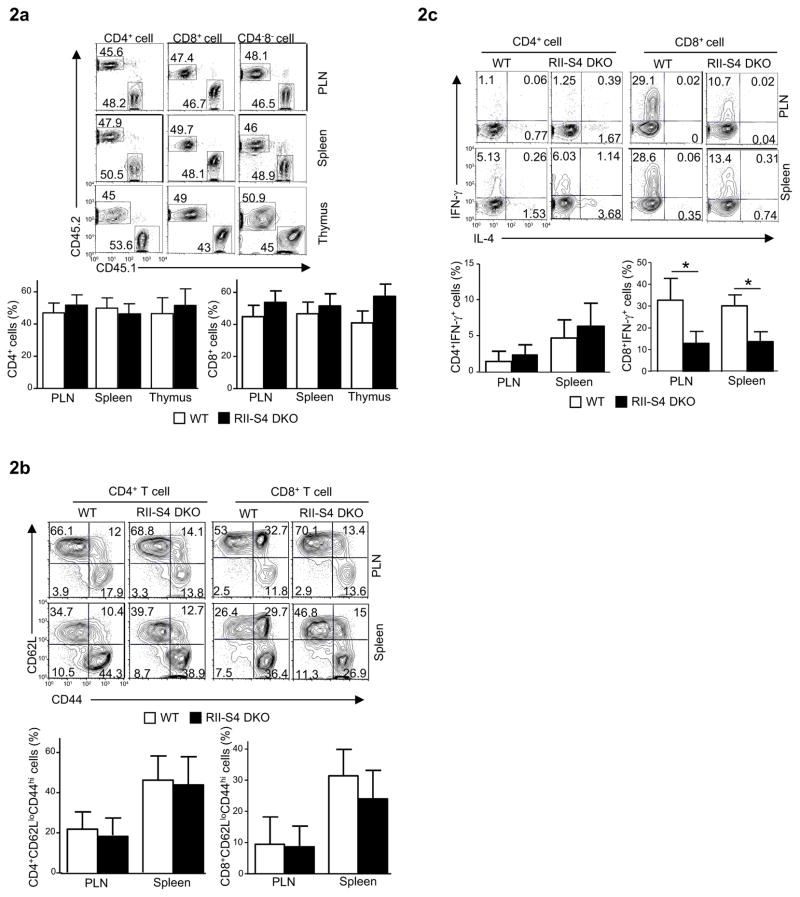
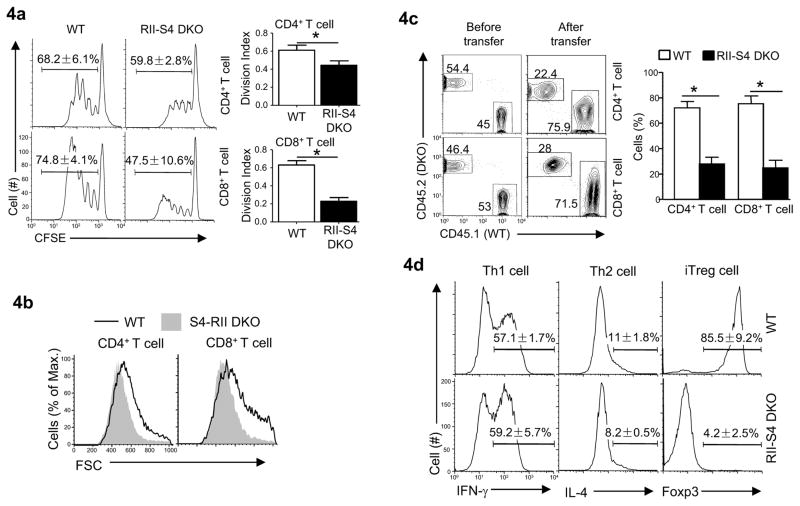
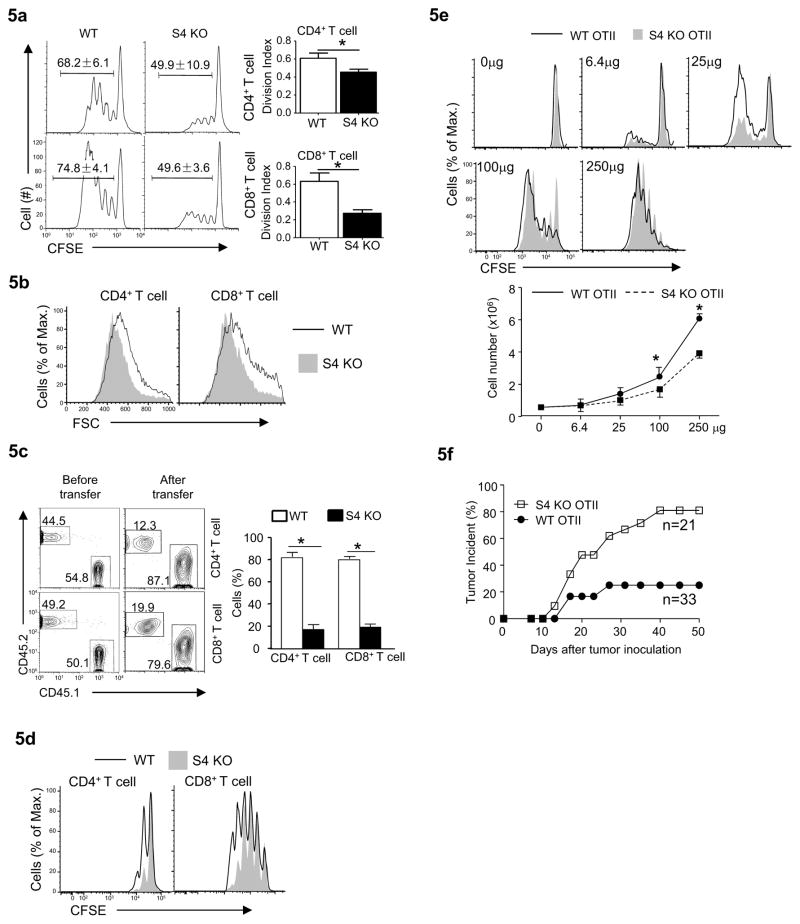
Transforming growth factor-beta (TGF-β) suppresses T cell function to maintain self-tolerance and to promote tumor immune evasion. Yet how Smad4, a transcription factor component of TGF-β signaling, regulates T cell function remains unclear. Here we have demonstrated an essential role for Smad4 in promoting T cell function during autoimmunity and anti-tumor immunity. Smad4 deletion rescued the lethal autoimmunity resulting from transforming growth factor-beta receptor (TGF-βR) deletion and compromised T-cell-mediated tumor rejection. Although Smad4 was dispensable for T cell generation, homeostasis, and effector function, it was essential for T cell proliferation after activation in vitro and in vivo. The transcription factor Myc was identified to mediate Smad4-controlled T cell proliferation. This study thus reveals a requirement of Smad4 for T-cell-mediated autoimmunity and tumor rejection, which is beyond the current paradigm. It highlights a TGF-βR-independent role for Smad4 in promoting T cell function, autoimmunity, and anti-tumor immunity.
转化生长因子-β(TGF-β)抑制T细胞功能以维持自身耐受性并促进肿瘤免疫逃逸。然而,作为TGF-β信号传导转录因子成分的Smad4如何调节T细胞功能仍不清楚。在这里,我们证明了Smad4在自身免疫和抗肿瘤免疫过程中促进T细胞功能方面的重要作用。Smad4基因缺失挽救了因转化生长因子-β受体(TGF-βR)缺失导致的致死性自身免疫,并损害了T细胞介导的肿瘤排斥反应。虽然Smad4对于T细胞的产生、稳态和效应功能并非必需,但它对于体外和体内激活后T细胞的增殖至关重要。已确定转录因子Myc介导Smad4控制的T细胞增殖。因此,这项研究揭示了T细胞介导的自身免疫和肿瘤排斥反应对Smad4的需求,这超出了当前的范式。它突出了Smad4在促进T细胞功能、自身免疫和抗肿瘤免疫方面的非TGF-βR依赖性作用。