Carvajal-Gonzalez Jose Maria, Mlodzik Marek
Department of Developmental & Regenerative Biology and Graduate School of Biomedical Sciences, Icahn School of Medicine at Mount Sinai One Gustave L. Levy Place, Box 1020, New York, NY 10029 USA.
F1000Prime Rep. 2014 Nov 4;6:98. doi: 10.12703/P6-98. eCollection 2014.
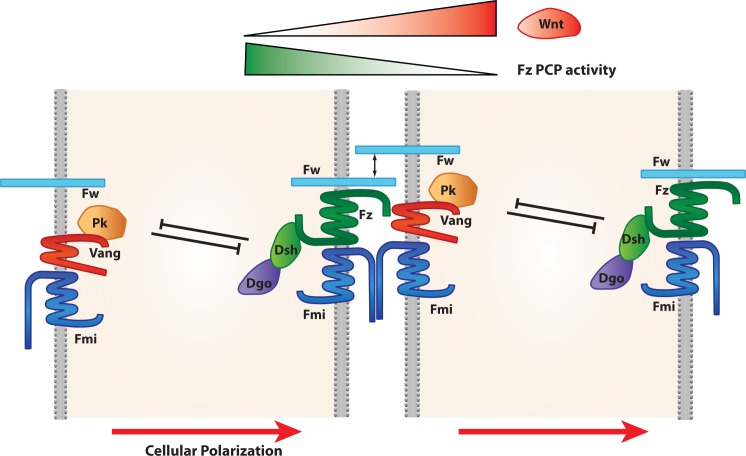
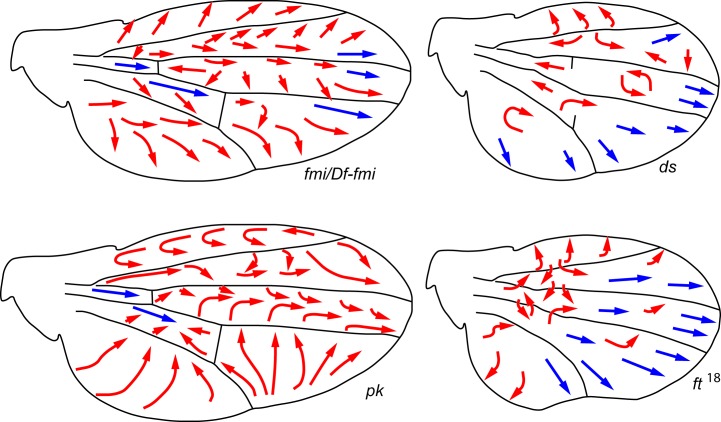
Correct patterning and polarization of epithelial and mesenchymal cells are essential for morphogenesis and function of all organs and organisms. Epithelial cells are generally polarized in two axes: (a) the ubiquitous apical-basal axis and (b) polarity within the plane of the epithelium. The latter is generally referred to as planar cell polarity (PCP) and also is found in several contexts of mesenchymal cell patterning. In Drosophila, all adult structures display PCP features, and two conserved molecular systems (the Fat [Ft]/Dachsous [Ds] system and the Frizzled [Fz]/PCP pathway) that regulate this process have been identified. Although significant progress has been made in dissecting aspects of PCP signaling within cells, much remains to be discovered about the mechanisms of long-range and local PCP cell-cell interactions. Here, we discuss the current models based on Drosophila studies and incorporate recent insights into this long-standing cell and developmental biology problem.
上皮细胞和间充质细胞的正确模式形成和极化对于所有器官和生物体的形态发生及功能至关重要。上皮细胞通常在两个轴向上极化:(a)普遍存在的顶-基轴,以及(b)上皮平面内的极性。后者通常被称为平面细胞极性(PCP),在间充质细胞模式形成的多种情况下也能发现。在果蝇中,所有成虫结构都表现出PCP特征,并且已经鉴定出两个保守的分子系统(Fat [Ft]/Dachsous [Ds] 系统和Frizzled [Fz]/PCP途径)来调节这一过程。尽管在剖析细胞内PCP信号传导方面已取得重大进展,但关于远程和局部PCP细胞间相互作用的机制仍有许多有待发现。在这里,我们讨论基于果蝇研究的当前模型,并纳入对这一长期存在的细胞和发育生物学问题的最新见解。