Spellmon Nicholas, Holcomb Joshua, Trescott Laura, Sirinupong Nualpun, Yang Zhe
Department of Biochemistry and Molecular Biology, Wayne State University School of Medicine, 540 East Canfield Street, Detroit, MI 48201, USA.
Nutraceuticals and Functional Food Research and Development Center, Prince of Songkla University, Hat-Yai, Songkhla 90112, Thailand.
Int J Mol Sci. 2015 Jan 8;16(1):1406-28. doi: 10.3390/ijms16011406.
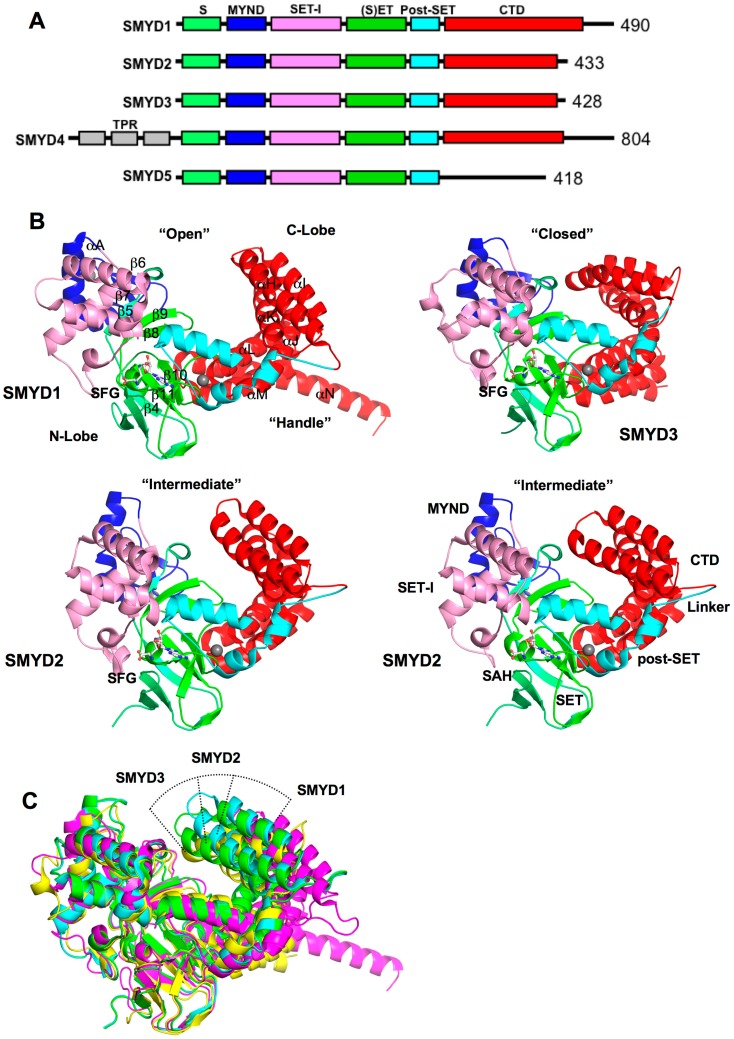
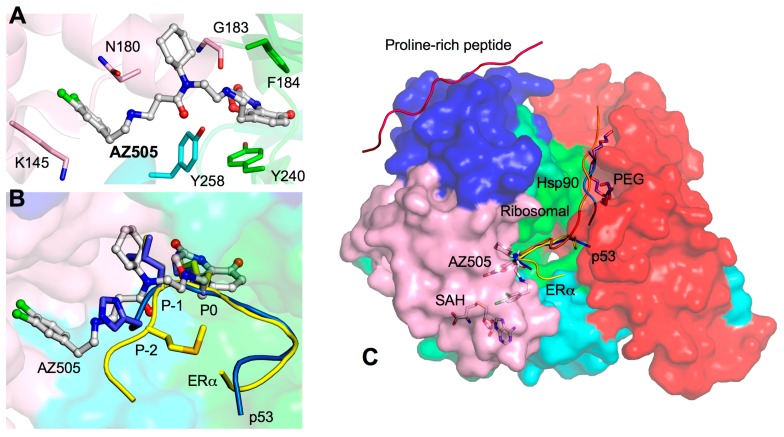
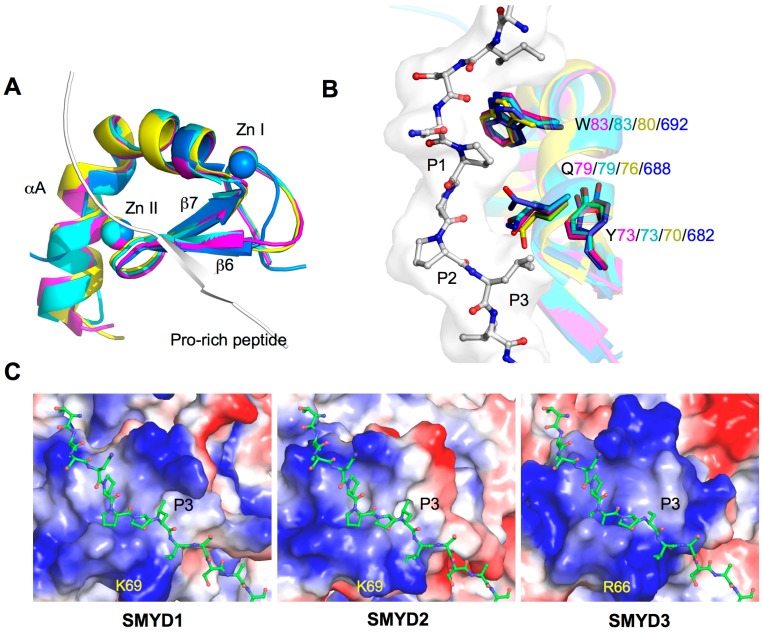
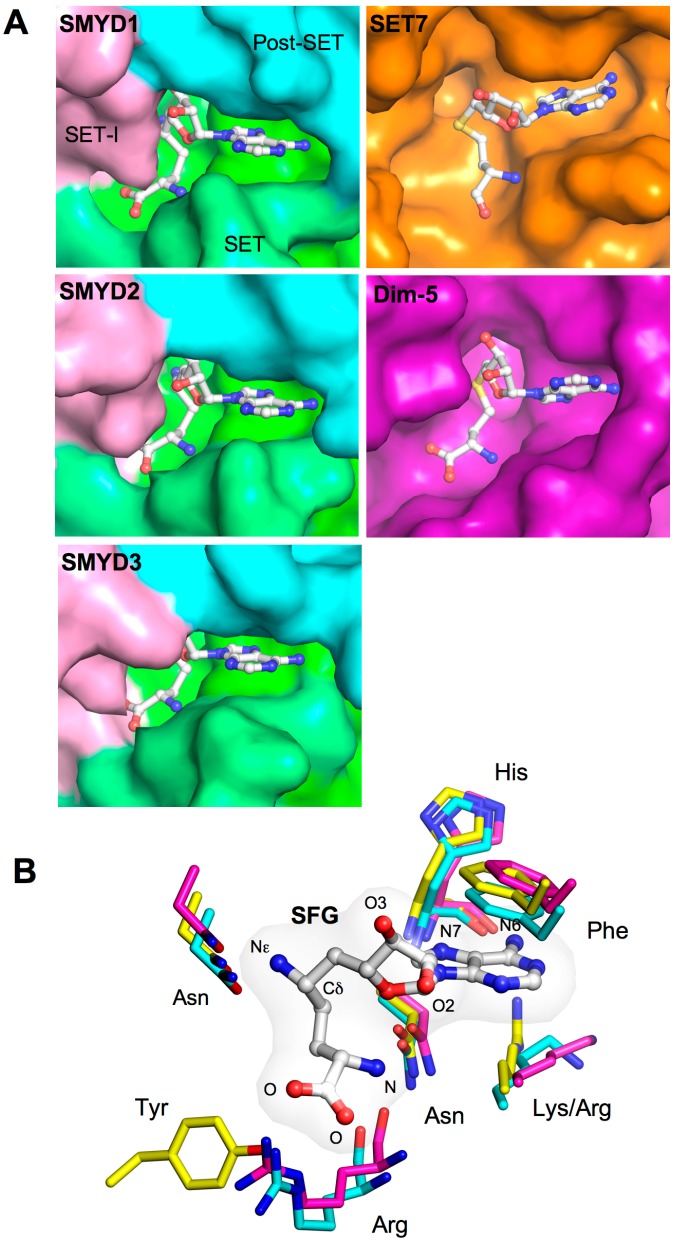
SET (Suppressor of variegation, Enhancer of Zeste, Trithorax) and MYND (Myeloid-Nervy-DEAF1) domain-containing proteins (SMYD) have been found to methylate a variety of histone and non-histone targets which contribute to their various roles in cell regulation including chromatin remodeling, transcription, signal transduction, and cell cycle control. During early development, SMYD proteins are believed to act as an epigenetic regulator for myogenesis and cardiomyocyte differentiation as they are abundantly expressed in cardiac and skeletal muscle. SMYD proteins are also of therapeutic interest due to the growing list of carcinomas and cardiovascular diseases linked to SMYD overexpression or dysfunction making them a putative target for drug intervention. This review will examine the biological relevance and gather all of the current structural data of SMYD proteins.
已发现含SET(异染色质抑制因子、Zeste增强子、三体胸蛋白)和MYND(髓样-神经-耳聋蛋白1)结构域的蛋白(SMYD)可使多种组蛋白和非组蛋白靶点发生甲基化,这有助于它们在细胞调控中发挥多种作用,包括染色质重塑、转录、信号转导和细胞周期控制。在早期发育过程中,SMYD蛋白被认为是肌生成和心肌细胞分化的表观遗传调节因子,因为它们在心脏和骨骼肌中大量表达。由于与SMYD过表达或功能障碍相关的癌症和心血管疾病越来越多,SMYD蛋白也具有治疗意义,使其成为药物干预的潜在靶点。本综述将研究SMYD蛋白的生物学相关性,并收集所有当前的结构数据。