Wu Zhenghua, Cheng Kebin, Shi Lidan, Li Zheqi, Negi Hema, Gao Guangwei, Kamle Suchitra, Li Dawei
School of Pharmacy, Shanghai Jiao Tong University, Shanghai, China.
Cancer Sci. 2015 Mar;106(3):253-61. doi: 10.1111/cas.12606. Epub 2015 Mar 3.
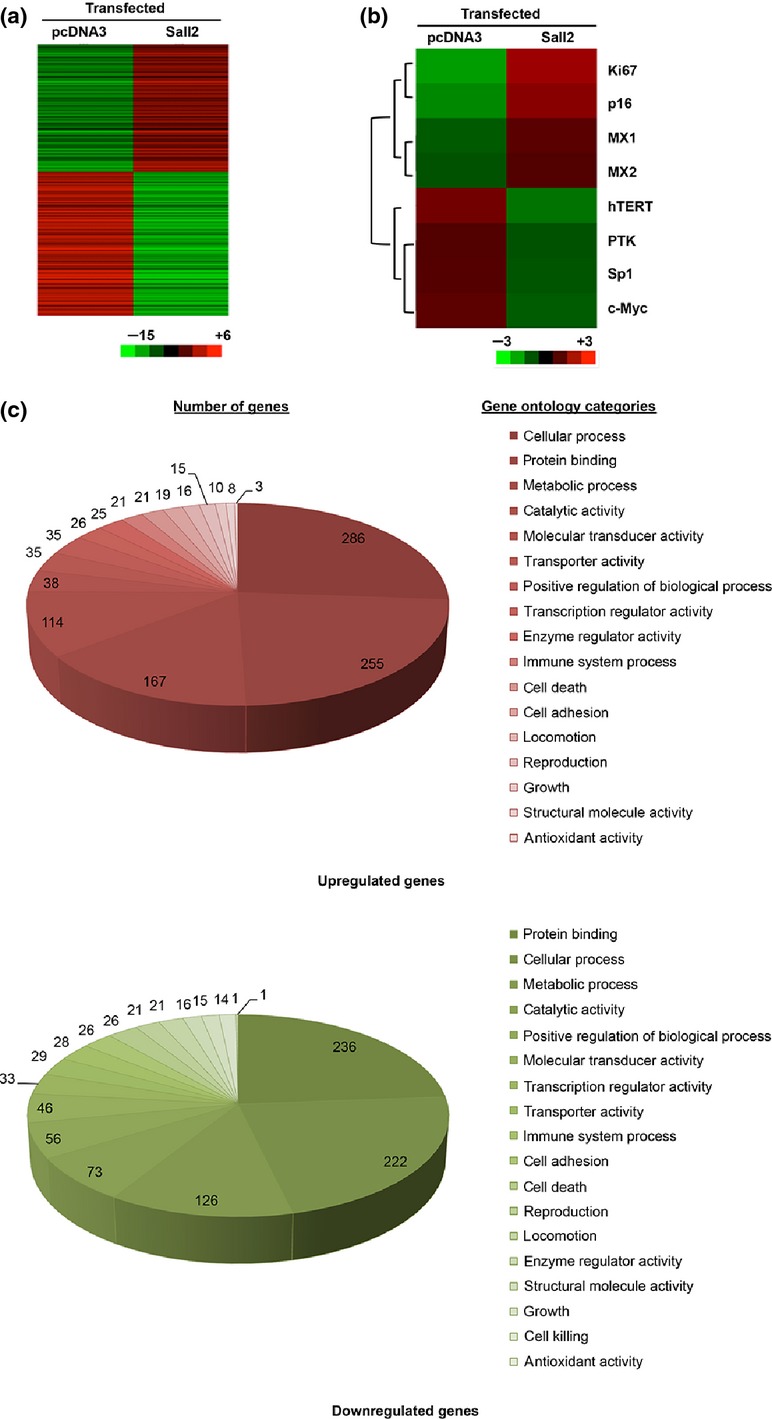
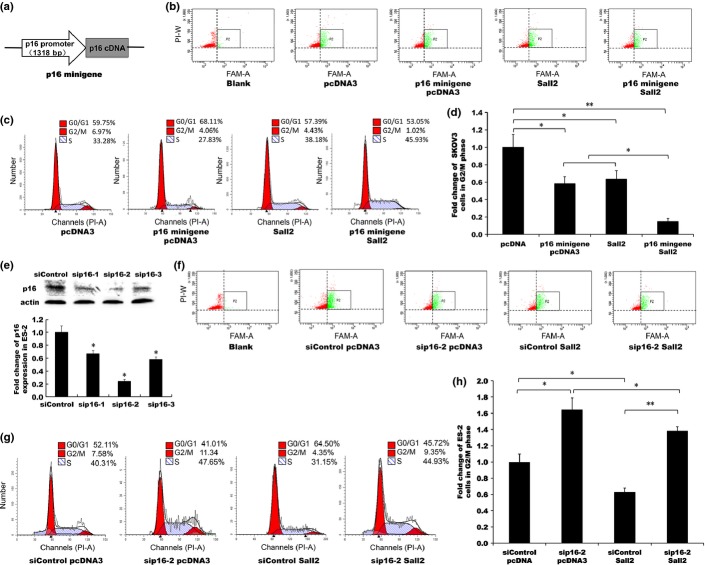
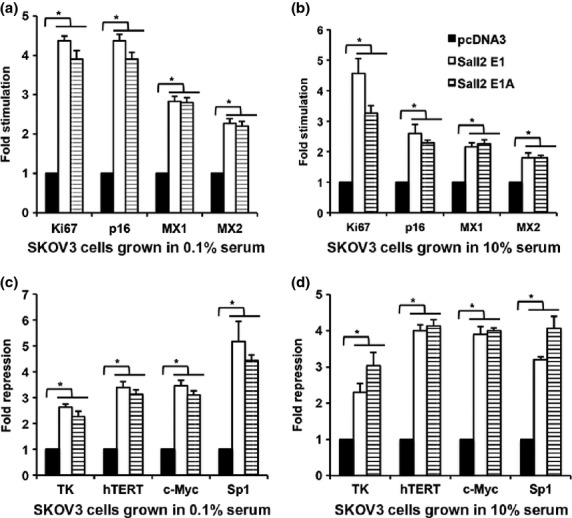
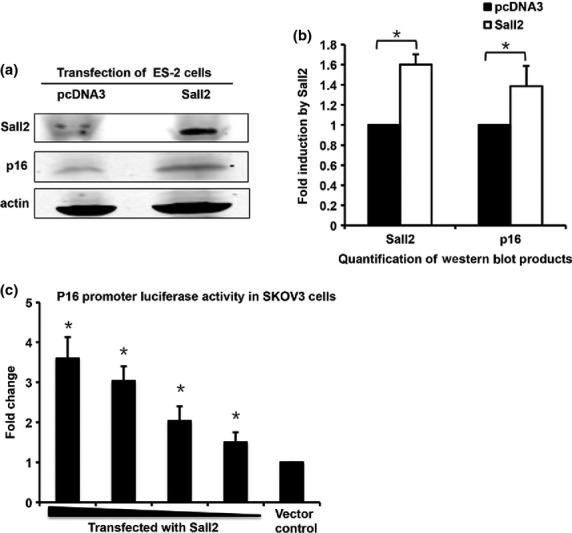
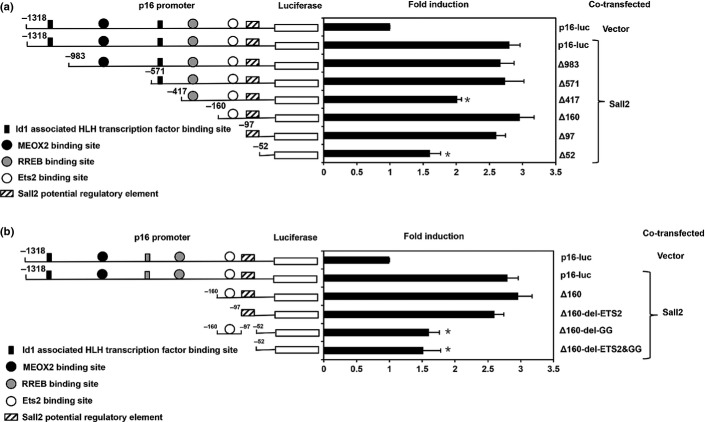
Sal-like protein 2 (Sall2), a homeotic transcription factor, is a putative tumor suppressor. We have previously shown that Sall2 activates the transcription of tumor suppressor gene p21 and suppresses tumorigenesis through cell cycle inhibition and induction of apoptosis. To investigate additional Sall2-regulated downstream genes, we analyzed the differences in mRNA expression profiles with and without exogenously expressed Sall2. We identified 1616 Sall2-responsive genes through gene expression arrays. Promoter-reporter assays of p16(INK4A) and several other tumor-related genes indicated that the Sall2 regulation of these promoters was not significantly different between the two major forms of Sall2 with alternative exon 1 or exon 1A. Additional analysis showed that Sall2-induced p16 promoter activation was Sall2 dose-dependent. Deletion and site-directed mutagenesis of the p16 promoter identified a consensus Sall2 binding site (GGGTGGG) proximal to the p16 transcription start site and was critical for p16 promoter activation. Finally, to confirm the significance of Sall2-activated p16 expression in cell cycle regulation, we co-transfected the SKOV3 cells with a Sall2 expression construct and a p16 minigene and also co-transfected the ES-2 cells with a Sall2 expression construct and the siRNA against p16 for flow cytometry analysis. Our results showed that Sall2 enhanced the p16 minigene blocking of cell cycle progression and p16 knockdown with siRNA abolished most of the Sall2 inhibition of cell cycle progression. These findings indicate that Sall2 targets multiple cell cycle regulators, including p16, through their promoters, adding knowledge to the understanding of Sall2 and p16 gene regulation, and how Sall2 deregulation may promote cancer formation.
Sall样蛋白2(Sall2)是一种同源异型转录因子,是一种假定的肿瘤抑制因子。我们之前已经表明,Sall2可激活肿瘤抑制基因p21的转录,并通过抑制细胞周期和诱导凋亡来抑制肿瘤发生。为了研究Sall2调控的其他下游基因,我们分析了有无外源性表达Sall2时mRNA表达谱的差异。通过基因表达阵列,我们鉴定出了1616个Sall2反应基因。对p16(INK4A)和其他几个肿瘤相关基因进行的启动子-报告基因分析表明,在具有可变外显子1或外显子1A的两种主要Sall2形式之间,这些启动子的Sall2调控没有显著差异。进一步分析表明,Sall2诱导的p16启动子激活呈Sall2剂量依赖性。对p16启动子进行缺失和定点诱变,确定了一个位于p16转录起始位点近端的共有Sall2结合位点(GGGTGGG),该位点对p16启动子激活至关重要。最后,为了证实Sall2激活的p16表达在细胞周期调控中的意义,我们将Sall2表达构建体与p16小基因共转染SKOV3细胞,并将Sall2表达构建体与针对p16的小干扰RNA(siRNA)共转染ES-2细胞,用于流式细胞术分析。我们的结果表明,Sall2增强了p16小基因对细胞周期进程的阻滞作用,而用siRNA敲低p16则消除了Sall2对细胞周期进程的大部分抑制作用。这些发现表明,Sall2通过其启动子靶向多个细胞周期调节因子,包括p16,这为理解Sall2和p16基因调控以及Sall2失调如何促进癌症形成增添了知识。