Keyhanfar Fariborz, Khani Samira, Bohlooli Shahab
Pharmacology Department, Iran University of Medical Sciences, Tehran, Iran.
School of Pharmacy, Ardabil University of Medical Sciences, Ardabil, Iran.
Iran J Pharm Res. 2014 Fall;13(4):1149-56.
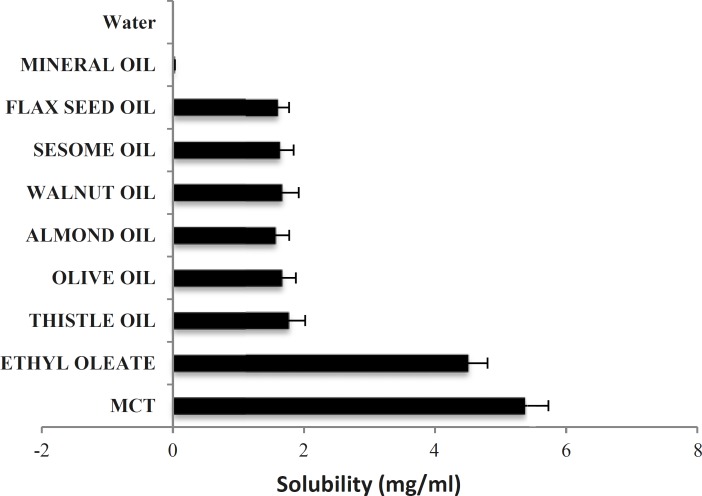
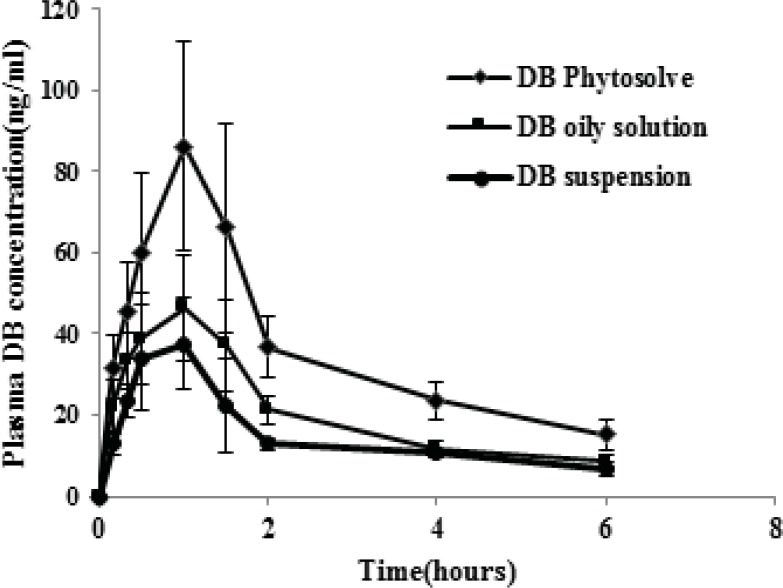
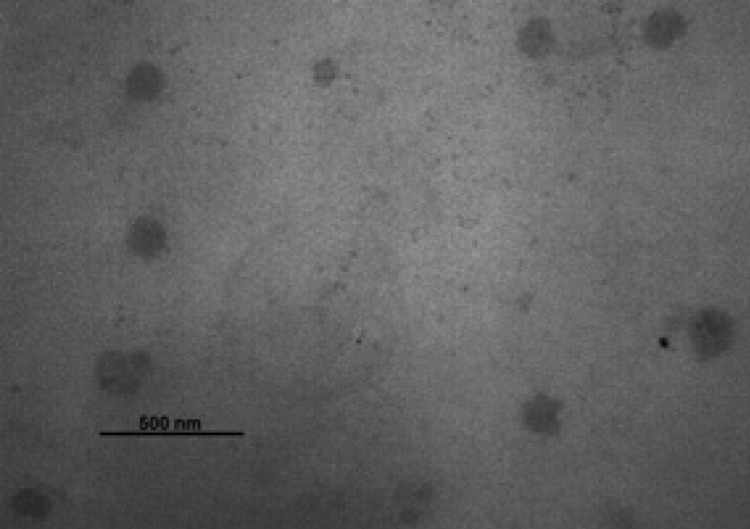
The objective of present study was to evaluate pharmacokinetic parameters of dibudipine Phytosolve after oral administration in rats. The solubility test was carried out to select suitable oily solvent for dibudipine. Phytosolve formulation was prepared with a medium chain triglyceride (MCT) oil (20%), soybean phospholipids (5%) and a 70% fructose solution (75%). The effect of polyol content on the mean globule size of Phytosolve formulation was studied. The optimized formulation was evaluated for robustness toward dilution, transparency, droplet size, zeta potential and transmission electron microscopic analysis. The Phytosolve of dibudipine with an average droplet size of 142.3 ± 4.3 nm and surface charge -18.36 ± 0.37 mv was administered orally to rats. The average relative bioavalabilities of dibudipine in the plasma with Phytosolve were 170.4% and 211.2% as compared to the oily solution and aqueous suspension respectively. So this formulation could be offered as a useful technique to improve the oral delivery of the poorly water soluble drugs such as dibudipine.
本研究的目的是评估大鼠口服二丁基吡啶 Phytosolve 后的药代动力学参数。进行溶解度试验以选择适合二丁基吡啶的油性溶剂。用中链甘油三酯(MCT)油(20%)、大豆磷脂(5%)和70%果糖溶液(75%)制备 Phytosolve 制剂。研究了多元醇含量对 Phytosolve 制剂平均球粒大小的影响。对优化后的制剂进行了稀释稳定性、透明度、液滴大小、zeta 电位和透射电子显微镜分析。将平均液滴大小为142.3±4.3 nm且表面电荷为-18.36±0.37 mv的二丁基吡啶 Phytosolve 口服给予大鼠。与油性溶液和水混悬液相比,二丁基吡啶在血浆中的平均相对生物利用度分别为170.4%和211.2%。因此,该制剂可作为一种有用的技术,用于改善二丁基吡啶等难溶性药物的口服给药。