UCB Pharma SA, Non Clinical Development, Chemin du Foriest, 1420 Braine-l'Alleud, Belgium; E-Mails:
Biosensors (Basel). 2013 Mar 15;3(1):132-56. doi: 10.3390/bios3010132. eCollection 2013 Mar.
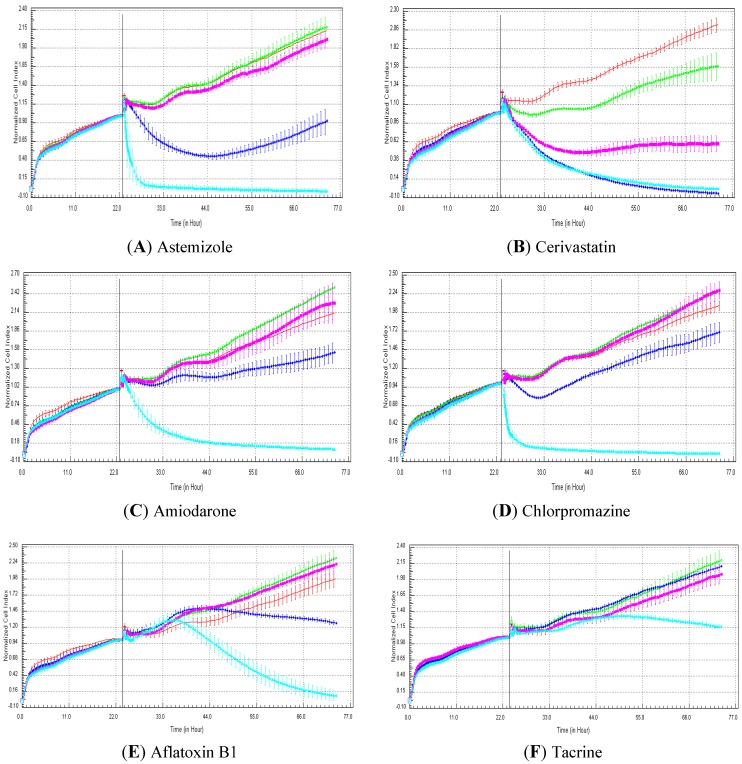
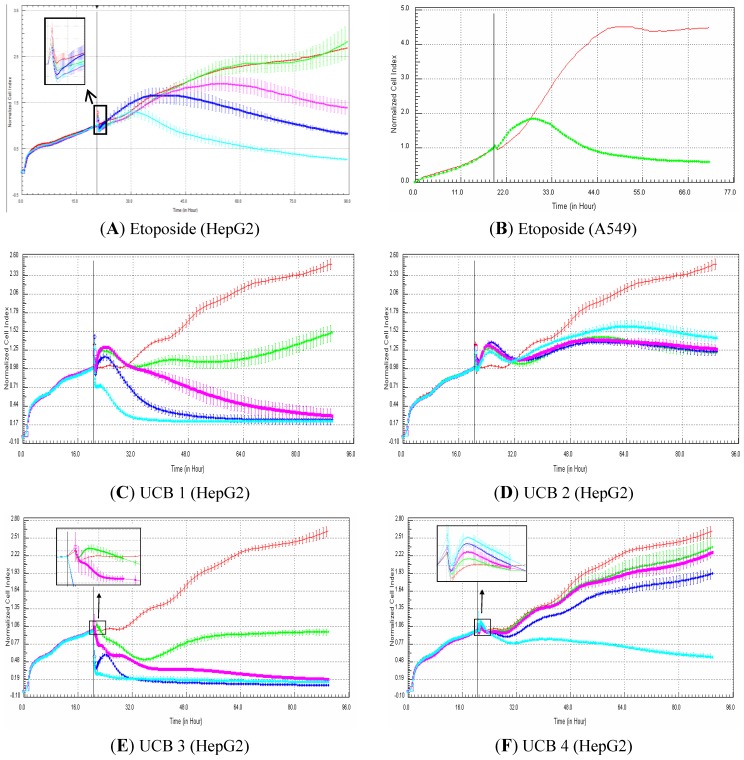
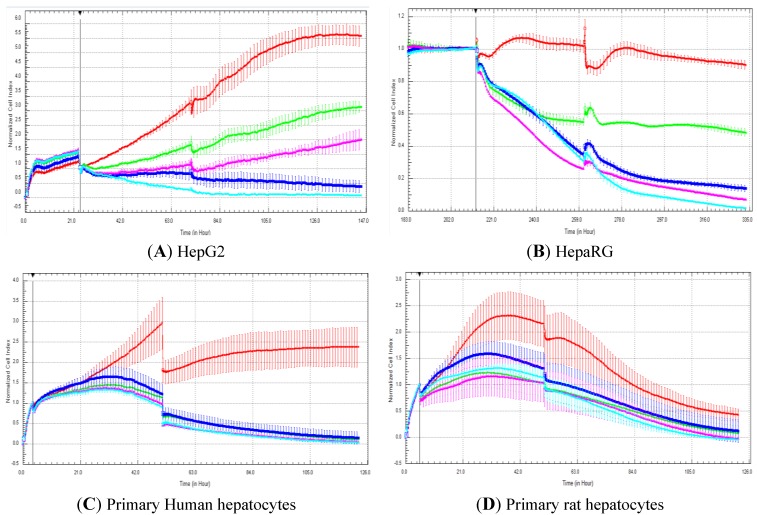
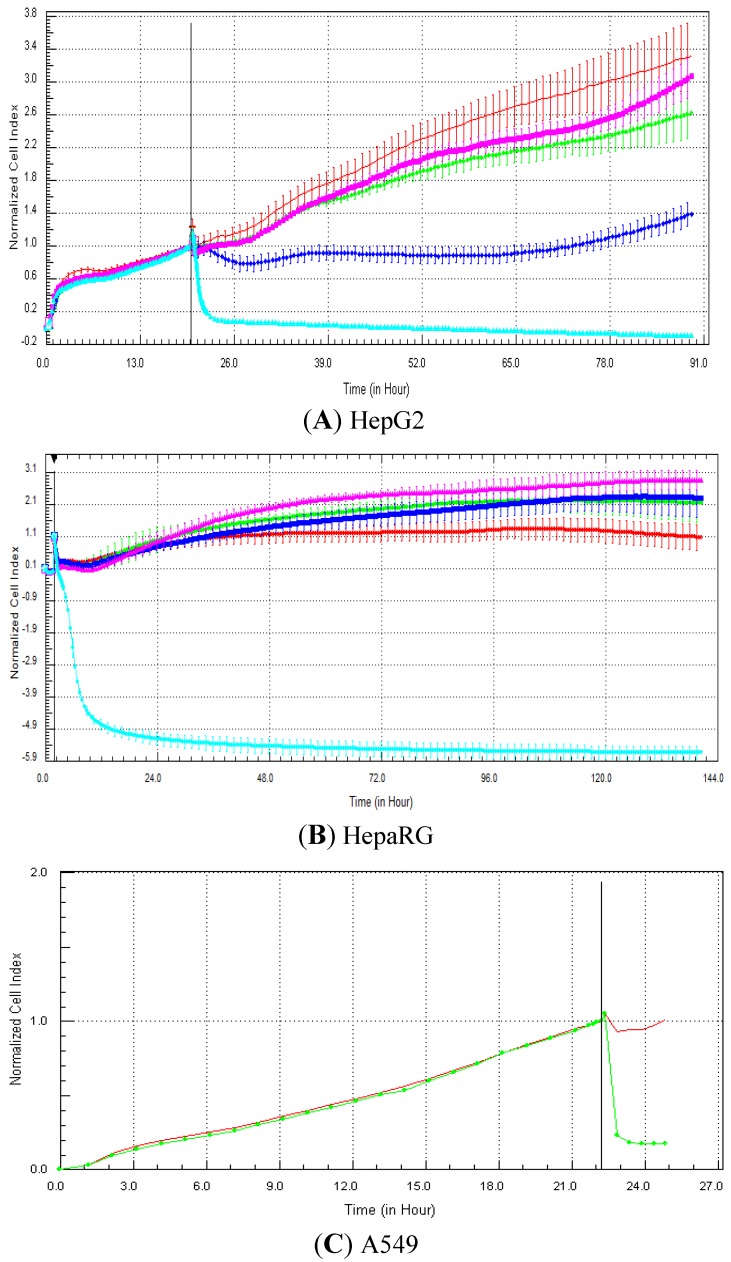
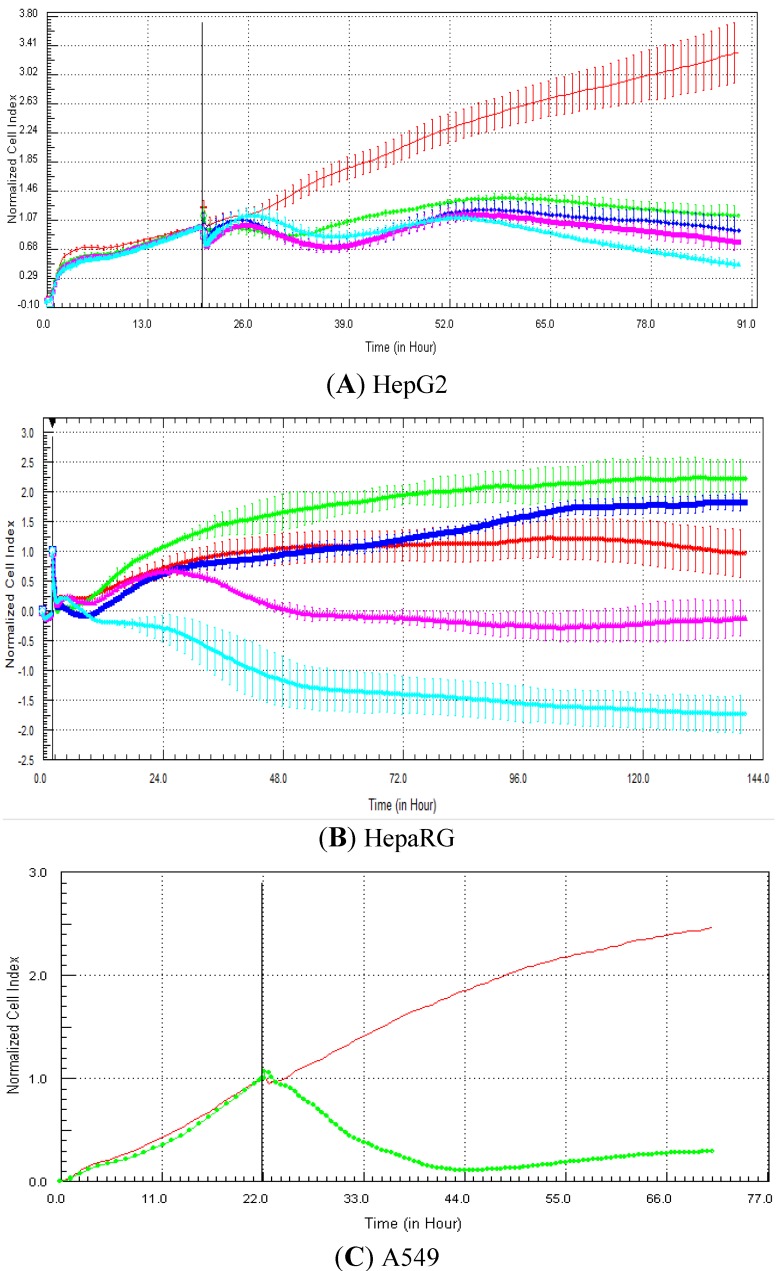
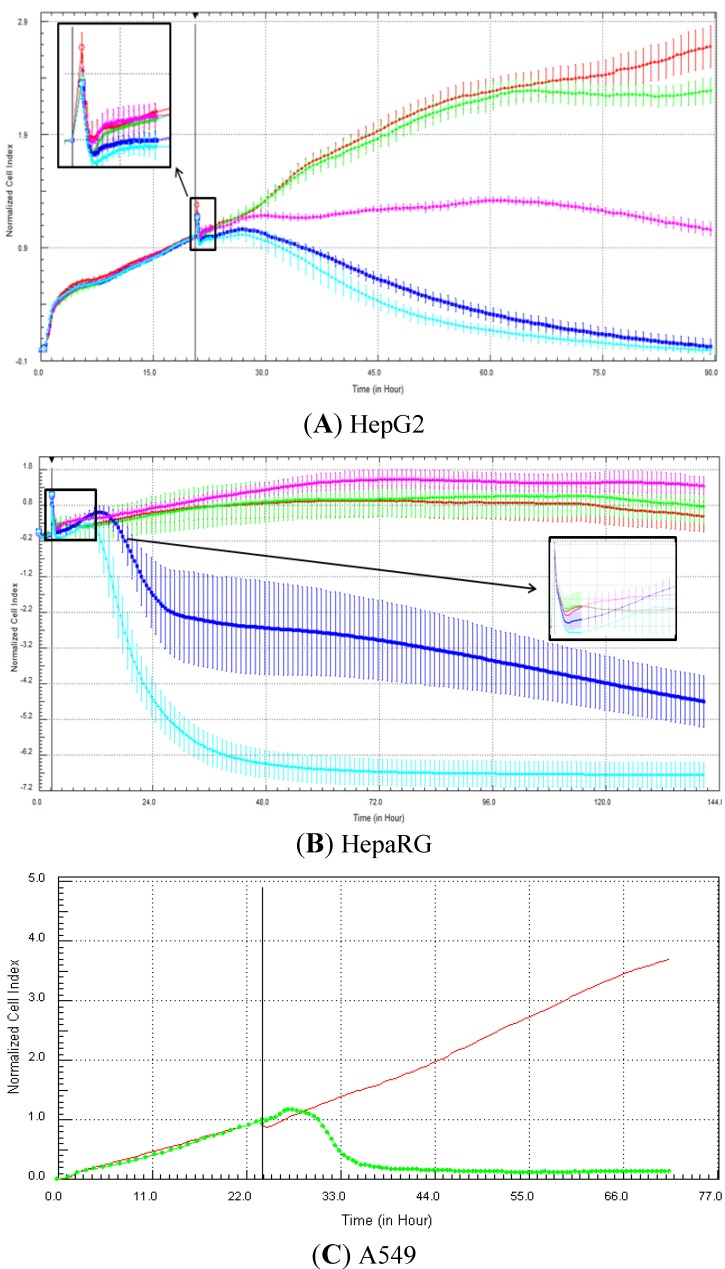
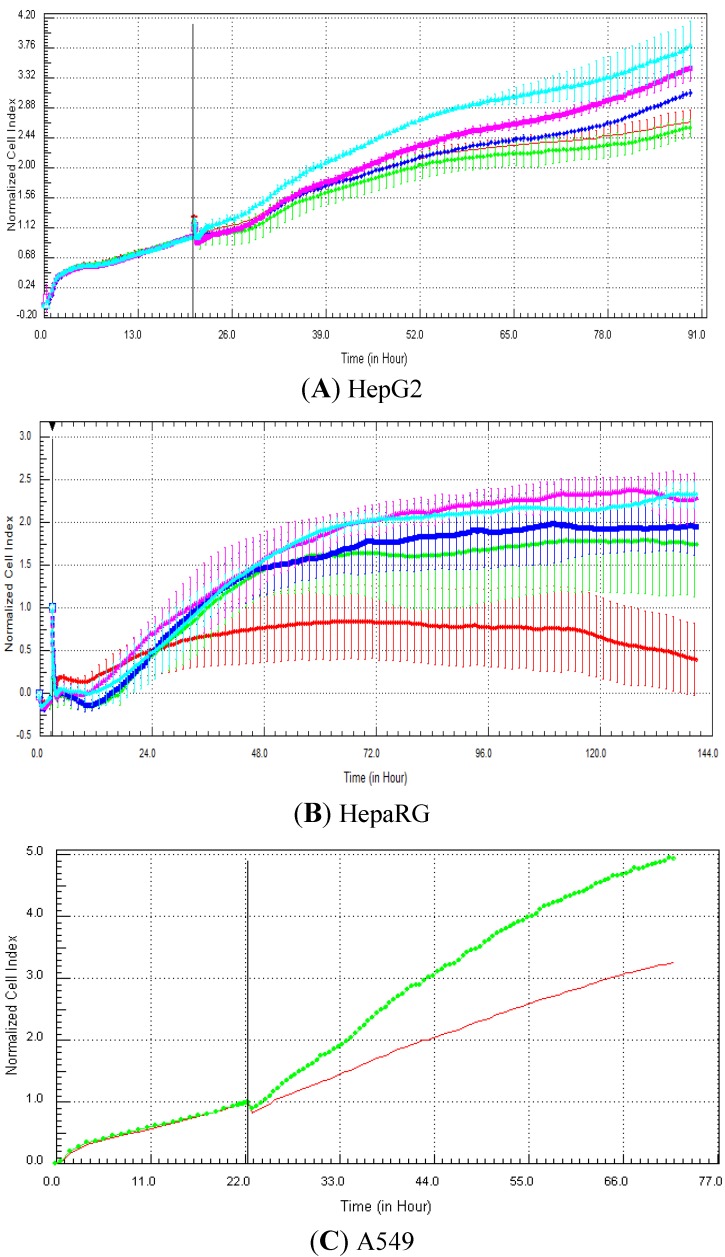
The use of label-free technologies based on electrical impedance is becoming more and more popular in drug discovery. Indeed, such a methodology allows the continuous monitoring of diverse cellular processes, including proliferation, migration, cytotoxicity and receptor-mediated signaling. The objective of the present study was to further assess the usefulness of the real-time cell analyzer (RTCA) and, in particular, the xCELLigence platform, in the context of early drug development for pharmacology and toxicology investigations. In the present manuscript, four cellular models were exposed to 50 compounds to compare the cell index generated by RTCA and cell viability measured with a traditional viability assay. The data revealed an acceptable correlation (ca. 80%) for both cell lines (i.e., HepG2 and HepaRG), but a lack of correlation (ca. 55%) for the primary human and rat hepatocytes. In addition, specific RTCA profiles (signatures) were generated when HepG2 and HepaRG cells were exposed to calcium modulators, antimitotics, DNA damaging and nuclear receptor agents, with a percentage of prediction close to 80% for both cellular models. In a subsequent experiment, HepG2 cells were exposed to 81 proprietary UCB compounds known to be genotoxic or not. Based on the DNA damaging signatures, the RTCA technology allowed the detection of ca. 50% of the genotoxic compounds (n = 29) and nearly 100% of the non-genotoxic compounds (n = 52). Overall, despite some limitations, the xCELLigence platform is a powerful and reliable tool that can be used in drug discovery for toxicity and pharmacology studies.
无标记技术基于电阻抗的使用在药物发现中变得越来越流行。事实上,这种方法允许对多种细胞过程进行连续监测,包括增殖、迁移、细胞毒性和受体介导的信号转导。本研究的目的是进一步评估实时细胞分析(RTCA)的有用性,特别是 xCELLigence 平台,在药理学和毒理学研究的早期药物开发背景下。在本手稿中,四种细胞模型暴露于 50 种化合物,以比较 RTCA 产生的细胞指数和传统活力测定测量的细胞活力。数据显示,两种细胞系(即 HepG2 和 HepaRG)的细胞指数具有可接受的相关性(约 80%),但原代人肝细胞和大鼠肝细胞的相关性较差(约 55%)。此外,当 HepG2 和 HepaRG 细胞暴露于钙调节剂、抗有丝分裂剂、DNA 损伤剂和核受体剂时,会产生特定的 RTCA 图谱(特征),两种细胞模型的预测百分比接近 80%。在随后的实验中,HepG2 细胞暴露于 81 种已知具有遗传毒性或非遗传毒性的 UCB 专有化合物。基于 DNA 损伤特征,RTCA 技术可以检测到约 50%的遗传毒性化合物(n = 29)和约 100%的非遗传毒性化合物(n = 52)。总体而言,尽管存在一些限制,但 xCELLigence 平台是一种强大且可靠的工具,可用于药物发现中的毒性和药理学研究。