Kozakova Lucie, Vondrova Lucie, Stejskal Karel, Charalabous Panagoula, Kolesar Peter, Lehmann Alan R, Uldrijan Stjepan, Sanderson Christopher M, Zdrahal Zbynek, Palecek Jan J
a From the Mendel Center for Plant Genomics and Proteomics; Central European Institute of Technology; Masaryk University ; Brno , Czech Republic.
Cell Cycle. 2015;14(6):920-30. doi: 10.1080/15384101.2014.1000112.
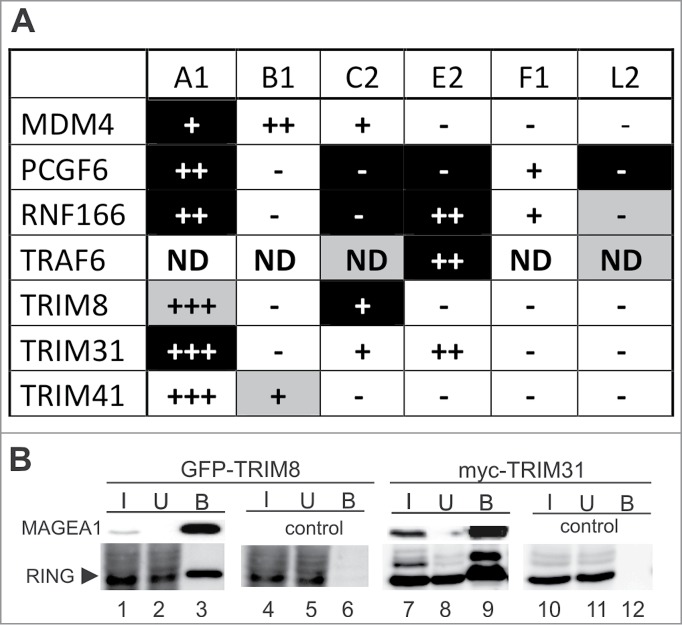
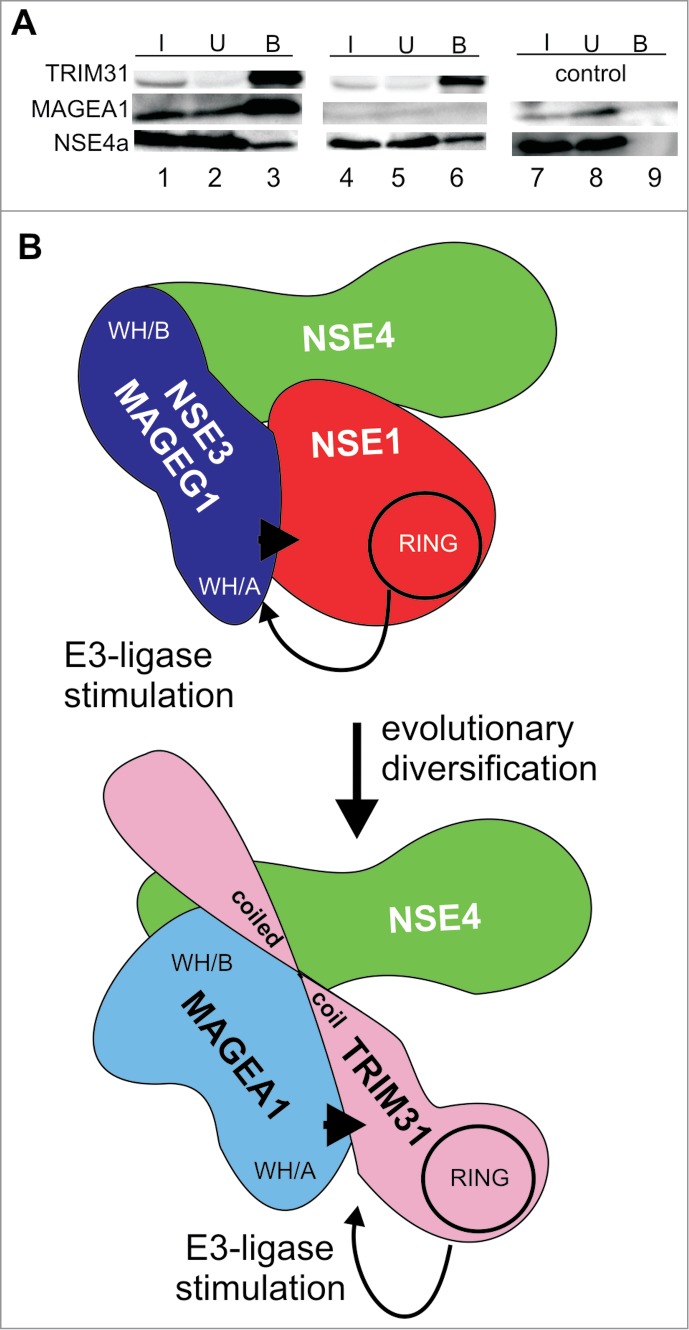
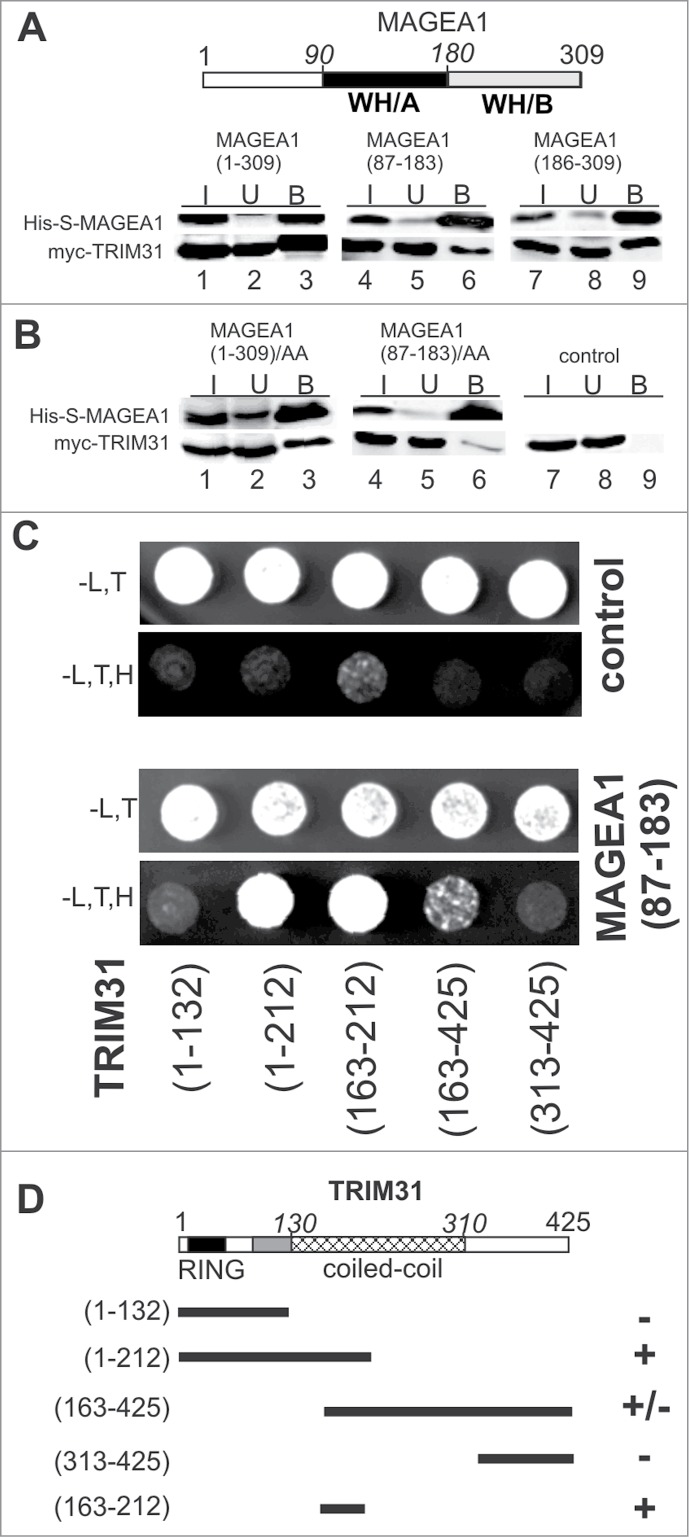
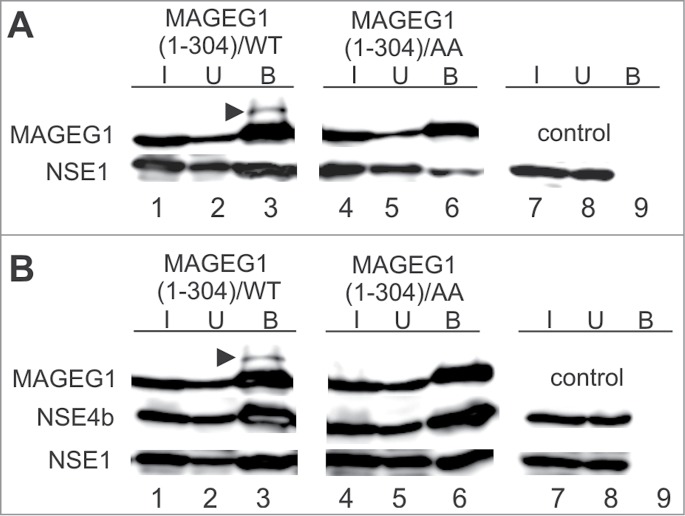
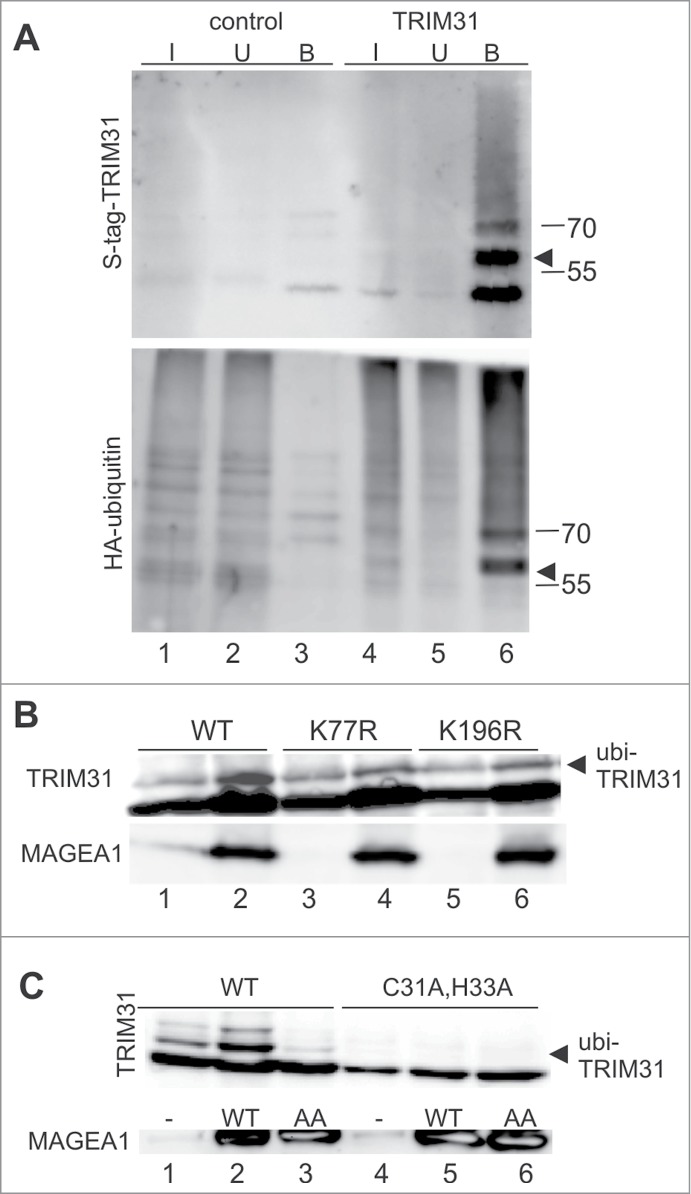
The MAGE (Melanoma-associated antigen) protein family members are structurally related to each other by a MAGE-homology domain comprised of 2 winged helix motifs WH/A and WH/B. This family specifically evolved in placental mammals although single homologs designated NSE3 (non-SMC element) exist in most eukaryotes. NSE3, together with its partner proteins NSE1 and NSE4 form a tight subcomplex of the structural maintenance of chromosomes SMC5-6 complex. Previously, we showed that interactions of the WH/B motif of the MAGE proteins with their NSE4/EID partners are evolutionarily conserved (including the MAGEA1-NSE4 interaction). In contrast, the interaction of the WH/A motif of NSE3 with NSE1 diverged in the MAGE paralogs. We hypothesized that the MAGE paralogs acquired new RING-finger-containing partners through their evolution and form MAGE complexes reminiscent of NSE1-NSE3-NSE4 trimers. In this work, we employed the yeast 2-hybrid system to screen a human RING-finger protein library against several MAGE baits. We identified a number of potential MAGE-RING interactions and confirmed several of them (MDM4, PCGF6, RNF166, TRAF6, TRIM8, TRIM31, TRIM41) in co-immunoprecipitation experiments. Among these MAGE-RING pairs, we chose to examine MAGEA1-TRIM31 in detail and showed that both WH/A and WH/B motifs of MAGEA1 bind to the coiled-coil domain of TRIM31 and that MAGEA1 interaction stimulates TRIM31 ubiquitin-ligase activity. In addition, TRIM31 directly binds to NSE4, suggesting the existence of a TRIM31-MAGEA1-NSE4 complex reminiscent of the NSE1-NSE3-NSE4 trimer. These results suggest that MAGEA1 functions as a co-factor of TRIM31 ubiquitin-ligase and that the TRIM31-MAGEA1-NSE4 complex may have evolved from an ancestral NSE1-NSE3-NSE4 complex.
黑色素瘤相关抗原(MAGE)蛋白家族成员通过一个由两个翼状螺旋基序WH/A和WH/B组成的MAGE同源结构域在结构上相互关联。这个家族是在胎盘哺乳动物中特异性进化而来的,尽管在大多数真核生物中存在单个同源物,称为NSE3(非SMC元件)。NSE3与其伴侣蛋白NSE1和NSE4一起形成了染色体结构维持SMC5-6复合物的紧密亚复合物。此前,我们表明MAGE蛋白的WH/B基序与其NSE4/EID伴侣之间的相互作用在进化上是保守的(包括MAGEA1-NSE4相互作用)。相比之下,NSE3的WH/A基序与NSE1的相互作用在MAGE旁系同源物中发生了分歧。我们推测MAGE旁系同源物在进化过程中获得了新的含RING结构域的伴侣,并形成了类似于NSE1-NSE3-NSE4三聚体的MAGE复合物。在这项工作中,我们利用酵母双杂交系统,针对几种MAGE诱饵筛选了一个人类含RING结构域蛋白文库。我们鉴定出了许多潜在的MAGE-RING相互作用,并在共免疫沉淀实验中证实了其中的几种(MDM4、PCGF6、RNF166、TRAF6、TRIM8、TRIM31、TRIM41)。在这些MAGE-RING对中,我们选择详细研究MAGEA1-TRIM31,并表明MAGEA1的WH/A和WH/B基序都与TRIM31的卷曲螺旋结构域结合,并且MAGEA1的相互作用刺激了TRIM31泛素连接酶活性。此外,TRIM31直接与NSE4结合,这表明存在一个类似于NSE1-NSE3-NSE4三聚体的TRIM31-MAGEA1-NSE4复合物。这些结果表明MAGEA1作为TRIM31泛素连接酶的辅助因子发挥作用,并且TRIM31-MAGEA1-NSE4复合物可能是从祖先的NSE1-NSE3-NSE4复合物进化而来的。