He Junyun, Hsuchou Hung, He Yi, Kastin Abba J, Mishra Pramod K, Fang Jidong, Pan Weihong
Blood-Brain Barrier Group, Pennington Biomedical Research Center, Baton Rouge, LA 70808 USA.
Department of Biology, University of Texas, San Antonio, TX 78249 USA.
Fluids Barriers CNS. 2014 Dec 28;11(1):27. doi: 10.1186/2045-8118-11-27. eCollection 2014.
We have recently shown that mice with experimental autoimmune encephalomyelitis (EAE) have increased sleep fragmentation (SF) and reduced sleep efficiency, and that the extent of SF correlates with the severity of disease. It is not yet clear whether and how sleep promotes recovery from autoimmune attacks. We hypothesized that SF promotes leukocyte infiltration across the blood-spinal cord barrier, impairs immune regulation, and thus worsens EAE.
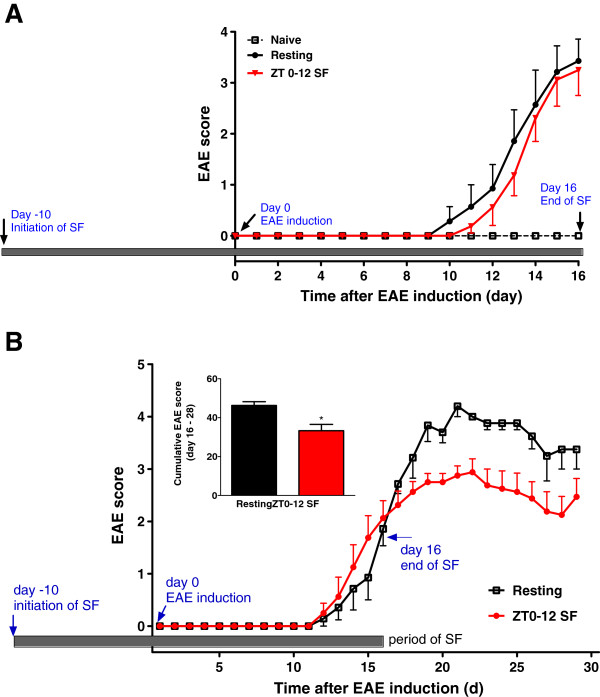
Three groups of C57 mice were studied: Resting EAE; SF EAE with the mice subjected to the SF maneuver 12 h /day during zeitgeber time (ZT) 0-12 h; and naïve controls with neither EAE nor SF. Besides monitoring of the incidence and severity of EAE, the immune profiles of leukocytes in the spinal cord as well as those in the spleen were determined.
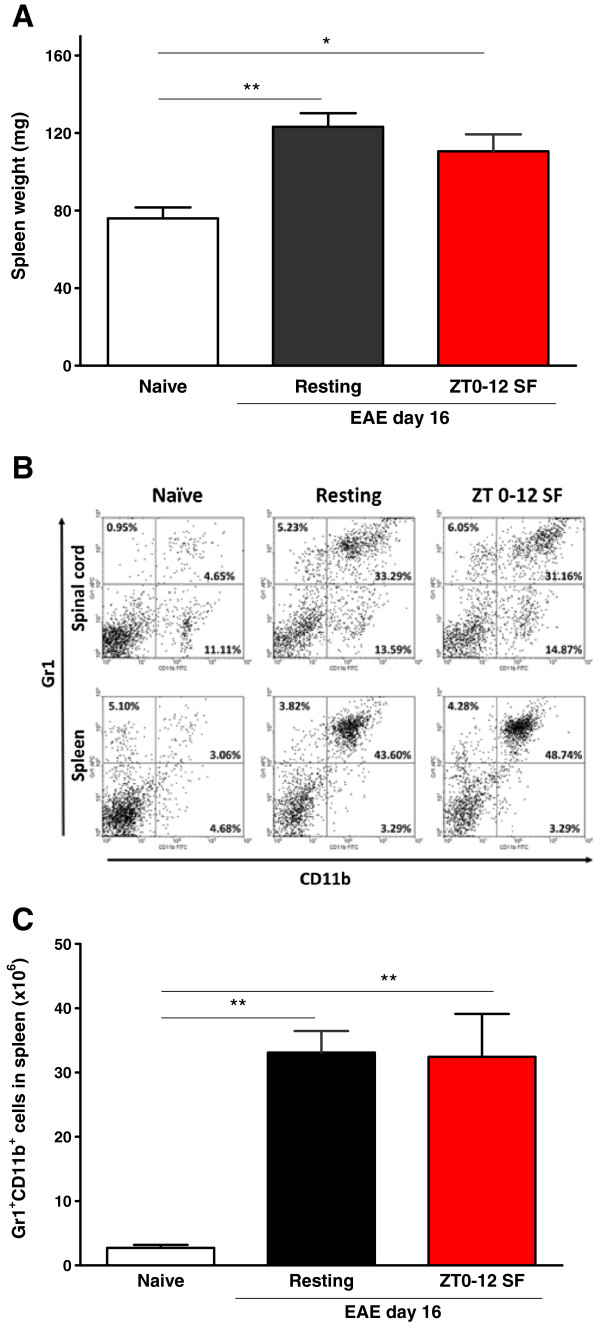
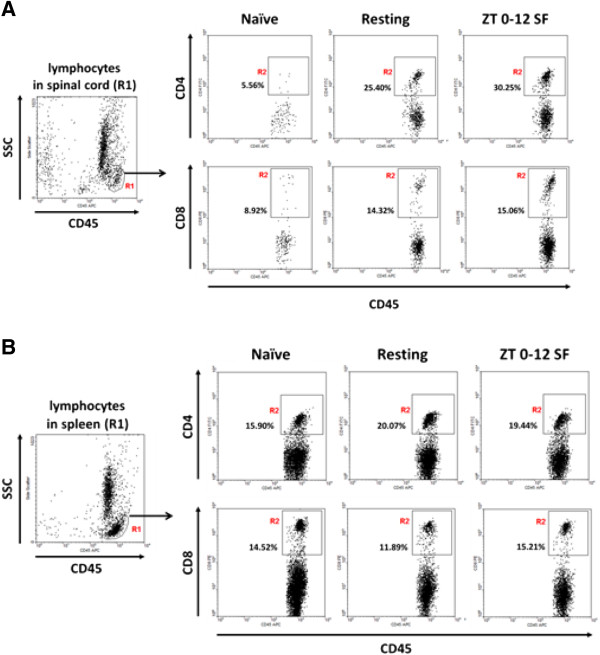
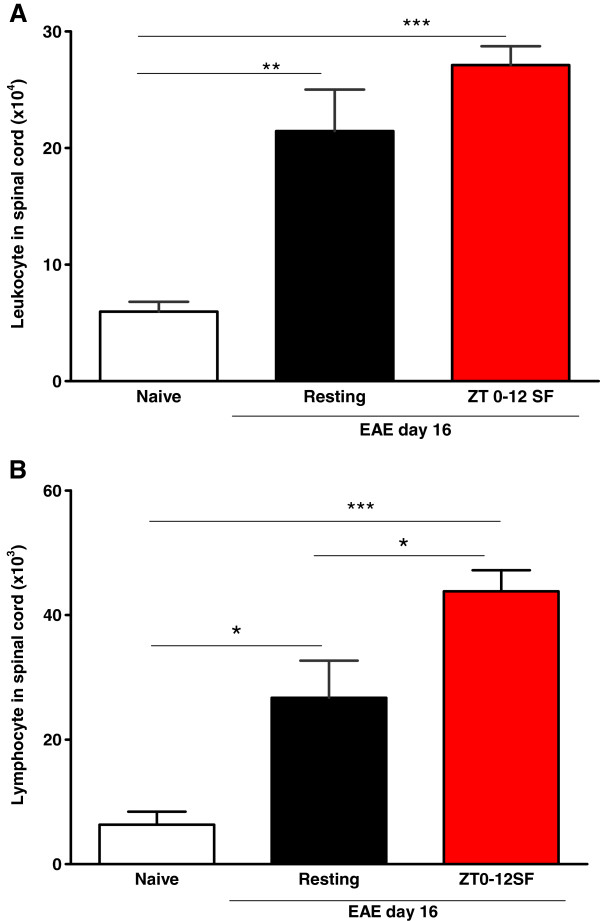
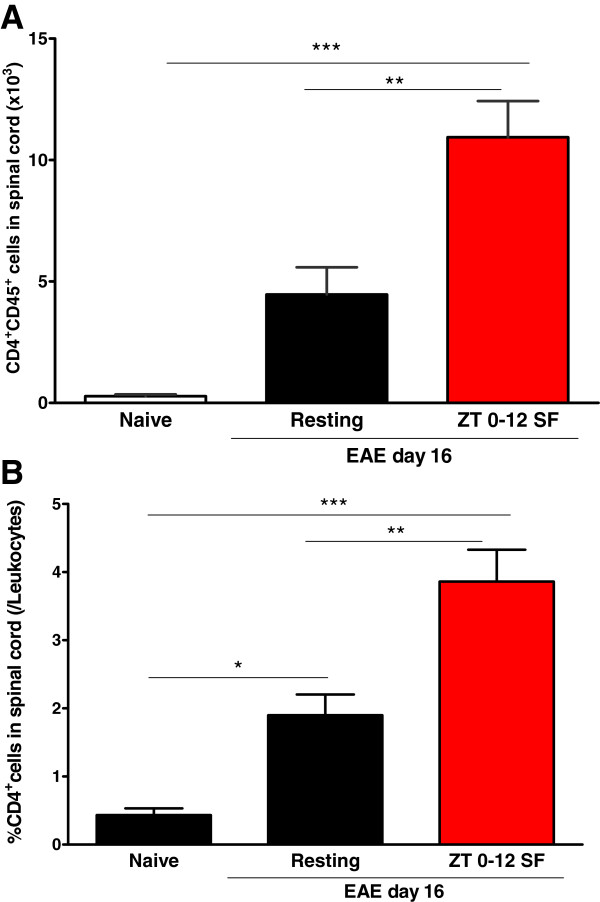
When analyzed 16 days after EAE induction, at which time the SF was terminated, the SF group had a greater number of CD4(+) T cells and a higher percent of CD4(+) cells among all leukocytes in the spinal cord than the resting EAE group. When allowed to recover to 28 days after EAE induction, the SF mice had lower EAE scores than the resting EAE group. EAE induced splenomegaly and an increase of Gr1(+)CD11b(+) myeloid-derived suppressor cells in the splenocytes. However, SF treatment had no additional effect on either peripheral splenocytes or granulocytes that reached the spinal cord.
The SF maneuver facilitated the migration of encephalopathic lymphocytes into the spinal cord. Paradoxically, these mice had a better EAE score after cessation of SF compared with mice without SF.
我们最近发现,患有实验性自身免疫性脑脊髓炎(EAE)的小鼠睡眠片段化(SF)增加且睡眠效率降低,并且SF的程度与疾病严重程度相关。目前尚不清楚睡眠是否以及如何促进自身免疫攻击后的恢复。我们假设SF会促进白细胞穿过血脊髓屏障的浸润,损害免疫调节,从而使EAE恶化。
研究了三组C57小鼠:静息EAE组;SF EAE组,在昼夜节律时间(ZT)0 - 12小时期间,小鼠每天接受12小时的SF操作;以及既无EAE也无SF的单纯对照组。除了监测EAE的发病率和严重程度外,还测定了脊髓以及脾脏中白细胞的免疫谱。
在EAE诱导后16天(此时SF已终止)进行分析时,SF组脊髓中CD4(+) T细胞数量更多,且在所有白细胞中CD4(+)细胞的百分比高于静息EAE组。当恢复到EAE诱导后28天时,SF小鼠的EAE评分低于静息EAE组。EAE诱导脾脏肿大,并使脾细胞中Gr1(+)CD11b(+)髓系来源的抑制性细胞增加。然而,SF处理对到达脊髓的外周脾细胞或粒细胞没有额外影响。
SF操作促进了脑病淋巴细胞向脊髓的迁移。矛盾的是,与未进行SF的小鼠相比,这些小鼠在停止SF后EAE评分更好。