Barnabas Ruanne V, van Rooyen Heidi, Tumwesigye Elioda, Murnane Pamela M, Baeten Jared M, Humphries Hilton, Turyamureeba Bosco, Joseph Philip, Krows Meighan, Hughes James P, Celum Connie
Departments of Global Health and Medicine, University of Washington, Seattle, WA ; Vaccine and Infectious Diseases Division, Fred Hutchinson Cancer Research Center, Seattle, WA.
Human Sciences Research Council, Sweetwaters, KwaZulu-Natal, South Africa.
Lancet HIV. 2014 Nov;1(2):e68-e76. doi: 10.1016/S2352-3018(14)70024-4.
Antiretroviral therapy (ART) significantly decreases HIV-associated morbidity, mortality, and HIV transmission through HIV viral load suppression. In high HIV prevalence settings, outreach strategies are needed to find asymptomatic HIV positive persons, link them to HIV care and ART, and achieve viral suppression.
We conducted a prospective intervention study in two rural communities in KwaZulu-Natal, South Africa, and Mbabara district, Uganda. The intervention included home HIV testing and counseling (HTC), point-of-care CD4 count testing for HIV positive persons, referral to care, and one month then quarterly lay counselor follow-up visits. The outcomes at 12 months were linkage to care, and ART initiation and viral suppression among HIV positive persons eligible for ART (CD4≤350 cells/μL).
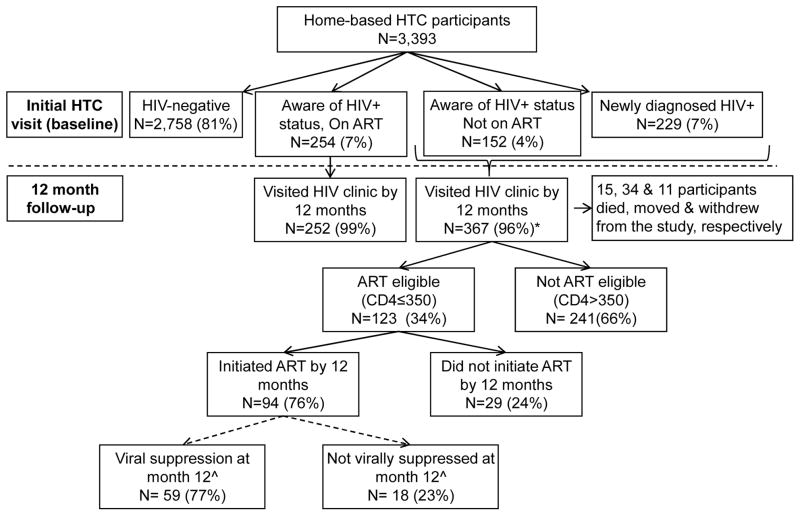
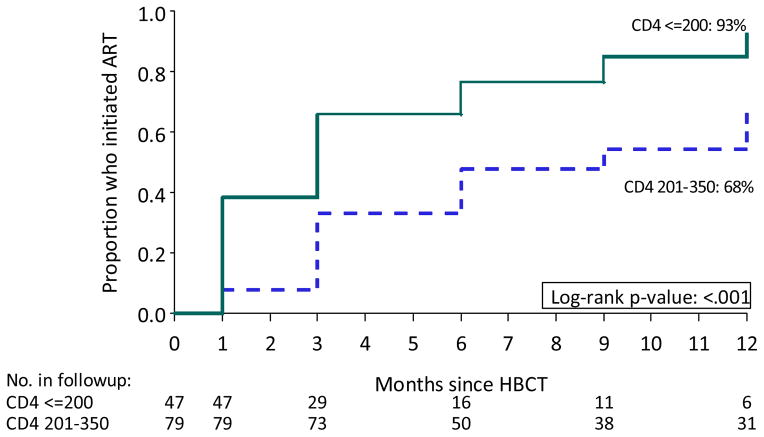
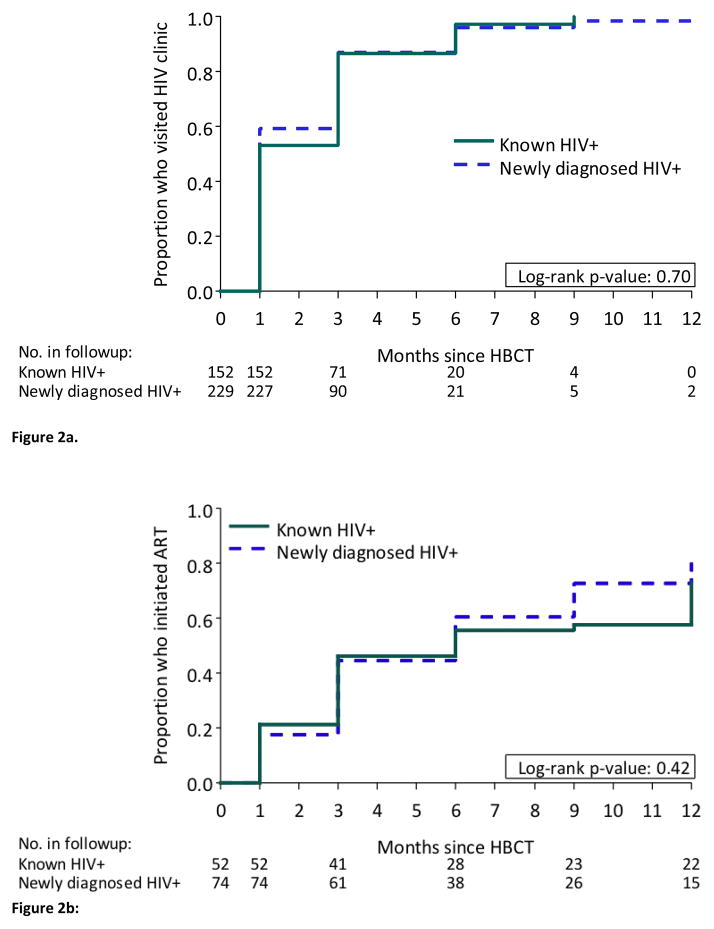
3,393 adults were tested for HIV (96% coverage), of whom 635 (19%) were HIV positive. At baseline, 36% of HIV positive persons were newly identified (64% were previously known to be HIV positive) and 40% were taking ART. By month 12, 619 (97%) of HIV positive persons visited an HIV clinic, and of 123 ART eligible participants, 94 (76%) initiated ART by 12 months. Of the 77 participants on ART by month 9, 59 (77%) achieved viral suppression by month 12. Among all HIV positive persons, the proportion with viral suppression (<1,000 copies/mL) increased from 50% to 65% (p=<0.001) at 12 months.
Community-based HTC in rural South Africa and Uganda achieved high testing coverage and linkage to care. Among those eligible for ART, a high proportion initiated ART and achieved viral suppression, indicating high adherence. Implementation of this HTC approach by existing community health workers in Africa should be evaluated to determine effectiveness and costs.
抗逆转录病毒疗法(ART)通过抑制HIV病毒载量,显著降低了与HIV相关的发病率、死亡率以及HIV传播。在HIV高流行地区,需要采取外展策略来发现无症状的HIV阳性者,将他们与HIV护理和ART联系起来,并实现病毒抑制。
我们在南非夸祖鲁-纳塔尔省的两个农村社区以及乌干达的姆巴巴拉区进行了一项前瞻性干预研究。干预措施包括家庭HIV检测与咨询(HTC)、为HIV阳性者进行即时CD4细胞计数检测、转介至护理机构,以及在一个月后进行季度性的非专业顾问随访。12个月时的结果包括与护理的联系,以及符合ART条件(CD4≤350个细胞/μL)的HIV阳性者开始接受ART治疗并实现病毒抑制。
对3393名成年人进行了HIV检测(覆盖率为96%),其中635人(19%)为HIV阳性。在基线时,36%的HIV阳性者是新确诊的(64%先前已知为HIV阳性),40%正在接受ART治疗。到第12个月时,619名(97%)HIV阳性者前往了HIV诊所,在123名符合ART条件的参与者中,94人(76%)在12个月时开始接受ART治疗。在第9个月时接受ART治疗的77名参与者中,59人(77%)在第12个月时实现了病毒抑制。在所有HIV阳性者中,病毒抑制(<1000拷贝/mL)的比例在12个月时从50%增加到了65%(p<0.001)。
在南非和乌干达农村地区开展的基于社区的HTC实现了高检测覆盖率和与护理的联系。在符合ART条件的人群中,很大一部分人开始接受ART治疗并实现了病毒抑制,表明依从性很高。应评估非洲现有社区卫生工作者实施这种HTC方法的有效性和成本。