Zayyad Zaina, Spudich Serena
Department of Neurology, Yale University School of Medicine, 300 George Street, Room 8300c, New Haven, CT, 06520, USA,
Curr HIV/AIDS Rep. 2015 Mar;12(1):16-24. doi: 10.1007/s11904-014-0255-3.
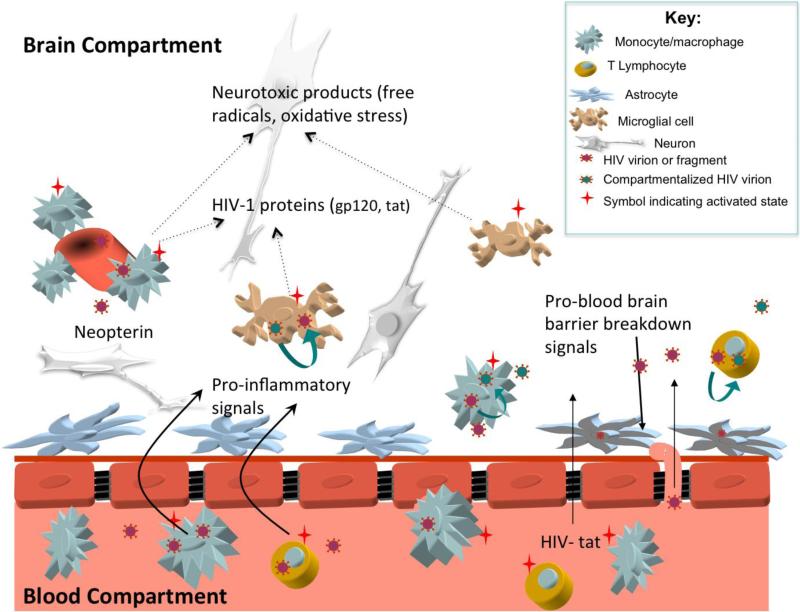
Early in the HIV epidemic, the central nervous system (CNS) was recognized as a target of infection and injury in the advanced stages of disease. Though the most severe forms of HIV-associated neurocognitive disorder (HAND) related to severe immunosuppression are rare in the current era of widespread combination antiretroviral therapy (cART), evidence now supports pathological involvement of the CNS throughout the course of infection. Recent work suggests that the stage for HIV neuropathogenesis may be set with initial viral entry into the CNS, followed by initiation of pathogenetic processes including neuroinflammation and neurotoxicity, and establishment of local, compartmentalized HIV replication that may reflect a tissue reservoir for HIV. Key questions still exist as to when HIV establishes local infection in the CNS, which CNS cells are the primary targets of HIV, and what mechanistic processes underlie the injury to neurons that produce clinical symptoms of HAND. Advances in these areas will provide opportunities for improved treatment of patients with established HAND, prevention of neurological disease in those with early stage infection, and understanding of HIV tissue reservoirs that will aid efforts at HIV eradication.
在艾滋病流行早期,中枢神经系统(CNS)就被认为是疾病晚期感染和损伤的靶点。尽管在当前广泛使用联合抗逆转录病毒疗法(cART)的时代,与严重免疫抑制相关的最严重形式的HIV相关神经认知障碍(HAND)很少见,但现在有证据支持在感染全过程中CNS存在病理改变。最近的研究表明,HIV神经发病机制可能始于病毒最初进入CNS,随后引发包括神经炎症和神经毒性在内的致病过程,并建立局部、分隔的HIV复制,这可能反映了HIV的组织储存库。关于HIV何时在CNS建立局部感染、哪些CNS细胞是HIV的主要靶标以及导致HAND临床症状的神经元损伤的潜在机制过程等关键问题仍然存在。这些领域的进展将为改善已确诊HAND患者的治疗、预防早期感染患者的神经疾病以及理解有助于根除HIV的HIV组织储存库提供机会。