Cichon Christoph, Sabharwal Harshana, Rüter Christian, Schmidt M Alexander
Institute of Infectiology-Center for Molecular Biology of Inflammation (ZMBE); University of Münster ; Münster, Germany.
Tissue Barriers. 2014 Aug 8;2(4):e944446. doi: 10.4161/21688362.2014.944446. eCollection 2014.
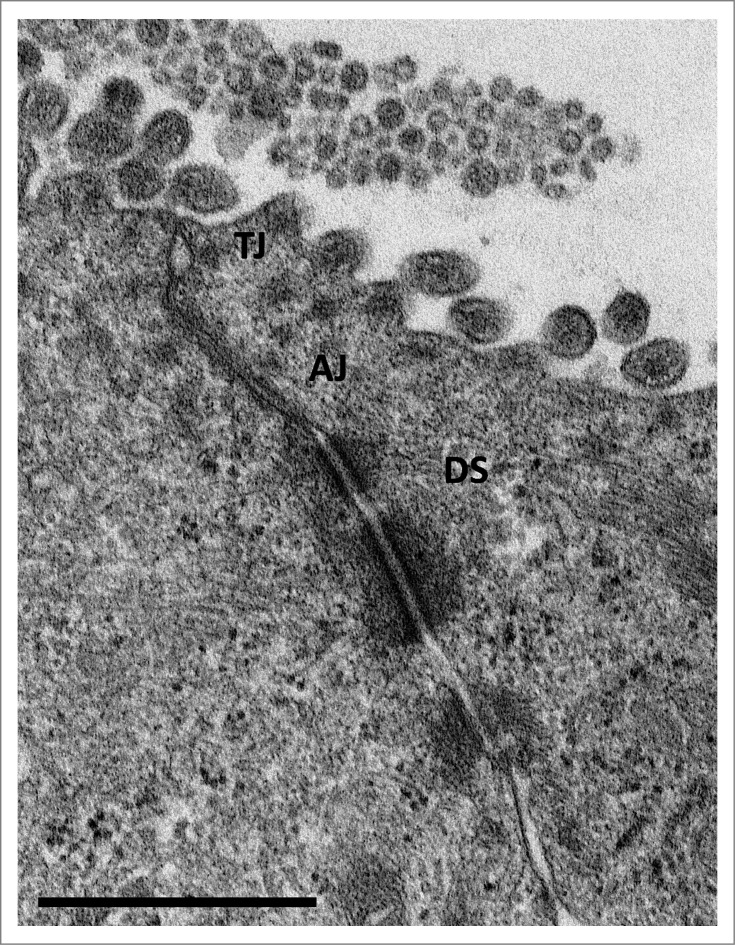
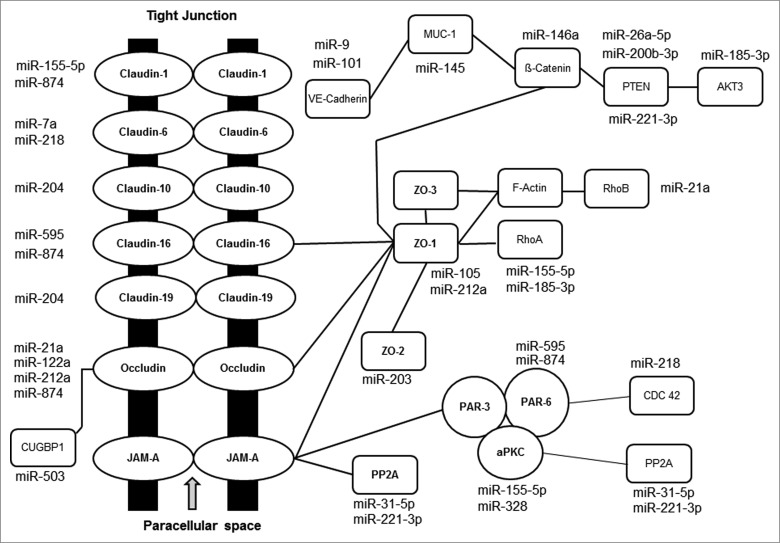
Tightly controlled epithelial and endothelial barriers are a prerequisite for life as these barriers separate multicellular organisms from their environment and serve as first lines of defense. Barriers between neighboring epithelial cells are formed by multiple intercellular junctions including the 'apical junctional complex-AJC' with tight junctions (TJ), adherens junctions (AJ), and desmosomes. TJ consist of tetraspan transmembrane proteins like occludin, various claudins that directly control paracellular permeability, and the 'Junctional Adhesion Molecules' (JAMs). For establishing tight barriers TJ are essential but at the same time have to allow also selective permeability. For this, TJ need to be tightly regulated and controlled. This is organized by a variety of adaptor molecules, i.e., protein kinases, phosphatases and GTPases, which in turn are regulated and fine-tuned involving microRNAs (miRNAs). In this review we summarize available data on the role and targeting of miRNAs in the maintenance of epithelial and/or endothelial barriers.
紧密调控的上皮和内皮屏障是生命的先决条件,因为这些屏障将多细胞生物与其环境分隔开来,并作为第一道防线。相邻上皮细胞之间的屏障由多种细胞间连接形成,包括具有紧密连接(TJ)、黏附连接(AJ)和桥粒的“顶端连接复合体-AJC”。TJ由四跨膜蛋白如闭合蛋白、直接控制细胞旁通透性的各种claudin以及“连接黏附分子”(JAM)组成。对于建立紧密屏障而言,TJ至关重要,但同时也必须允许选择性通透性。为此,TJ需要受到严格调控。这是由多种衔接分子来组织的,即蛋白激酶、磷酸酶和GTP酶,而这些分子又会受到微小RNA(miRNA)的调控和微调。在本综述中,我们总结了关于miRNA在维持上皮和/或内皮屏障中的作用及靶向作用的现有数据。