Psaros Christina, Remmert Jocelyn E, Bangsberg David R, Safren Steven A, Smit Jennifer A
Massachusetts General Hospital, One Bowdoin Square, 7th Floor, Boston, MA, 02140, USA,
Curr HIV/AIDS Rep. 2015 Mar;12(1):1-5. doi: 10.1007/s11904-014-0252-6.
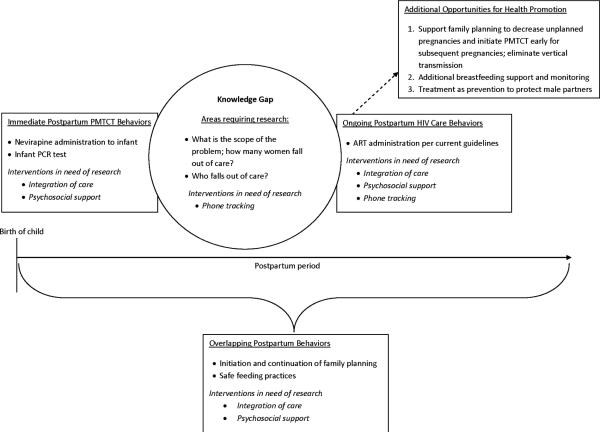
Increased access to testing and treatment means HIV can be managed as a chronic illness, though successful management requires continued engagement with the health care system. Most of the global HIV burden is in sub-Saharan Africa where rates of new infections are consistently higher in women versus men. Pregnancy is often the point at which an HIV diagnosis is made. While preventing mother to child transmission (PMTCT) interventions significantly reduce the rate of vertical transmission of HIV, women must administer ARVs to their infants, adhere to breastfeeding recommendations, and test their infants for HIV after childbirth. Some women will be expected to remain on the ARVs initiated during pregnancy, while others are expected to engage in routine testing so treatment can be reinitiated when appropriate. The postpartum period presents many barriers to sustained treatment adherence and engagement in care. While some studies have examined adherence to postpartum PMTCT guidelines, few have focused on continued engagement in care by the mother, and very few examine adherence beyond the 6-week postpartum visit. Here, we attempt to identify gaps in the research literature and make recommendations on how to address barriers to ongoing postpartum HIV care.
检测和治疗机会的增加意味着艾滋病毒可以作为一种慢性病来管理,不过成功的管理需要持续与医疗保健系统接触。全球大部分艾滋病毒负担位于撒哈拉以南非洲,在那里,女性新感染率一直高于男性。怀孕往往是艾滋病毒诊断的时机。虽然预防母婴传播(PMTCT)干预措施显著降低了艾滋病毒垂直传播率,但女性必须给婴儿服用抗逆转录病毒药物,遵守母乳喂养建议,并在产后对婴儿进行艾滋病毒检测。一些女性预计会继续服用孕期开始的抗逆转录病毒药物,而其他女性则预计要进行常规检测,以便在适当的时候重新开始治疗。产后时期对持续坚持治疗和参与护理存在许多障碍。虽然一些研究调查了对产后预防母婴传播指南的遵守情况,但很少有研究关注母亲持续参与护理的情况,而且极少有研究考察产后6周访视之后的遵守情况。在此,我们试图找出研究文献中的差距,并就如何解决产后艾滋病毒护理持续存在的障碍提出建议。