Gonzalez Vivian M, Dulin Patrick L
Department of Psychology, University of Alaska Anchorage.
J Consult Clin Psychol. 2015 Apr;83(2):335-45. doi: 10.1037/a0038620. Epub 2015 Jan 26.
To date, no research has evaluated the efficacy of a stand-alone, smartphone-based intervention for individuals with an alcohol use disorder. The current pilot study evaluated the short-term outcomes of a smartphone-based intervention for alcohol use disorders compared with an Internet-based brief motivational intervention plus bibliotherapy.
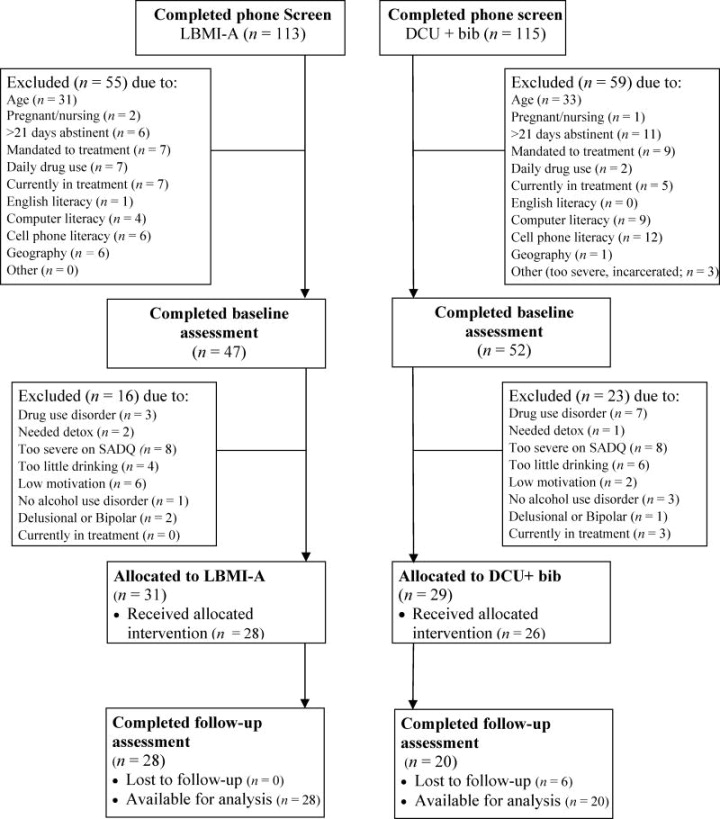
Adults (18 to 45 years old) with an alcohol use disorder received either the Location-Based Monitoring and Intervention for Alcohol Use Disorders (LBMI-A; n = 28), a smartphone-based intervention, or the online Drinker's Check-up plus bibliotherapy (DCU + bib; n = 26). These groups were compared using the Timeline Followback interview for percent days abstinent (PDA), percent heavy drinking days (PHDD), and drinks per week (DPW) from baseline to 6 weeks after the introduction of the interventions.
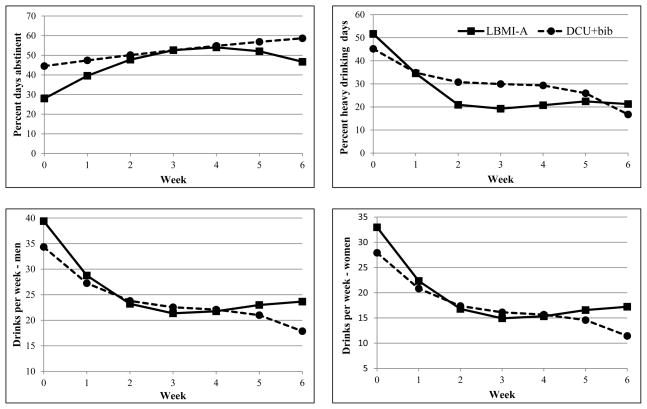
Multilevel models revealed that the LBMI-A resulted in a significant increase in PDA over the course of the study, whereas the DCU + bib did not. Effect sizes for change from baseline for PDA suggest that the DCU + bib resulted in moderate a decrease, whereas the LBMI-A resulted in a large increase in PDA. Both interventions resulted in significant decreases in PHDD and DPW. The LBMI-A produced larger reductions in the first 3 to 4 weeks after the intervention was introduced than the DCU + bib. On weeks with greater LBMI-A usage, participants reported less DPW and PHDD.
Both interventions resulted in significant decreases in alcohol use over the 6-week trial, which is promising for stand-alone technology-based intervention systems aimed at individuals with an alcohol use disorder. (PsycINFO Database Record
迄今为止,尚无研究评估针对酒精使用障碍患者的独立的、基于智能手机的干预措施的疗效。当前的这项试点研究评估了一种针对酒精使用障碍的基于智能手机的干预措施与基于互联网的简短动机干预加书籍治疗相比的短期效果。
患有酒精使用障碍的成年人(18至45岁)接受了基于位置的酒精使用障碍监测与干预(LBMI-A;n = 28),这是一种基于智能手机的干预措施,或者接受了在线饮酒者检查加书籍治疗(DCU + bib;n = 26)。使用时间线回溯访谈对这些组从基线到干预引入后6周的戒酒天数百分比(PDA)、重度饮酒天数百分比(PHDD)和每周饮酒量(DPW)进行比较。
多层次模型显示,在研究过程中,LBMI-A导致PDA显著增加,而DCU + bib则没有。PDA从基线变化的效应大小表明,DCU + bib导致适度下降,而LBMI-A导致PDA大幅增加。两种干预措施均导致PHDD和DPW显著下降。在引入干预后的前3至4周,LBMI-A产生的降幅比DCU + bib更大。在LBMI-A使用量较高的几周里,参与者报告的DPW和PHDD较少。
在为期6周的试验中,两种干预措施均导致酒精使用显著减少,这对于针对酒精使用障碍患者的独立的基于技术的干预系统来说很有前景。(PsycINFO数据库记录)