Ding Wei, Si Meiru, Zhang Weipeng, Zhang Yaoling, Chen Can, Zhang Lei, Lu Zhiqiang, Chen Shaolin, Shen Xihui
State Key Laboratory of Crop Stress Biology for Arid Areas and College of Life Sciences, Northwest A&F University, Yangling, Shaanxi 712100, PR China.
1] State Key Laboratory of Crop Stress Biology for Arid Areas and College of Life Sciences, Northwest A&F University, Yangling, Shaanxi 712100, PR China [2] Biomass Energy Center for Arid and Semi-Arid Lands, Northwest A&F University, Yangling, Shaanxi 712100, PR China.
Sci Rep. 2015 Jan 27;5:8044. doi: 10.1038/srep08044.
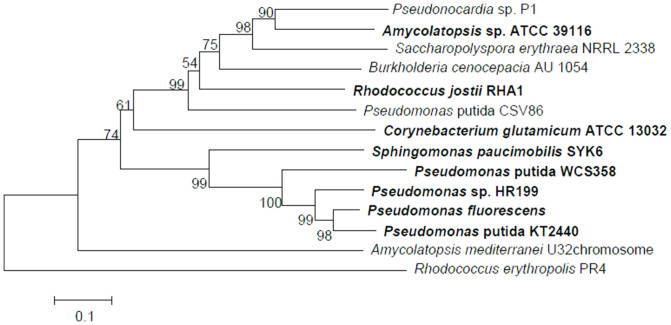
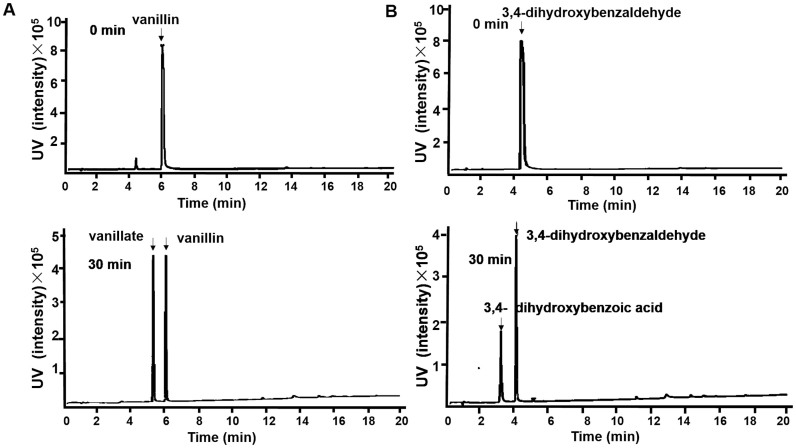
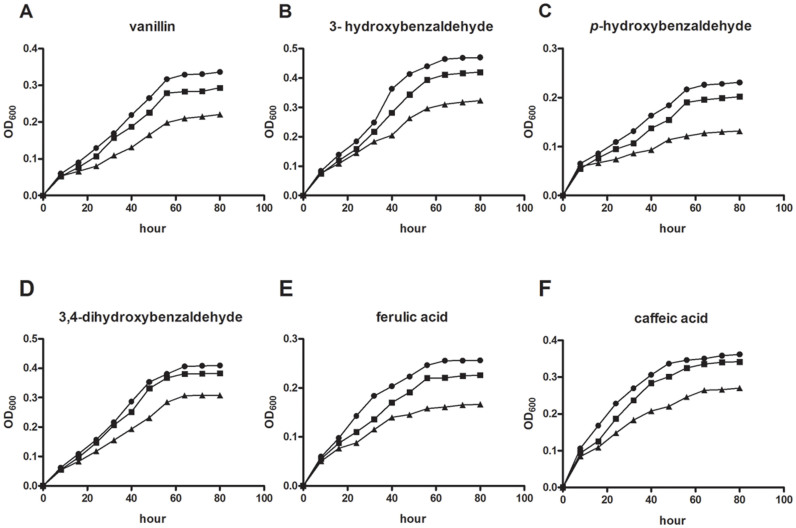
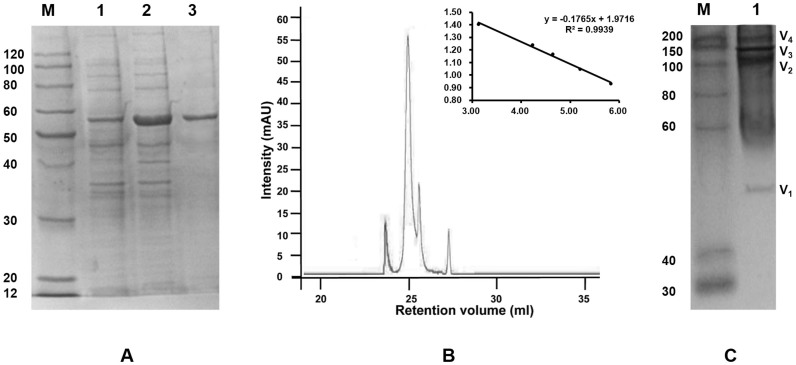
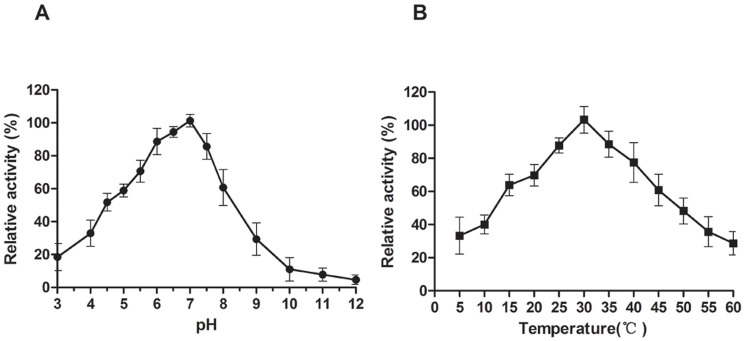
Vanillin dehydrogenase (VDH) is a crucial enzyme involved in the degradation of lignin-derived aromatic compounds. Herein, the VDH from Corynebacterium glutamicum was characterized. The relative molecular mass (Mr) determined by SDS-PAGE was ~51 kDa, whereas the apparent native Mr values revealed by gel filtration chromatography were 49.5, 92.3, 159.0 and 199.2 kDa, indicating the presence of dimeric, trimeric and tetrameric forms. Moreover, the enzyme showed its highest level of activity toward vanillin at pH 7.0 and 30°C, and interestingly, it could utilize NAD(+) and NADP(+) as coenzymes with similar efficiency and showed no obvious difference toward NAD(+) and NADP(+). In addition to vanillin, this enzyme exhibited catalytic activity toward a broad range of substrates, including p-hydroxybenzaldehyde, 3,4-dihydroxybenzaldehyde, o-phthaldialdehyde, cinnamaldehyde, syringaldehyde and benzaldehyde. Conserved catalytic residues or putative cofactor interactive sites were identified based on sequence alignment and comparison with previous studies, and the function of selected residues were verified by site-directed mutagenesis analysis. Finally, the vdh deletion mutant partially lost its ability to grow on vanillin, indicating the presence of alternative VDH(s) in Corynebacterium glutamicum. Taken together, this study contributes to understanding the VDH diversity from bacteria and the aromatic metabolism pathways in C. glutamicum.
香草醛脱氢酶(VDH)是参与木质素衍生芳香族化合物降解的关键酶。在此,对谷氨酸棒杆菌的VDH进行了表征。通过SDS-PAGE测定的相对分子质量(Mr)约为51 kDa,而凝胶过滤色谱显示的表观天然Mr值分别为49.5、92.3、159.0和199.2 kDa,表明存在二聚体、三聚体和四聚体形式。此外,该酶在pH 7.0和30°C时对香草醛的活性最高,有趣的是,它可以以相似的效率利用NAD(+)和NADP(+)作为辅酶,并且对NAD(+)和NADP(+)没有明显差异。除香草醛外,该酶还对多种底物表现出催化活性,包括对羟基苯甲醛、3,4-二羟基苯甲醛、邻苯二甲醛、肉桂醛、丁香醛和苯甲醛。基于序列比对并与先前研究进行比较,鉴定出保守的催化残基或假定的辅因子相互作用位点,并通过定点诱变分析验证了所选残基的功能。最后,vdh缺失突变体在香草醛上生长的能力部分丧失,表明谷氨酸棒杆菌中存在其他VDH。综上所述,本研究有助于理解细菌中VDH的多样性以及谷氨酸棒杆菌中的芳香族代谢途径。