García Isaac E, Maripillán Jaime, Jara Oscar, Ceriani Ricardo, Palacios-Muñoz Angelina, Ramachandran Jayalakshmi, Olivero Pablo, Perez-Acle Tomas, González Carlos, Sáez Juan C, Contreras Jorge E, Martínez Agustín D
Laboratorio de Conexinas y Panexinas, Centro Interdisciplinario de Neurociencias de Valparaíso, Facultad de Ciencias, Universidad de Valparaíso, Valparaíso, Chile.
Department of Pharmacology and Physiology, New Jersey Medical School, Rutgers University, Newark, New Jersey, USA.
J Invest Dermatol. 2015 May;135(5):1338-1347. doi: 10.1038/jid.2015.20. Epub 2015 Jan 27.
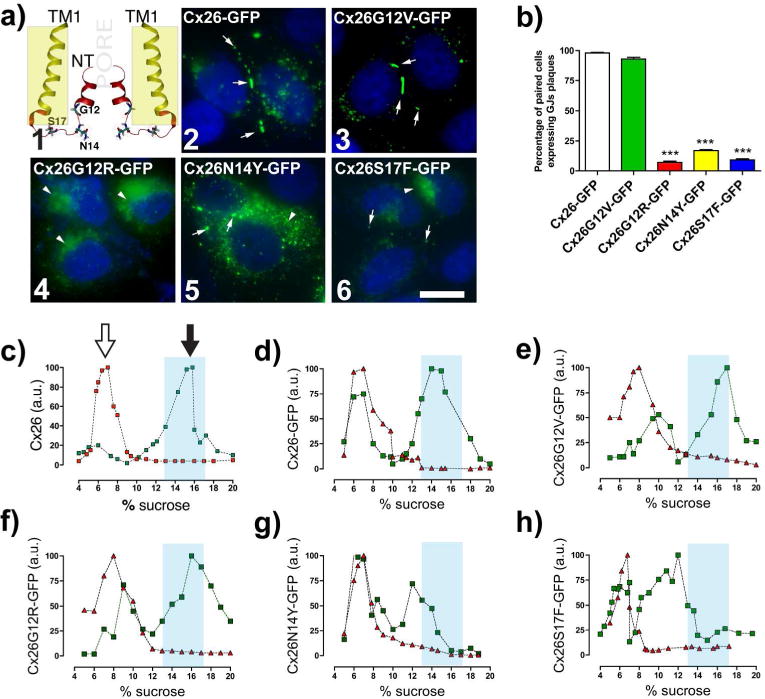
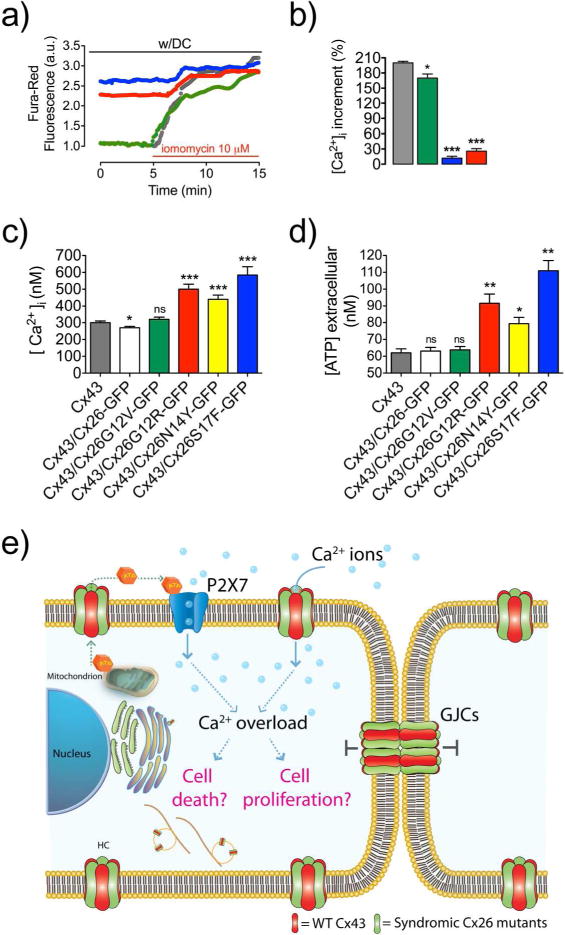
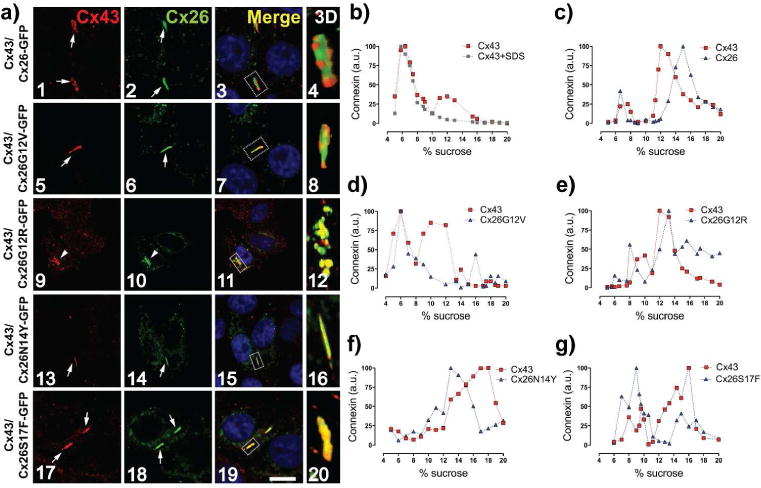
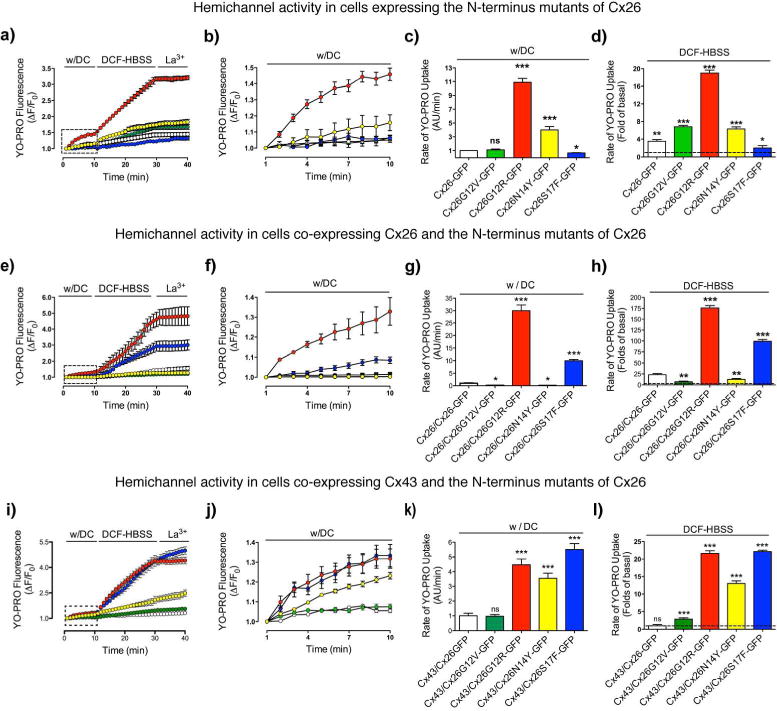
Mutations in Cx26 gene are found in most cases of human genetic deafness. Some mutations produce syndromic deafness associated with skin disorders, like the Keratitis-Ichthyosis-Deafness syndrome (KID). Because in the human skin connexin 26 (Cx26) is co-expressed with other connexins, like Cx43 and Cx30, and as the KID syndrome is inherited as autosomal dominant condition, it is possible that KID mutations change the way Cx26 interacts with other co-expressed connexins. Indeed, some Cx26 syndromic mutations showed gap junction dominant negative effect when co-expressed with wild-type connexins, including Cx26 and Cx43. The nature of these interactions and the consequences on hemichannels and gap junction channel (GJC) functions remain unknown. In this study, we demonstrate that syndromic mutations, at the N terminus segment of Cx26, change connexin oligomerization compatibility, allowing aberrant interactions with Cx43. Strikingly, heteromeric oligomer formed by Cx43/Cx26 (syndromic mutants) shows exacerbated hemichannel activity but nonfunctional GJCs; this also occurs for those Cx26 KID mutants that do not show functional homomeric hemichannels. Heterologous expression of these hyperactive heteromeric hemichannels increases cell membrane permeability, favoring ATP release and Ca(2+) overload. The functional paradox produced by oligomerization of Cx43 and Cx26 KID mutants could underlie the severe syndromic phenotype in human skin.
在大多数人类遗传性耳聋病例中都发现了Cx26基因的突变。一些突变会导致与皮肤疾病相关的综合征性耳聋,如角膜炎-鱼鳞病-耳聋综合征(KID)。由于在人类皮肤中,连接蛋白26(Cx26)与其他连接蛋白如Cx43和Cx30共同表达,并且由于KID综合征是以常染色体显性方式遗传的,所以KID突变有可能改变Cx26与其他共同表达的连接蛋白相互作用的方式。实际上,一些Cx26综合征性突变在与野生型连接蛋白(包括Cx26和Cx43)共同表达时表现出间隙连接显性负效应。这些相互作用的性质以及对半通道和间隙连接通道(GJC)功能的影响仍然未知。在本研究中,我们证明了Cx26 N端片段的综合征性突变会改变连接蛋白的寡聚化兼容性,从而允许与Cx43发生异常相互作用。令人惊讶的是,由Cx43/Cx26(综合征性突变体)形成的异源寡聚体表现出加剧的半通道活性,但GJC无功能;对于那些不表现出功能性同源半通道的Cx26 KID突变体也是如此。这些高活性异源半通道的异源表达增加了细胞膜通透性,有利于ATP释放和Ca(2+)过载。Cx43和Cx26 KID突变体寡聚化产生的功能悖论可能是人类皮肤严重综合征表型的基础。