O'Sullivan D, Murray B J, Ross J F, Whale T F, Price H C, Atkinson J D, Umo N S, Webb M E
Institute for Climate and Atmospheric Science, School of Earth &Environment, University of Leeds, UK.
School of Chemistry and Astbury Centre for Structural Molecular Biology, University of Leeds, UK.
Sci Rep. 2015 Jan 28;5:8082. doi: 10.1038/srep08082.
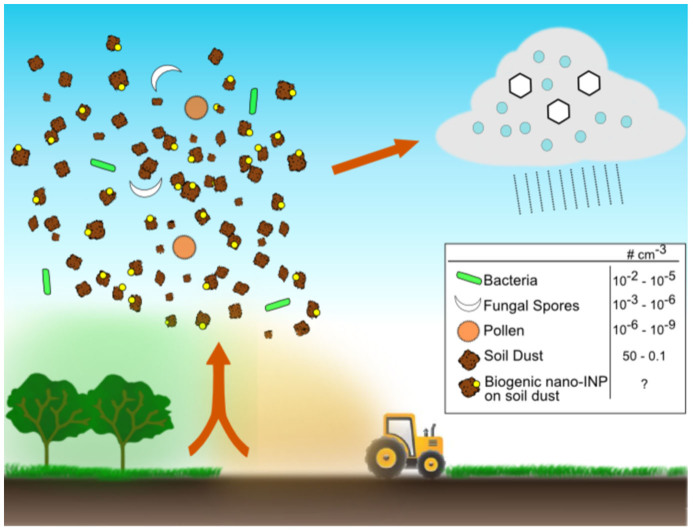
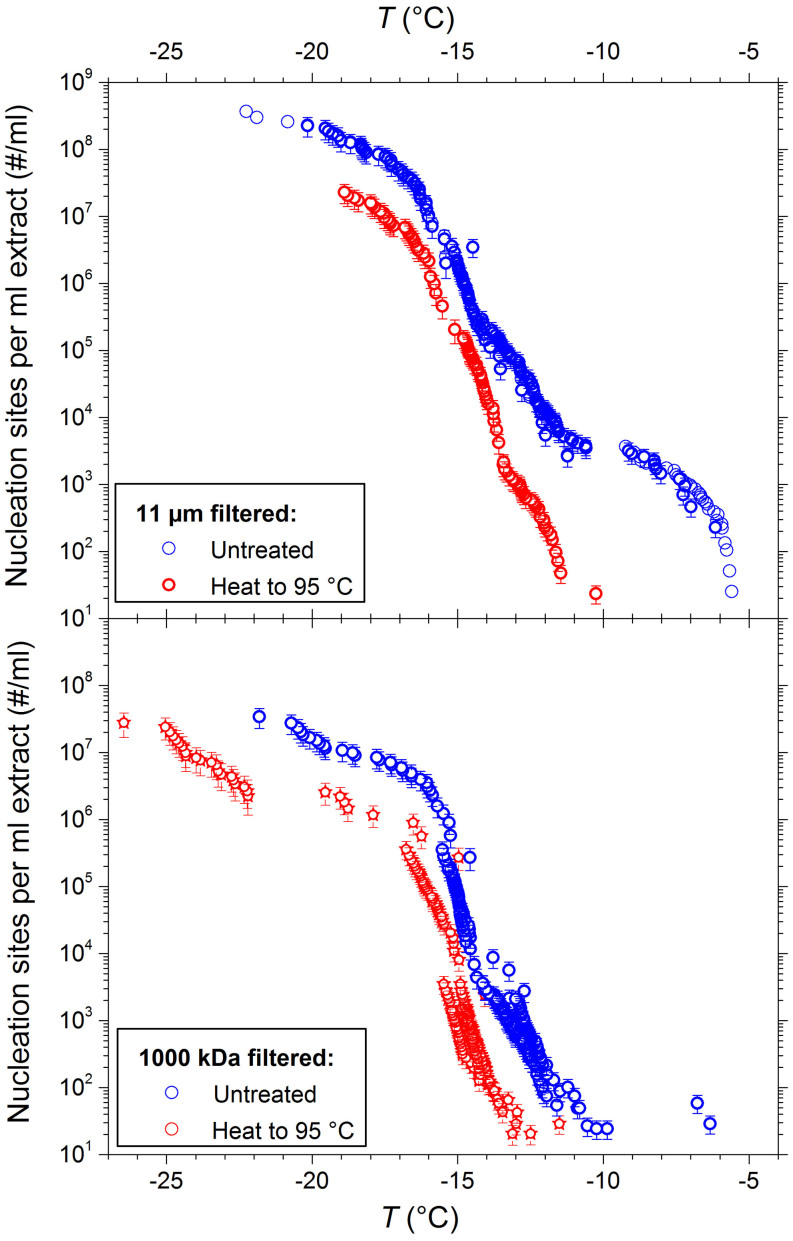
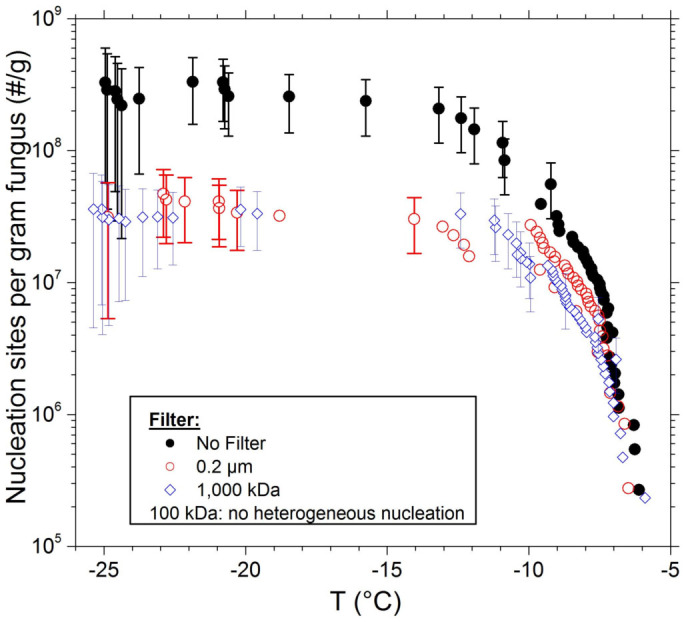
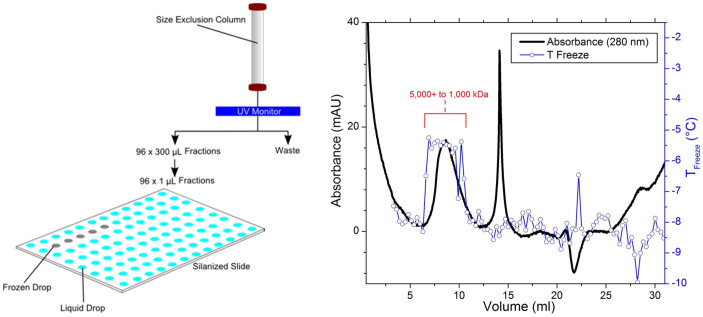
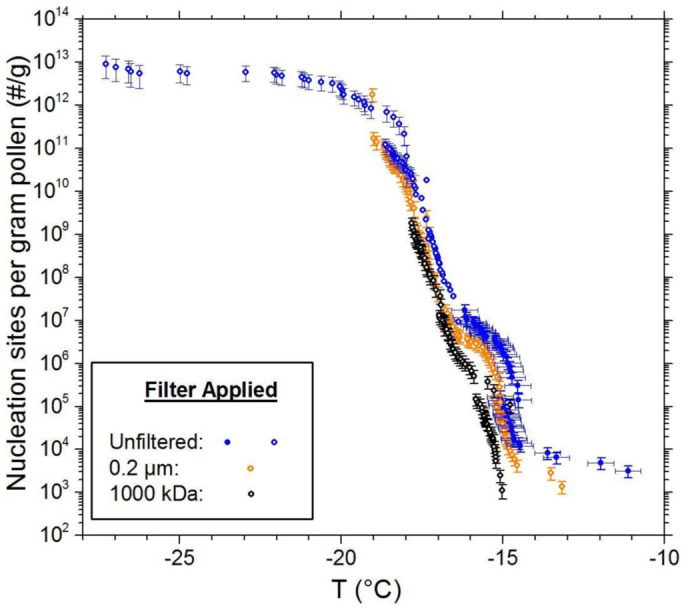
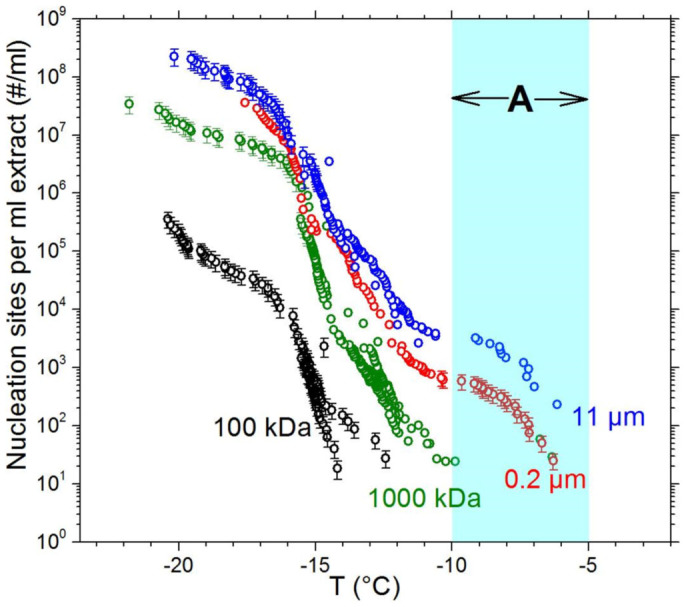
Most studies of the role of biological entities as atmospheric ice-nucleating particles have focused on relatively rare supermicron particles such as bacterial cells, fungal spores and pollen grains. However, it is not clear that there are sufficient numbers of these particles in the atmosphere to strongly influence clouds. Here we show that the ice-nucleating activity of a fungus from the ubiquitous genus Fusarium is related to the presence of nanometre-scale particles which are far more numerous, and therefore potentially far more important for cloud glaciation than whole intact spores or hyphae. In addition, we quantify the ice-nucleating activity of nano-ice nucleating particles (nano-INPs) washed off pollen and also show that nano-INPs are present in a soil sample. Based on these results, we suggest that there is a reservoir of biological nano-INPs present in the environment which may, for example, become aerosolised in association with fertile soil dust particles.
大多数关于生物实体作为大气冰核粒子作用的研究都集中在相对罕见的超微米粒子上,如细菌细胞、真菌孢子和花粉粒。然而,目前尚不清楚大气中是否存在足够数量的这些粒子来对云产生强烈影响。在这里,我们表明,来自无处不在的镰刀菌属的一种真菌的冰核活性与纳米级粒子的存在有关,这些纳米级粒子数量要多得多,因此对于云的冰川化可能比完整的孢子或菌丝体重要得多。此外,我们对从花粉上冲洗下来的纳米冰核粒子(nano-INPs)的冰核活性进行了量化,还表明土壤样品中存在纳米冰核粒子。基于这些结果,我们认为环境中存在生物纳米冰核粒子库,例如,它们可能会与肥沃的土壤尘埃颗粒一起被气溶胶化。