Marcuzzo Stefania, Bonanno Silvia, Kapetis Dimos, Barzago Claudia, Cavalcante Paola, D'Alessandro Sara, Mantegazza Renato, Bernasconi Pia
Neurology IV - Neuromuscular Diseases and Neuroimmunology Unit, Fondazione Istituto Neurologico "Carlo Besta", Via Celoria 11, Milan, 20133, Italy.
Neurology IV - Neuromuscular Diseases and Neuroimmunology Unit, Fondazione Istituto Neurologico "Carlo Besta", Via Celoria 11, Milan, 20133, Italy. sara.d'
Mol Brain. 2015 Jan 28;8:5. doi: 10.1186/s13041-015-0095-0.
Amyotrophic lateral sclerosis (ALS) is a fatal neurodegenerative disease characterized by selective motor neuron degeneration in motor cortex, brainstem and spinal cord. microRNAs (miRNAs) are small non-coding RNAs that bind complementary target sequences and modulate gene expression; they are key molecules for establishing a neuronal phenotype, and in neurodegeneration. Here we investigated neural miR-9, miR-124a, miR-125b, miR-219, miR-134, and cell cycle-related miR-19a and -19b, in G93A-SOD1 mouse brain in pre-symptomatic and late stage disease.
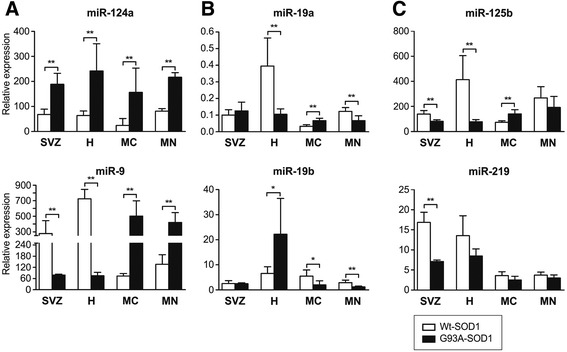
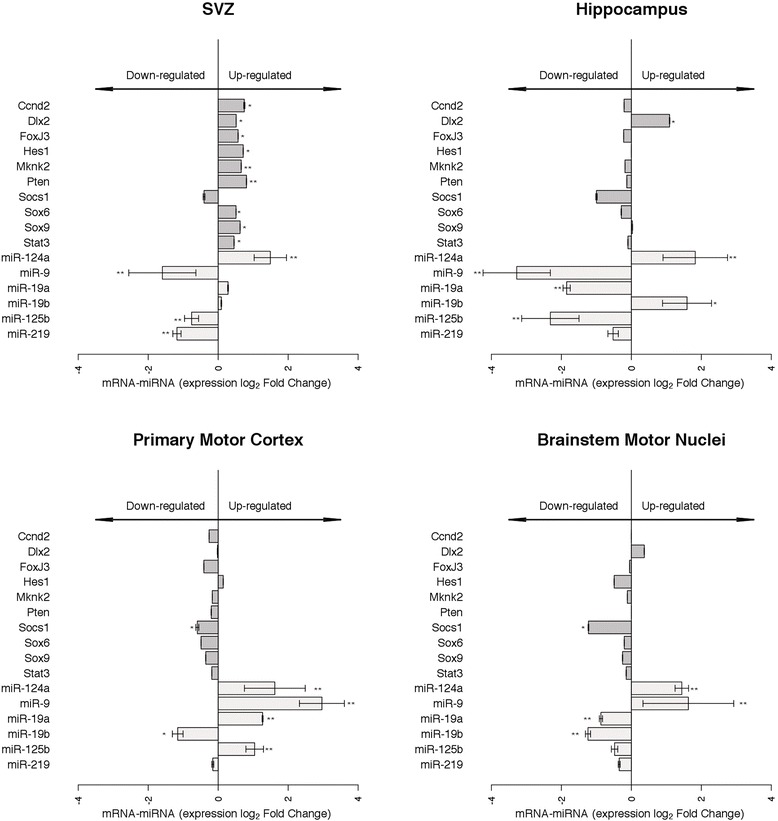
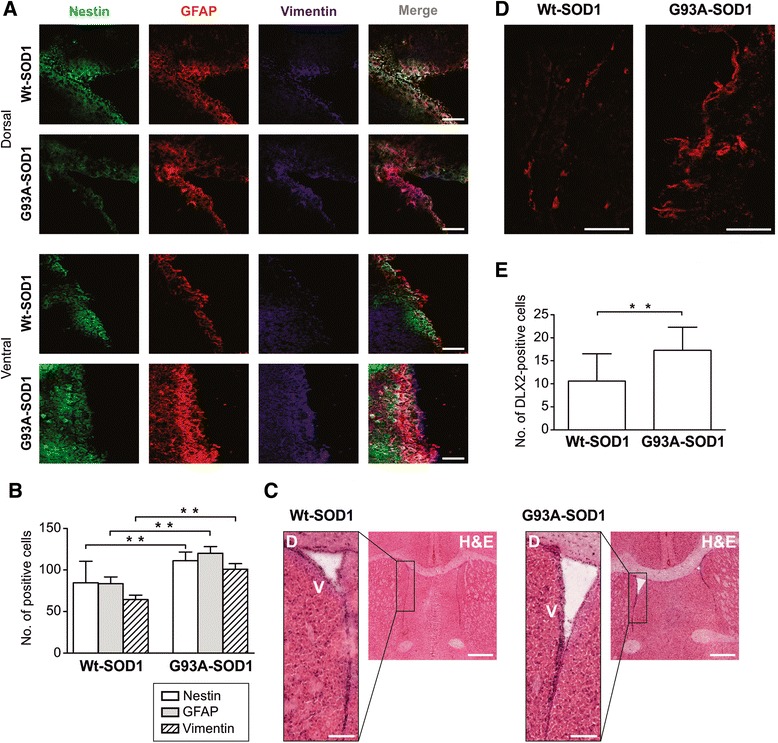
Expression of miR-9, miR-124a, miR-19a and -19b was significantly increased in G93A-SOD1 whole brain at late stage disease compared to B6.SJL and Wt-SOD1 control brains. These miRNAs were then analyzed in manually dissected SVZ, hippocampus, primary motor cortex and brainstem motor nuclei in 18-week-old ALS mice compared to same age controls. In SVZ and hippocampus miR-124a was up-regulated, miR-219 was down-regulated, and numbers of neural stem progenitor cells (NSPCs) were significantly increased. In G93A-SOD1 brainstem motor nuclei and primary motor cortex, miR-9 and miR-124a were significantly up-regulated, miR-125b expression was also increased. miR-19a and -19b were up-regulated in primary motor cortex and hippocampus, respectively. Expression analysis of predicted miRNA targets identified miRNA/target gene pairs differentially expressed in G93A-SOD1 brain regions compared to controls.
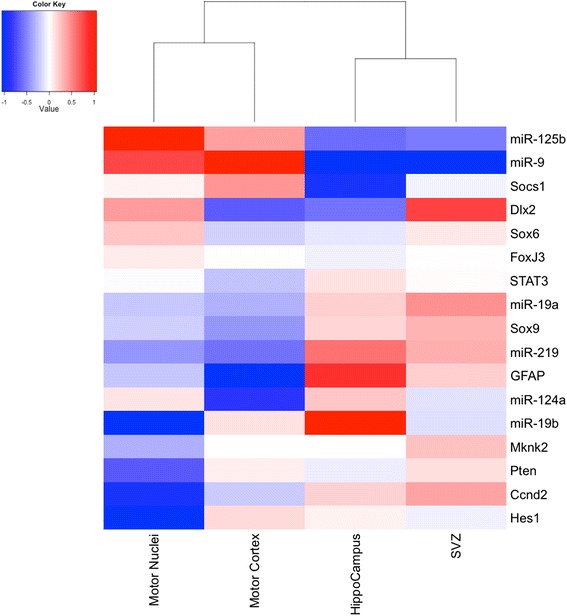
Hierarchical clustering analysis, identifying two clusters of miRNA/target genes, one characterizing brainstem motor nuclei and primary motor cortex, the other hippocampus and SVZ, suggests that altered expression of neural and cell cycle-related miRNAs in these brain regions might contribute to ALS pathogenesis in G93A-SOD1 mice. Re-establishing their expression to normal levels could be a new therapeutic approach to ALS.
肌萎缩侧索硬化症(ALS)是一种致命的神经退行性疾病,其特征是运动皮层、脑干和脊髓中的运动神经元选择性退化。微小RNA(miRNA)是一类小的非编码RNA,它们与互补的靶序列结合并调节基因表达;它们是建立神经元表型以及在神经退行性变过程中的关键分子。在此,我们研究了G93A-SOD1小鼠脑在症状前期和疾病晚期时神经miR-9、miR-124a、miR-125b、miR-219、miR-134以及细胞周期相关的miR-19a和miR-19b的情况。
与B6.SJL和野生型SOD1对照脑相比,G93A-SOD1全脑在疾病晚期时miR-9、miR-124a、miR-19a和miR-19b的表达显著增加。随后,将18周龄的ALS小鼠与同龄对照相比,对手动解剖的室管膜下区(SVZ)、海马体、初级运动皮层和脑干运动核中的这些miRNA进行分析。在SVZ和海马体中,miR-124a上调,miR-219下调,神经干细胞祖细胞(NSPCs)数量显著增加。在G93A-SOD1脑干运动核和初级运动皮层中,miR-9和miR-124a显著上调,miR-125b表达也增加。miR-19a和miR-19b分别在初级运动皮层和海马体中上调。对预测的miRNA靶标的表达分析确定了与对照相比在G93A-SOD1脑区中差异表达的miRNA/靶基因对。
层次聚类分析确定了两个miRNA/靶基因簇,一个表征脑干运动核和初级运动皮层,另一个表征海马体和SVZ,这表明这些脑区中神经和细胞周期相关miRNA的表达改变可能促成了G93A-SOD1小鼠的ALS发病机制。将它们的表达恢复到正常水平可能是一种治疗ALS的新方法。