Alvia Marcela, Aytan Nurgul, Spencer Keith R, Foster Zachariah W, Rauf Nazifa Abdul, Guilderson Latease, Robey Ian, Averill James G, Walker Sean E, Alvarez Victor E, Huber Bertrand R, Mathais Rebecca, Cormier Kerry A, Nicks Raymond, Pothast Morgan, Labadorf Adam, Agus Filisia, Alosco Michael L, Mez Jesse, Kowall Neil W, McKee Ann C, Brady Christopher B, Stein Thor D
Boston University Alzheimer's Disease Research Center, Boston University CTE Center, Boston University School of Medicine, Boston, MA, United States.
Department of Neurology, Boston University School of Medicine, Boston, MA, United States.
Front Neurosci. 2022 May 19;16:855096. doi: 10.3389/fnins.2022.855096. eCollection 2022.
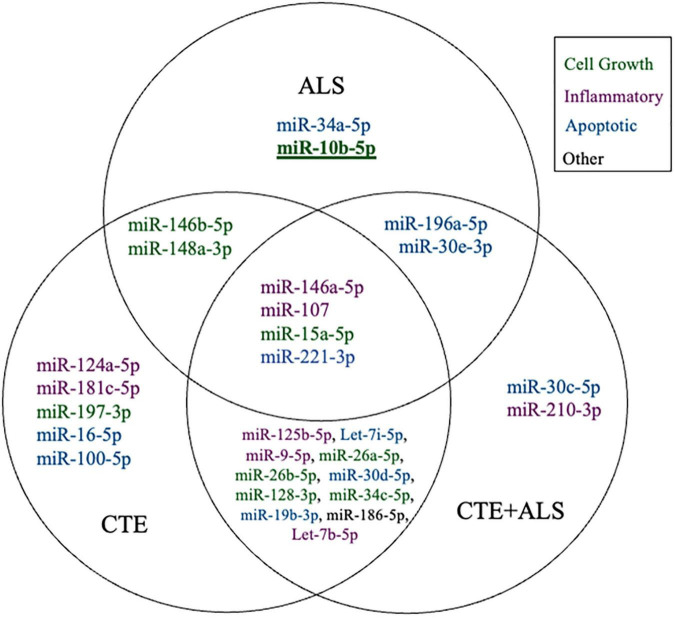
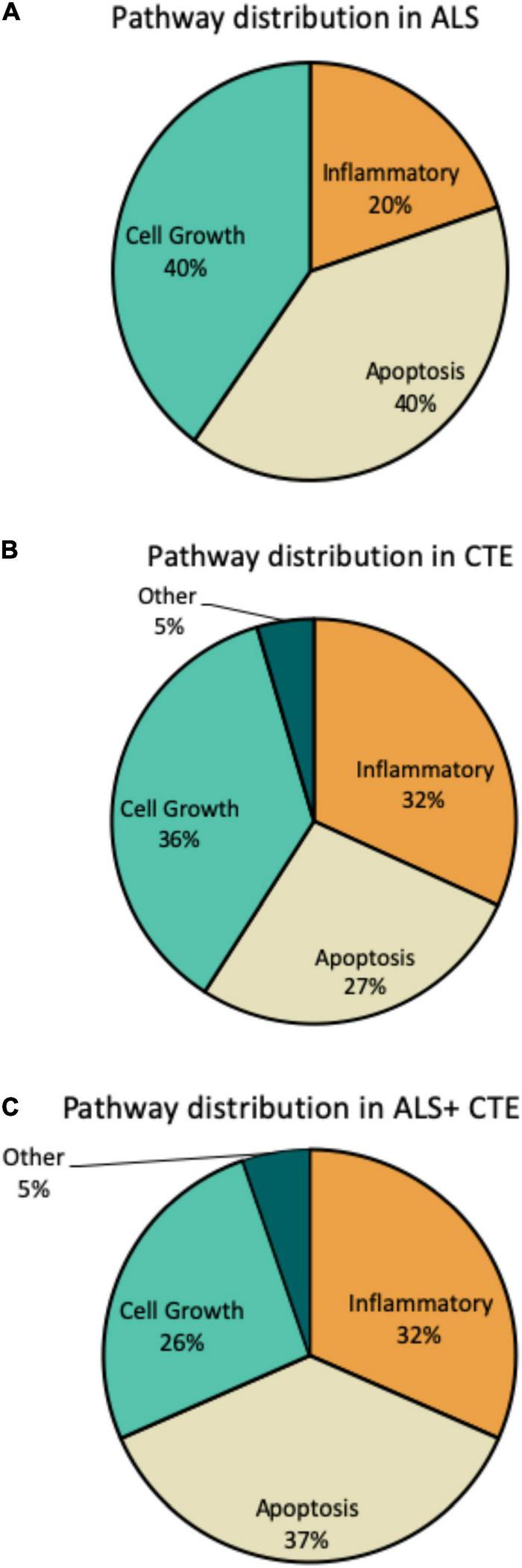
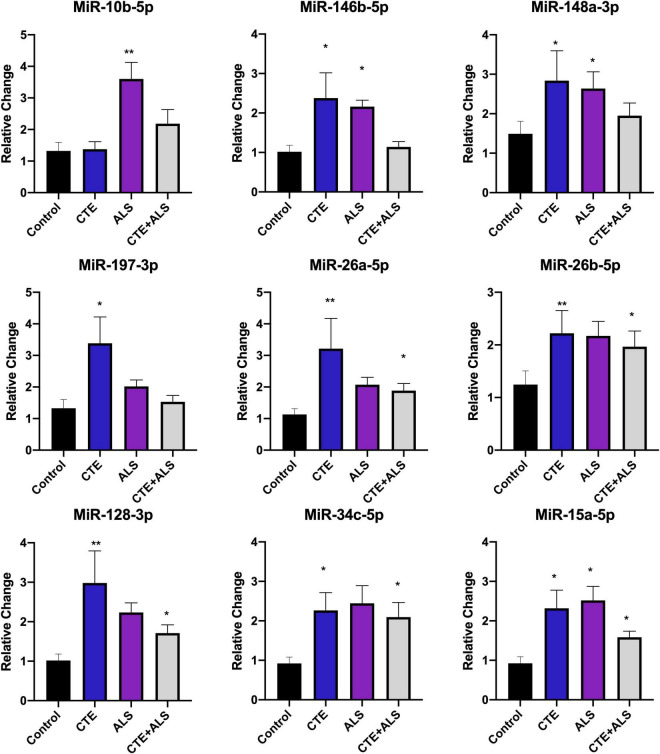
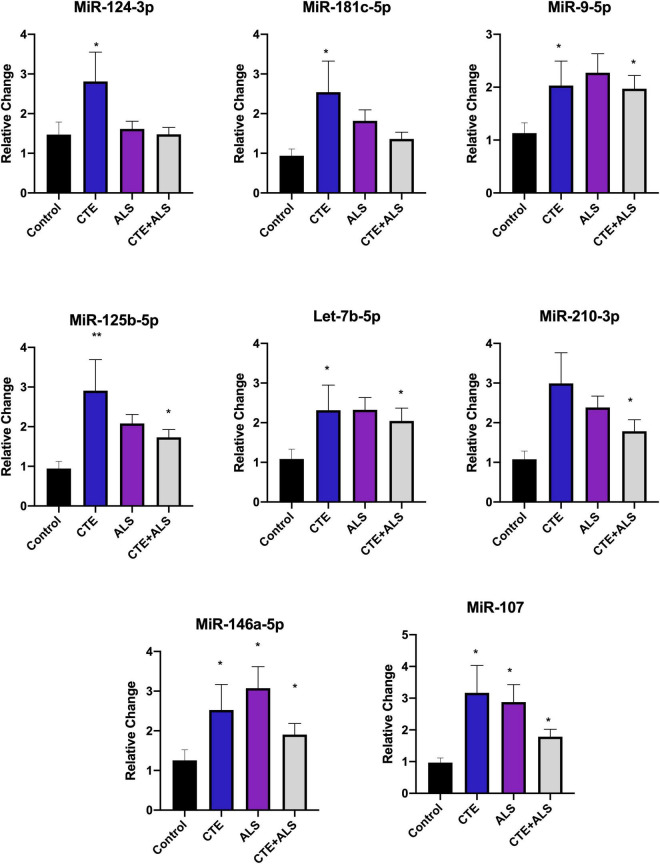
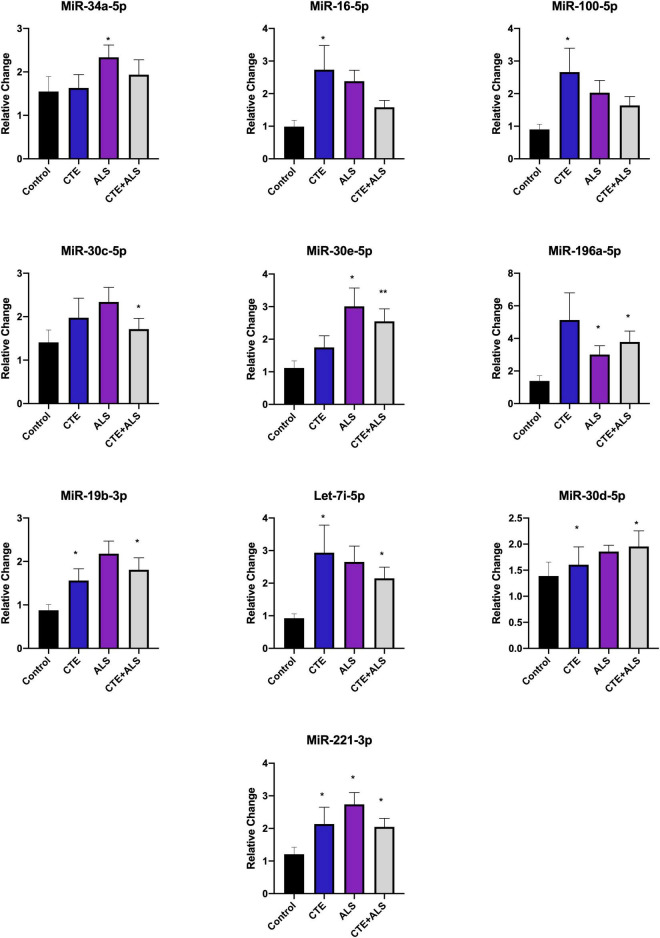
Repetitive head impacts (RHI) and traumatic brain injuries are risk factors for the neurodegenerative diseases chronic traumatic encephalopathy (CTE) and amyotrophic lateral sclerosis (ALS). ALS and CTE are distinct disorders, yet in some instances, share pathology, affect similar brain regions, and occur together. The pathways involved and biomarkers for diagnosis of both diseases are largely unknown. MicroRNAs (miRNAs) involved in gene regulation may be altered in neurodegeneration and be useful as stable biomarkers. Thus, we set out to determine associations between miRNA levels and disease state within the prefrontal cortex in a group of brain donors with CTE, ALS, CTE + ALS and controls. Of 47 miRNAs previously implicated in neurological disease and tested here, 28 (60%) were significantly different between pathology groups. Of these, 21 (75%) were upregulated in both ALS and CTE, including miRNAs involved in inflammatory, apoptotic, and cell growth/differentiation pathways. The most significant change occurred in miR-10b, which was significantly increased in ALS, but not CTE or CTE + ALS. Overall, we found patterns of miRNA expression that are common and unique to CTE and ALS and that suggest shared and distinct mechanisms of pathogenesis.
重复性头部撞击(RHI)和创伤性脑损伤是神经退行性疾病慢性创伤性脑病(CTE)和肌萎缩侧索硬化症(ALS)的危险因素。ALS和CTE是不同的疾病,但在某些情况下,它们有共同的病理学特征,影响相似的脑区,且会同时出现。这两种疾病所涉及的途径和诊断生物标志物在很大程度上尚不清楚。参与基因调控的微小RNA(miRNA)在神经退行性变中可能会发生改变,并可用作稳定的生物标志物。因此,我们着手确定一组患有CTE、ALS、CTE + ALS的脑捐献者以及对照组的前额叶皮质中miRNA水平与疾病状态之间的关联。在先前涉及神经疾病并在此进行检测的47种miRNA中,28种(60%)在病理组之间存在显著差异。其中,21种(75%)在ALS和CTE中均上调,包括参与炎症、凋亡和细胞生长/分化途径的miRNA。最显著的变化发生在miR-10b上,它在ALS中显著增加,但在CTE或CTE + ALS中没有增加。总体而言,我们发现了CTE和ALS共同的以及独特的miRNA表达模式,这表明它们在发病机制上有共同和不同的机制。