Saadeldin Mona K, Shawer Heba, Mostafa Ahmed, Kassem Neemat M, Amleh Asma, Siam Rania
Biotechnology Department, American University in Cairo New Cairo, Egypt.
National Cancer Institute, Cairo University New Cairo, Egypt.
Front Genet. 2015 Jan 13;5:425. doi: 10.3389/fgene.2014.00425. eCollection 2014.
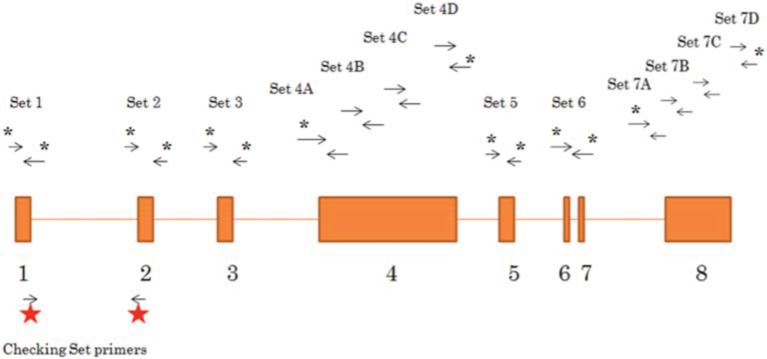
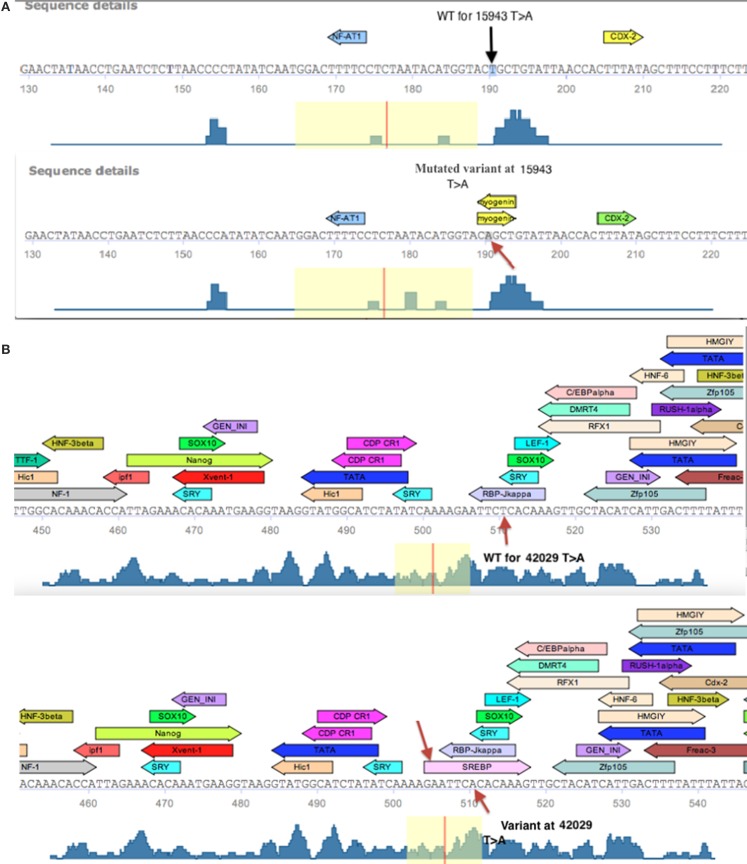
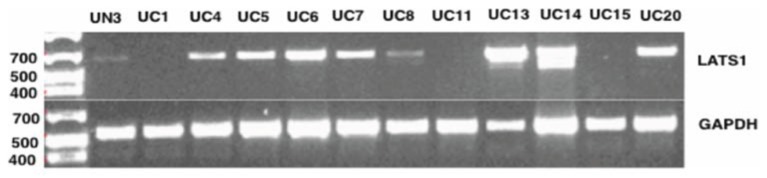
LATS1, the large tumor suppressor 1 gene, encodes for a serine/threonine kinase protein and is implicated in cell cycle progression. LATS1 is down-regulated in various human cancers, such as breast cancer, and astrocytoma. Point mutations in LATS1 were reported in human sarcomas. Additionally, loss of heterozygosity of LATS1 chromosomal region predisposes to breast, ovarian, and cervical tumors. In the current study, we investigated LATS1 genetic variations including single nucleotide polymorphisms (SNPs), in 28 Egyptian patients with either urinary bladder or colon cancers. The LATS1 gene was amplified and sequenced and the expression of LATS1 at the RNA level was assessed in 12 urinary bladder cancer samples. We report, the identification of a total of 29 variants including previously identified SNPs within LATS1 coding and non-coding sequences. A total of 18 variants were novel. Majority of the novel variants, 13, were mapped to intronic sequences and un-translated regions of the gene. Four of the five novel variants located in the coding region of the gene, represented missense mutations within the serine/threonine kinase catalytic domain. Interestingly, LATS1 RNA steady state levels was lost in urinary bladder cancerous tissue harboring four specific SNPs (16045 + 41736 + 34614 + 56177) positioned in the 5'UTR, intron 6, and two silent mutations within exon 4 and exon 8, respectively. This study identifies novel single-base-sequence alterations in the LATS1 gene. These newly identified variants could potentially be used as novel diagnostic or prognostic tools in cancer.
大肿瘤抑制因子1基因(LATS1)编码一种丝氨酸/苏氨酸激酶蛋白,并与细胞周期进程有关。LATS1在多种人类癌症中表达下调,如乳腺癌和星形细胞瘤。人类肉瘤中报道了LATS1的点突变。此外,LATS1染色体区域的杂合性缺失易患乳腺癌、卵巢癌和宫颈癌。在本研究中,我们调查了28例患有膀胱癌或结肠癌的埃及患者中LATS1的基因变异,包括单核苷酸多态性(SNP)。对LATS1基因进行扩增和测序,并在12例膀胱癌样本中评估LATS1在RNA水平的表达。我们报告,在LATS1编码和非编码序列中总共鉴定出29个变异,包括先前鉴定的SNP。其中共有18个变异是新发现的。大多数新变异(13个)定位于该基因的内含子序列和非翻译区。位于该基因编码区的5个新变异中有4个代表丝氨酸/苏氨酸激酶催化域内的错义突变。有趣的是,在含有位于5'UTR、内含子6的四个特定SNP(16045 + 41736 + 34614 + 56177)以及外显子4和外显子8内的两个沉默突变的膀胱癌组织中,LATS1 RNA稳态水平丧失。本研究鉴定了LATS1基因中新的单碱基序列改变。这些新鉴定的变异有可能用作癌症新的诊断或预后工具。