Wang Ying, Wang Dapeng, Wu Jie, Wang Bohan, Gao Xianhui, Wang Liangjun, Ma Honglin
Department of Occupational and Environmental Health, School of Public Health, Liaoning Medical University, Jinzhou, Liaoning 121001, China.
Biomed Res Int. 2015;2015:278931. doi: 10.1155/2015/278931. Epub 2015 Jan 6.
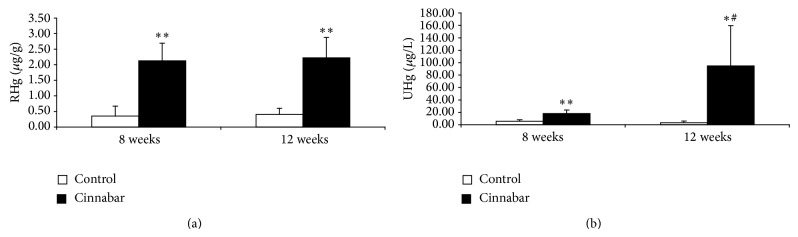
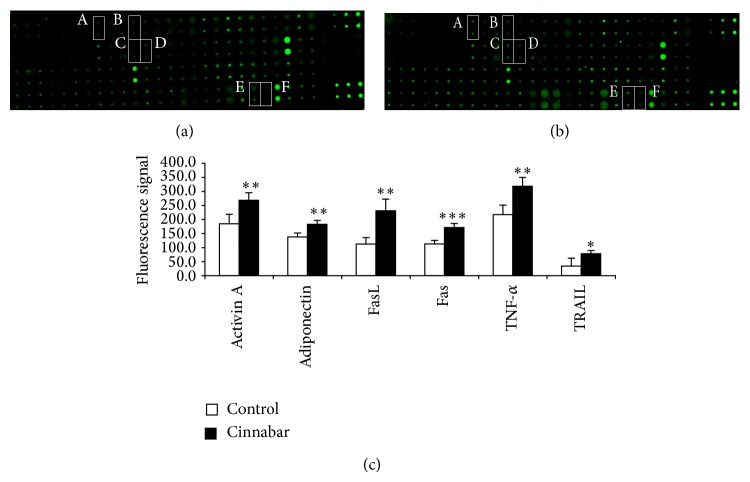
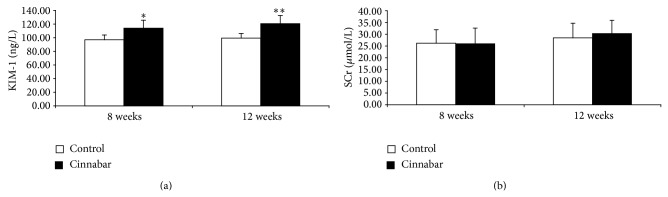
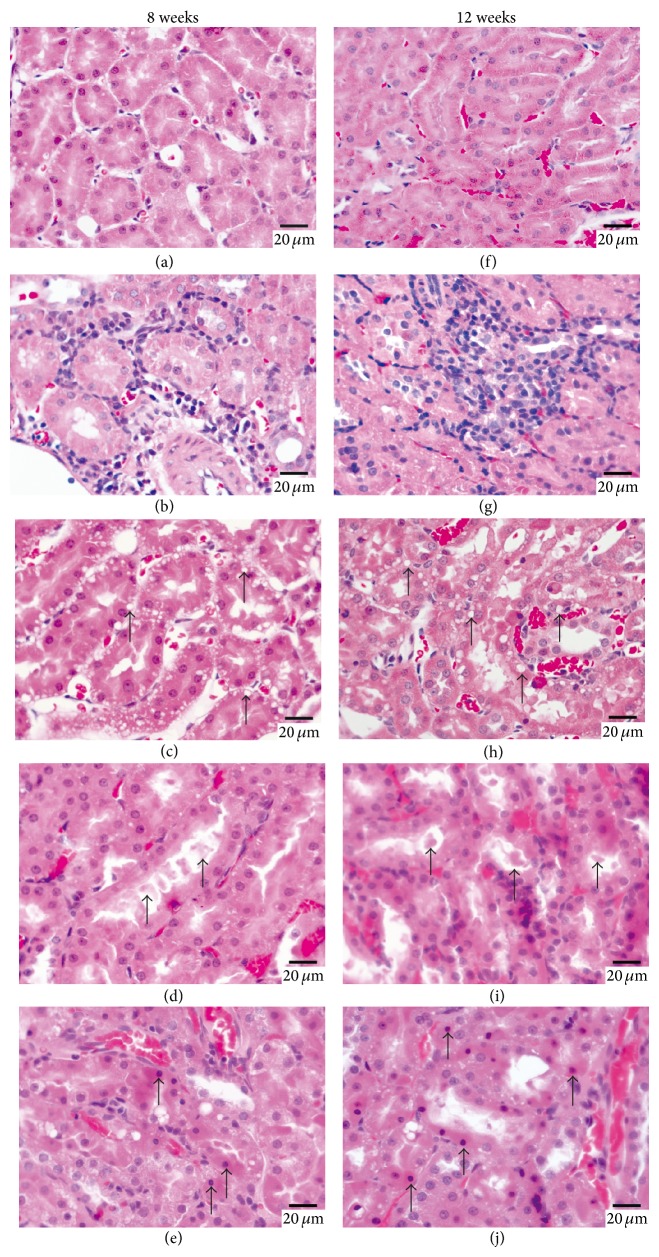
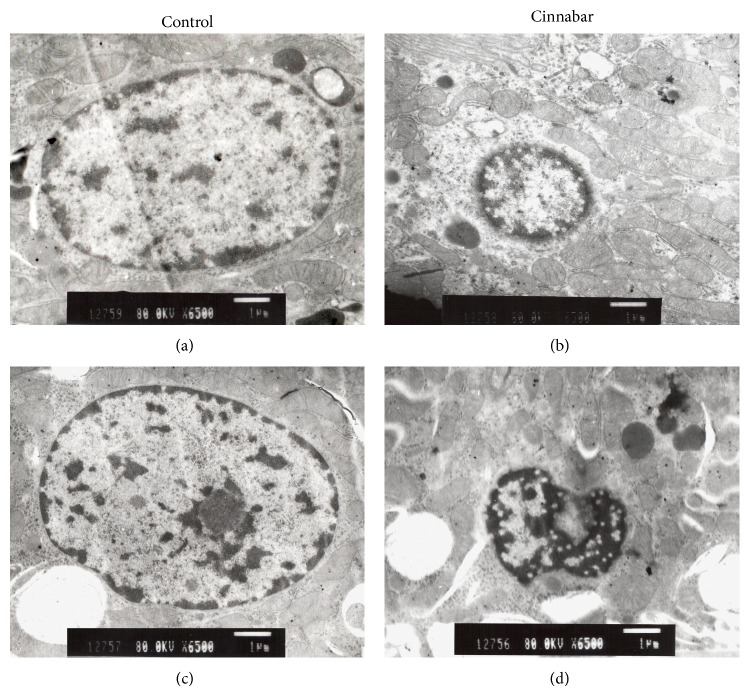
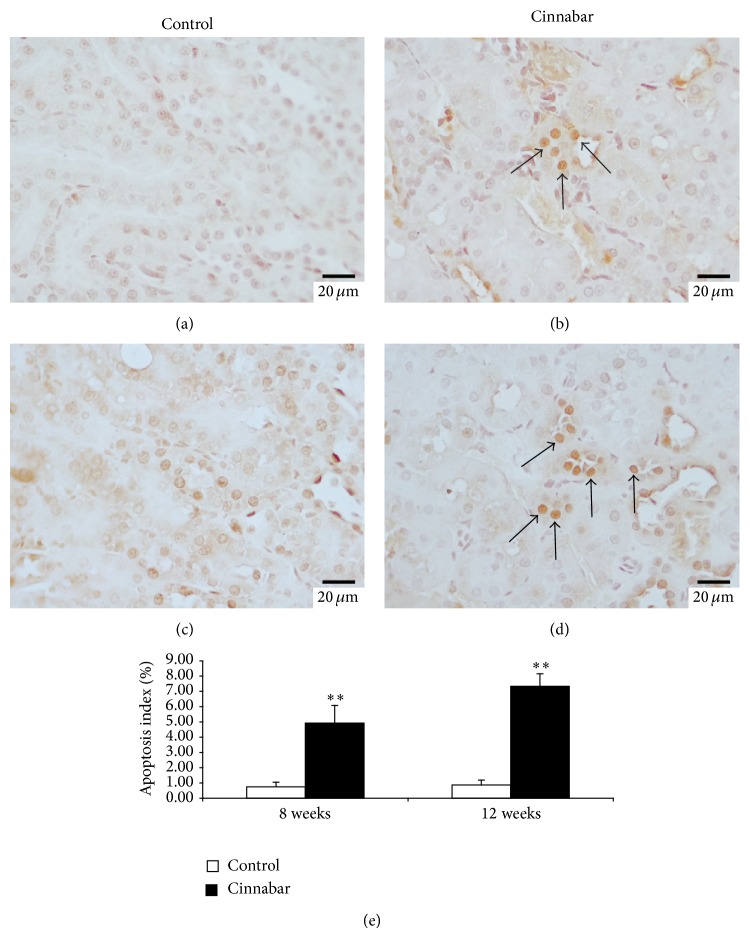
The aim of this study was to explore the role of apoptosis in cinnabar-induced renal injury in rats. To test this role, rats were dosed orally with cinnabar (1 g/kg/day) for 8 weeks or 12 weeks, and the control rats were treated with 5% carboxymethylcellulose solution. Levels of urinary mercury (UHg), renal mercury (RHg), serum creatinine (SCr), and urine kidney injury molecule 1 (KIM-1) were assessed, and renal pathology was analyzed. Apoptotic cells were identified and the apoptotic index was calculated. A rat antibody array was used to analyze expression of cytokines associated with apoptosis. Results from these analyses showed that UHg, RHg, and urine KIM-1, but not SCr, levels were significantly increased in cinnabar-treated rats. Renal pathological changes in cinnabar-treated rats included vacuolization of tubular cells, formation of protein casts, infiltration of inflammatory cells, and increase in the number of apoptotic tubular cells. In comparison to the control group, expression of FasL, Fas, TNF-α, TRAIL, activin A, and adiponectin was upregulated in the cinnabar-treated group. Collectively, our results suggest that prolonged use of cinnabar results in kidney damage due to accumulation of mercury and that the underlying mechanism involves apoptosis of tubular cells via a death receptor-mediated pathway.
本研究旨在探讨细胞凋亡在朱砂诱导的大鼠肾损伤中的作用。为验证这一作用,给大鼠口服朱砂(1克/千克/天),持续8周或12周,对照组大鼠用5%羧甲基纤维素溶液处理。评估尿汞(UHg)、肾汞(RHg)、血清肌酐(SCr)和尿肾损伤分子1(KIM-1)水平,并分析肾脏病理学。鉴定凋亡细胞并计算凋亡指数。使用大鼠抗体芯片分析与细胞凋亡相关的细胞因子表达。这些分析结果表明,朱砂处理组大鼠的UHg、RHg和尿KIM-1水平显著升高,但SCr水平未升高。朱砂处理组大鼠的肾脏病理变化包括肾小管细胞空泡化、蛋白管型形成、炎性细胞浸润以及凋亡肾小管细胞数量增加。与对照组相比,朱砂处理组中FasL、Fas、TNF-α、TRAIL、激活素A和脂联素的表达上调。总体而言,我们的结果表明,长期使用朱砂会因汞蓄积导致肾损伤,其潜在机制涉及通过死亡受体介导的途径引起肾小管细胞凋亡。