Schweinhuber Stefanie K, Meßerschmidt Tania, Hänsch Robert, Korte Martin, Rothkegel Martin
Cellular Neurobiology, Zoological Institute, TU Braunschweig, Braunschweig, Germany.
Molecular and Cell Biology of Plants, Institute of Plant Biology, TU Braunschweig, Braunschweig, Germany.
PLoS One. 2015 Jan 28;10(1):e0117244. doi: 10.1371/journal.pone.0117244. eCollection 2015.
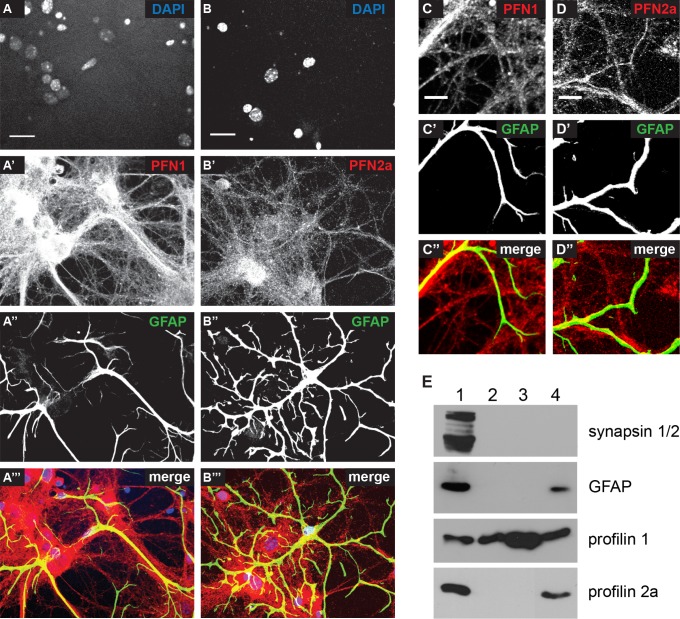
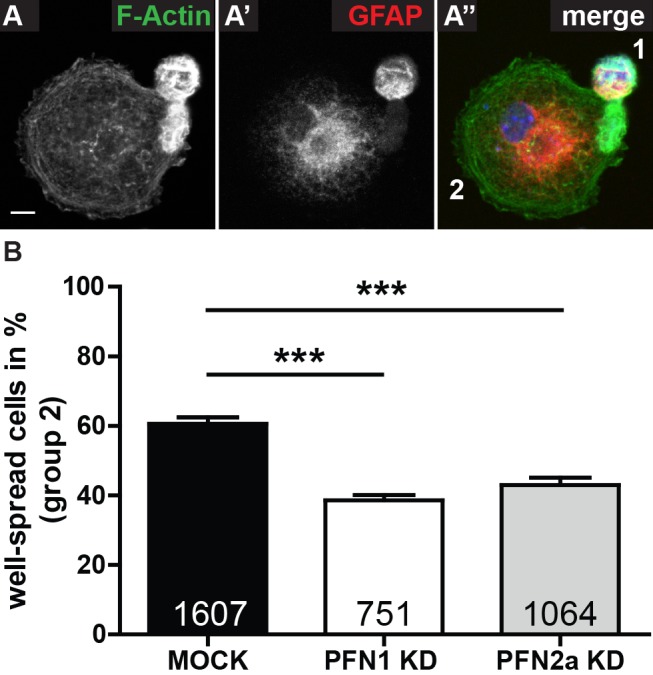
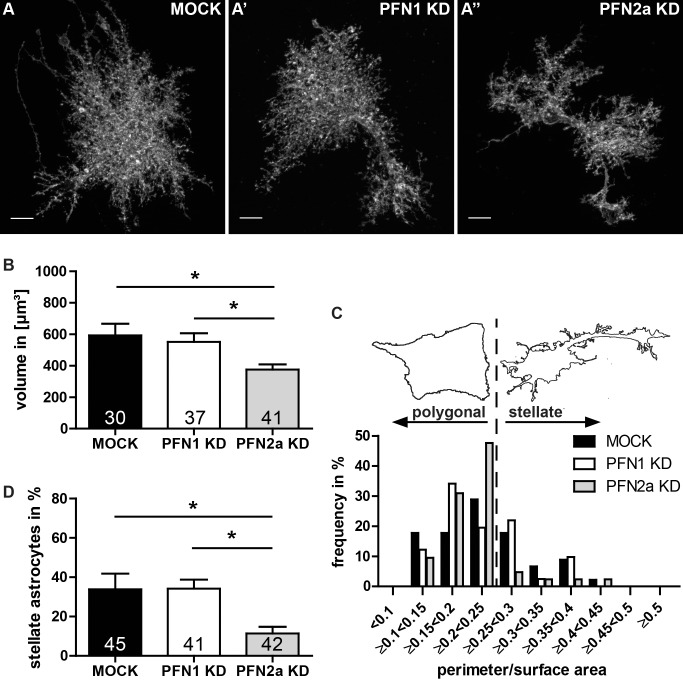
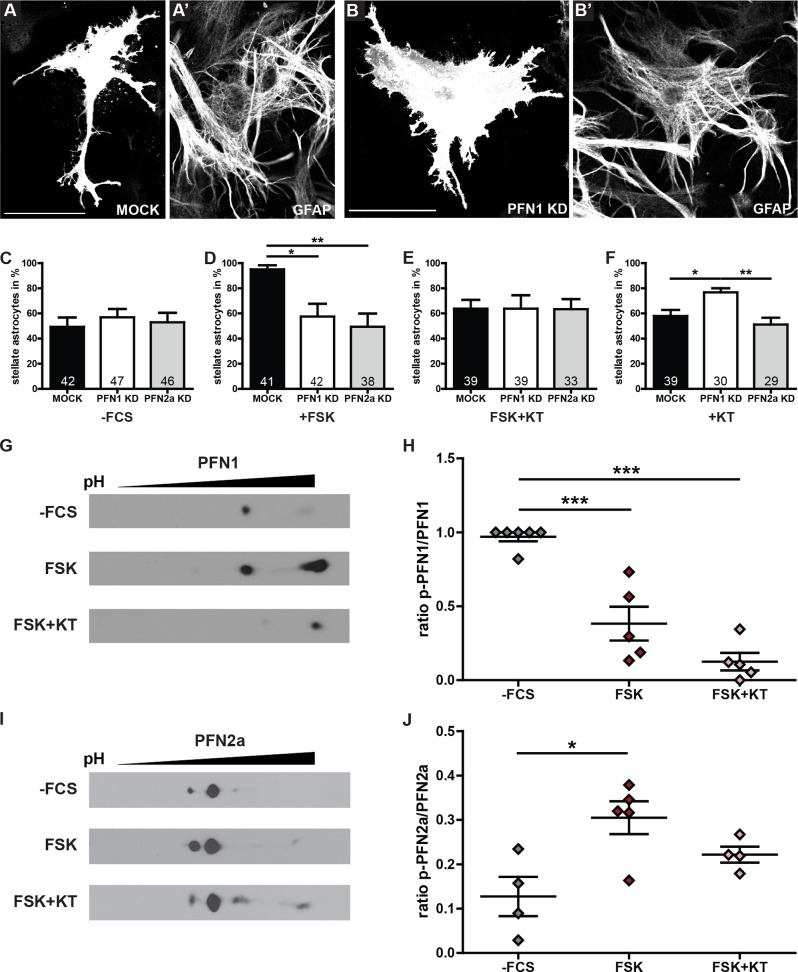
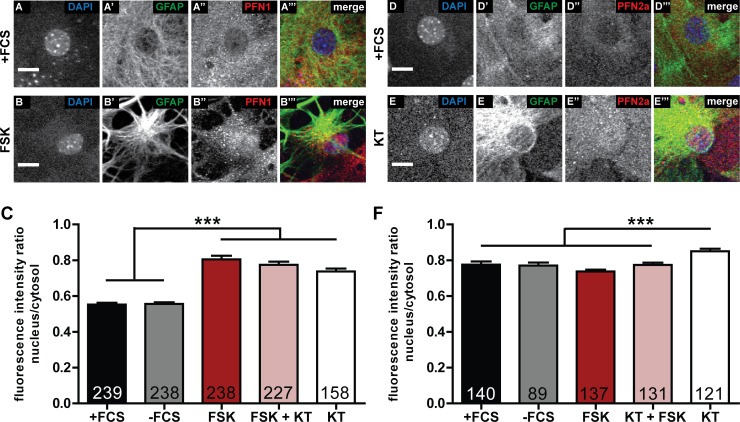
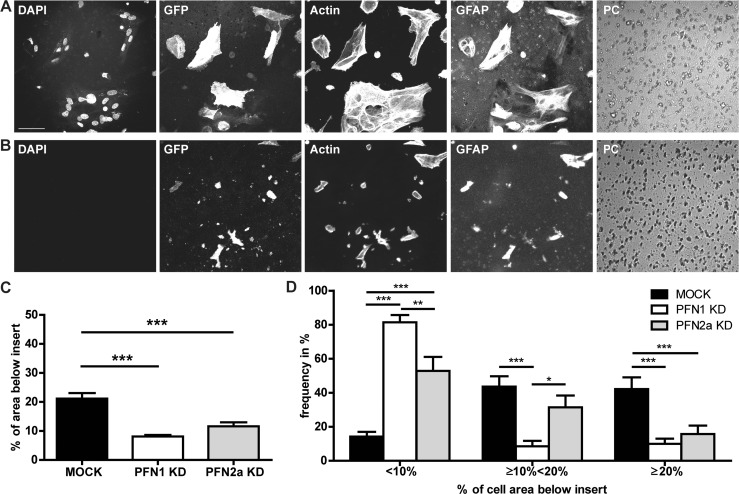
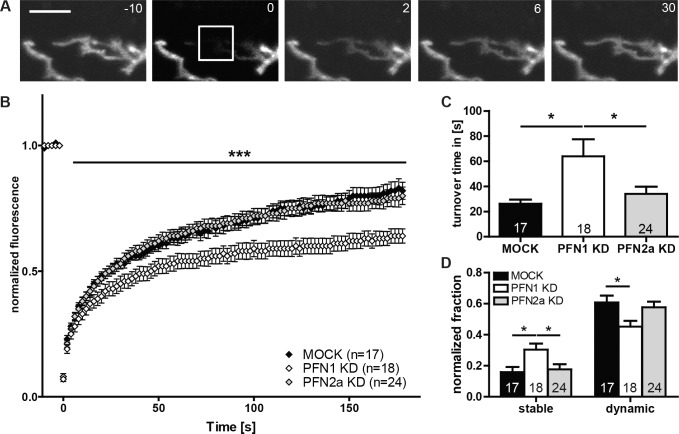
The morphology of astrocytic processes determines their close structural association with synapses referred to as the 'tripartite synapse'. Concerted morphological plasticity processes at tripartite synapses are supposed to shape neuronal communication. Morphological changes in astrocytes as well as the motility of astrocytic processes require remodeling of the actin cytoskeleton. Among the regulators of fast timescale actin-based motility, the actin binding protein profilin 1 has recently been shown to control the activity-dependent outgrowth of astrocytic processes. Here, we demonstrate that cultured murine astrocytes in addition to the ubiquitous profilin 1 also express the neuronal isoform profilin 2a. To analyze the cellular function of both profilins in astrocytes, we took advantage of a shRNA mediated isoform-specific downregulation. Interestingly, consistent with earlier results in neurons, we found redundant as well as isoform-specific functions of both profilins in modulating cellular physiology. The knockdown of either profilin 1 or profilin 2a led to a significant decrease in cell spreading of astrocytes. In contrast, solely the knockdown of profilin 2a resulted in a significantly reduced morphological complexity of astrocytes in both dissociated and slice culture astrocytes. Moreover, both isoforms proved to be crucial for forskolin-induced astrocytic stellation. Furthermore, forskolin treatment resulted in isoform-specific changes in the phosphorylation level of profilin 1 and profilin 2a, leading to a PKA-dependent phosphorylation of profilin 2a. In addition, transwell assays revealed an involvement of both isoforms in the motility of astrocytic processes, while FRAP analysis displayed an isoform-specific role of profilin 1 in the regulation of actin dynamics in peripheral astrocytic processes. Taken together, we suggest profilin isoforms to be important modulators of astrocytic morphology and motility with overlapping as well as isoform-specific functions.
星形胶质细胞突起的形态决定了它们与被称为“三方突触”的突触紧密的结构关联。三方突触处协同的形态可塑性过程被认为塑造了神经元通讯。星形胶质细胞的形态变化以及星形胶质细胞突起的运动性需要肌动蛋白细胞骨架的重塑。在基于肌动蛋白的快速时间尺度运动的调节因子中,肌动蛋白结合蛋白丝切蛋白1最近已被证明可控制星形胶质细胞突起的活性依赖性生长。在这里,我们证明培养的小鼠星形胶质细胞除了普遍存在的丝切蛋白1外,还表达神经元亚型丝切蛋白2a。为了分析这两种丝切蛋白在星形胶质细胞中的细胞功能,我们利用了shRNA介导的亚型特异性下调。有趣的是,与神经元中的早期结果一致,我们发现这两种丝切蛋白在调节细胞生理方面具有冗余以及亚型特异性功能。丝切蛋白1或丝切蛋白2a的敲低导致星形胶质细胞的细胞铺展显著减少。相比之下,仅丝切蛋白2a的敲低导致解离培养和切片培养的星形胶质细胞中星形胶质细胞的形态复杂性显著降低。此外,两种亚型都被证明对福斯可林诱导的星形胶质细胞星形化至关重要。此外,福斯可林处理导致丝切蛋白1和丝切蛋白2a的磷酸化水平发生亚型特异性变化,导致丝切蛋白2a的PKA依赖性磷酸化。此外,Transwell分析显示两种亚型都参与了星形胶质细胞突起的运动,而FRAP分析显示丝切蛋白1在调节外周星形胶质细胞突起中的肌动蛋白动力学方面具有亚型特异性作用。综上所述,我们认为丝切蛋白亚型是星形胶质细胞形态和运动的重要调节因子,具有重叠以及亚型特异性功能。