O'Brown Natasha M, Summers Brian R, Jones Felicity C, Brady Shannon D, Kingsley David M
Department of Developmental Biology, Stanford University School of Medicine, Stanford, United States.
Elife. 2015 Jan 28;4:e05290. doi: 10.7554/eLife.05290.
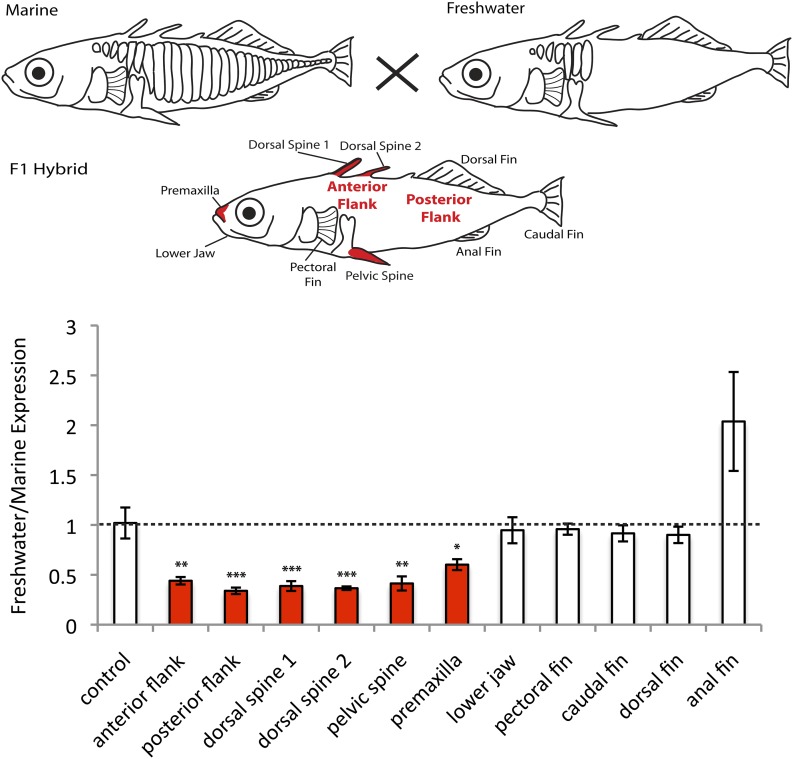
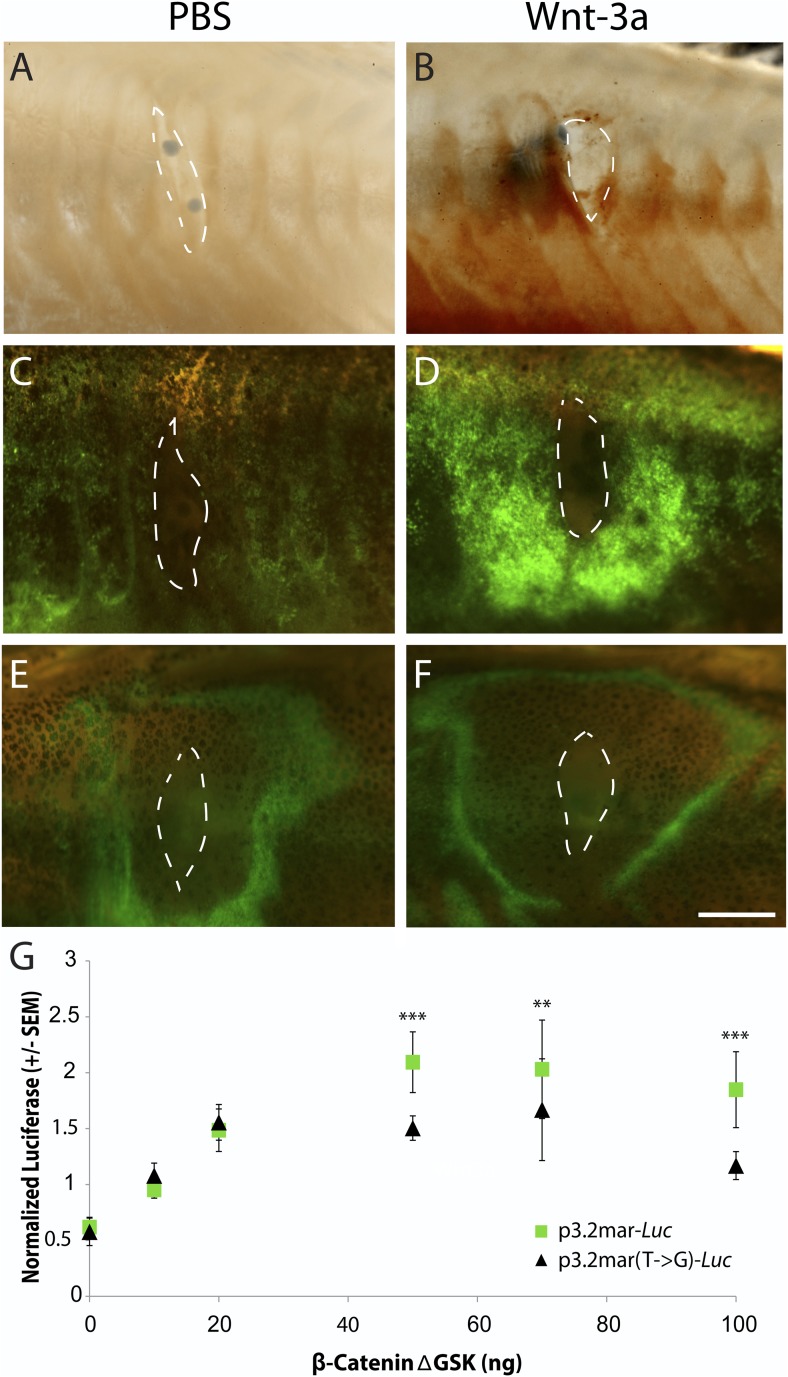
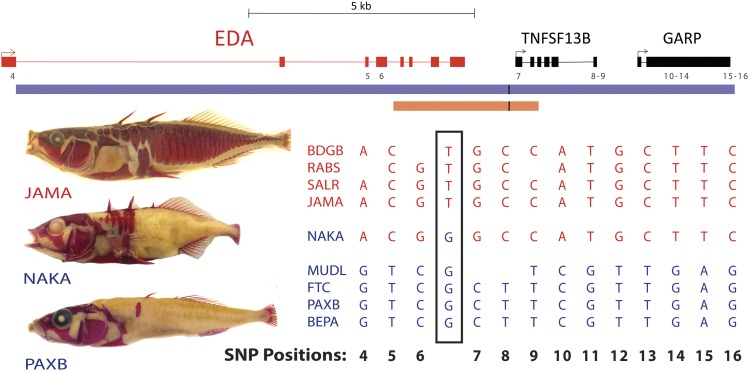
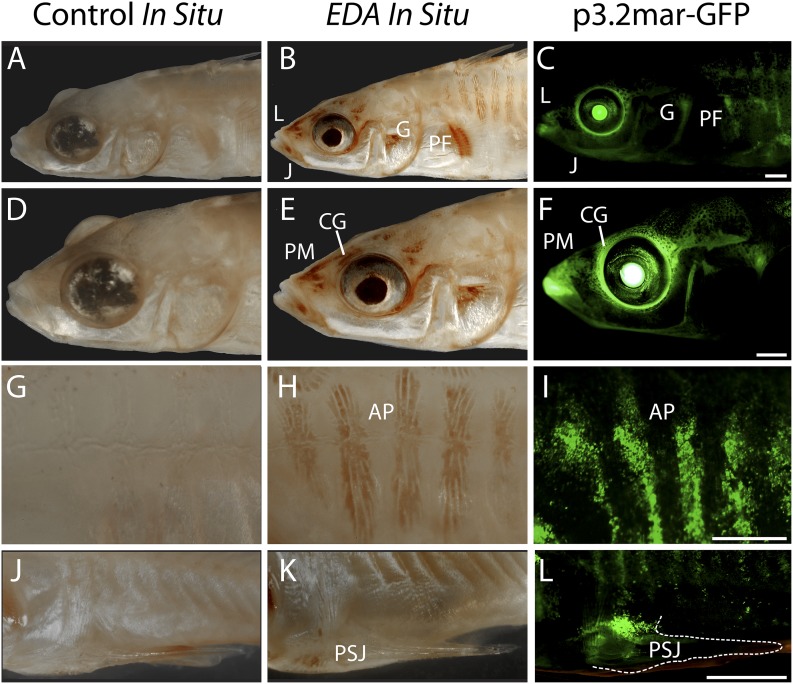
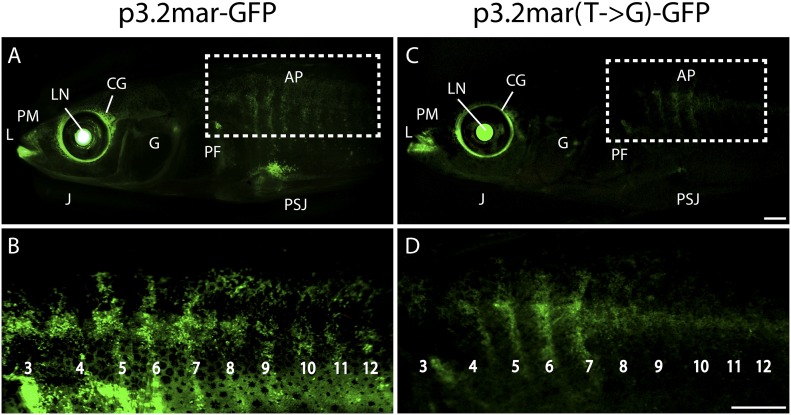
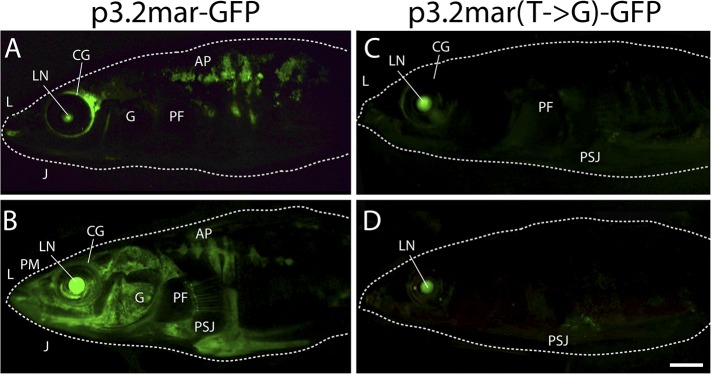
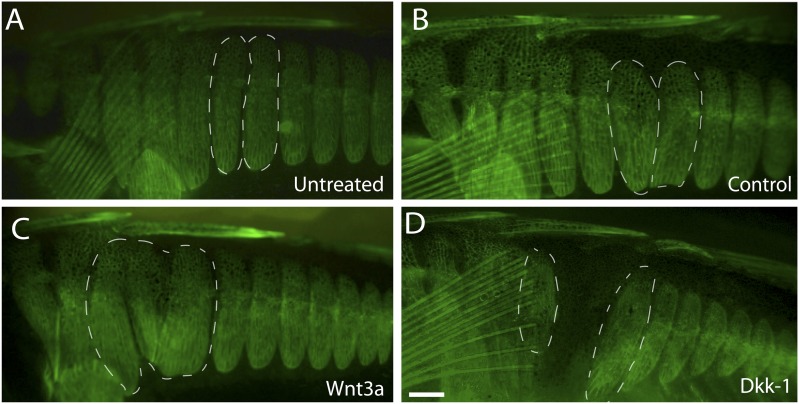
Armor plate changes in sticklebacks are a classic example of repeated adaptive evolution. Previous studies identified ectodysplasin (EDA) gene as the major locus controlling recurrent plate loss in freshwater fish, though the causative DNA alterations were not known. Here we show that freshwater EDA alleles have cis-acting regulatory changes that reduce expression in developing plates and spines. An identical T → G base pair change is found in EDA enhancers of divergent low-plated fish. Recreation of the T → G change in a marine enhancer strongly reduces expression in posterior armor plates. Bead implantation and cell culture experiments show that Wnt signaling strongly activates the marine EDA enhancer, and the freshwater T → G change reduces Wnt responsiveness. Thus parallel evolution of low-plated sticklebacks has occurred through a shared DNA regulatory change, which reduces the sensitivity of an EDA enhancer to Wnt signaling, and alters expression in developing armor plates while preserving expression in other tissues.
棘鱼的甲胄变化是反复适应性进化的经典例子。先前的研究确定外胚层发育不良蛋白(EDA)基因为控制淡水鱼反复出现甲胄缺失的主要基因座,尽管致病的DNA改变尚不清楚。在此我们表明,淡水EDA等位基因具有顺式作用调控变化,可减少发育中的甲胄和脊椎中的表达。在不同的低甲胄鱼类的EDA增强子中发现了相同的T→G碱基对变化。在海洋增强子中重现T→G变化会强烈降低后甲胄中的表达。珠子植入和细胞培养实验表明,Wnt信号强烈激活海洋EDA增强子,而淡水T→G变化降低了Wnt反应性。因此,低甲胄棘鱼通过共享的DNA调控变化发生了平行进化,该变化降低了EDA增强子对Wnt信号的敏感性,并改变了发育中甲胄的表达,同时保留了其他组织中的表达。