St John Michelle E, Dunker Julia C, Richards Emilie J, Romero Stephanie, Martin Christopher H
Department of Biology University of Oklahoma Norman Oklahoma USA.
Department of Integrative Biology University of California Berkeley California USA.
Ecol Evol. 2024 Jul 7;14(7):e11640. doi: 10.1002/ece3.11640. eCollection 2024 Jul.
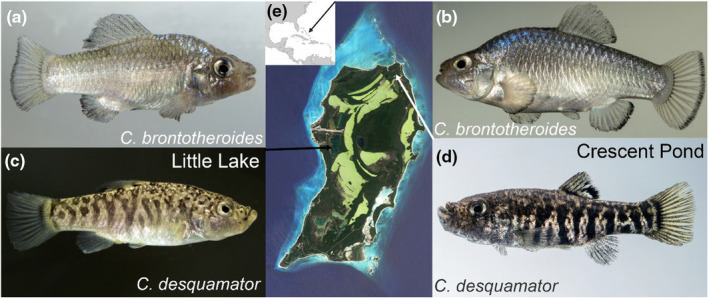
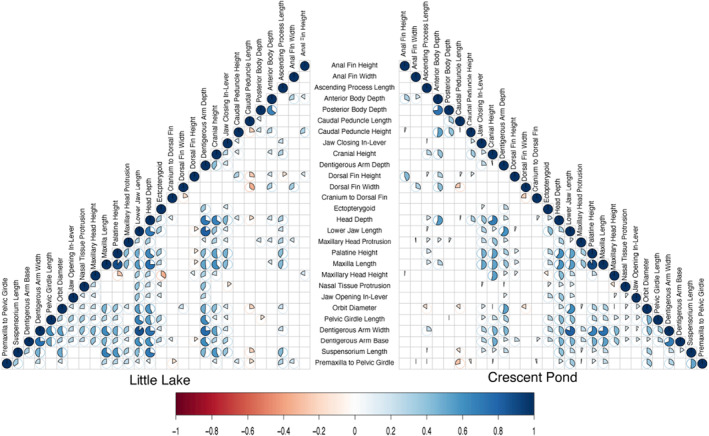
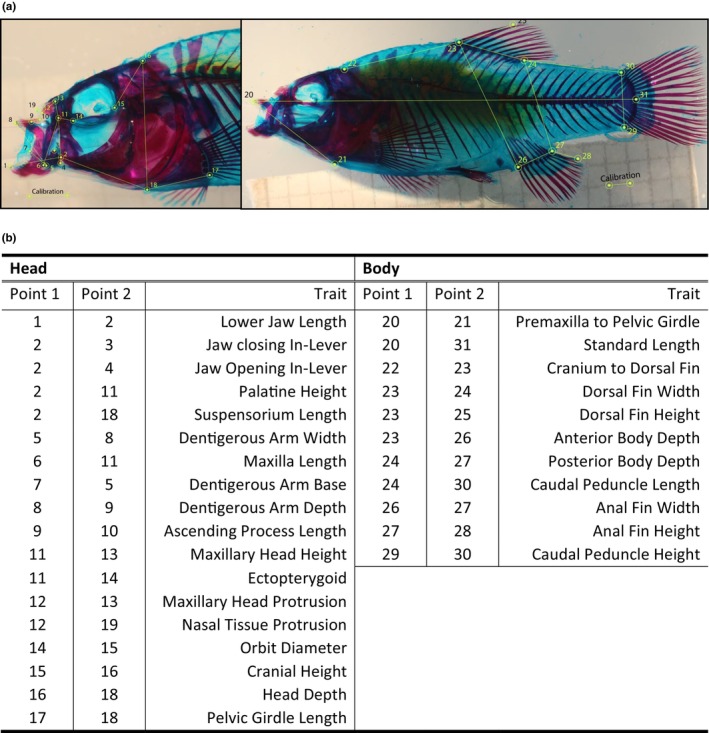
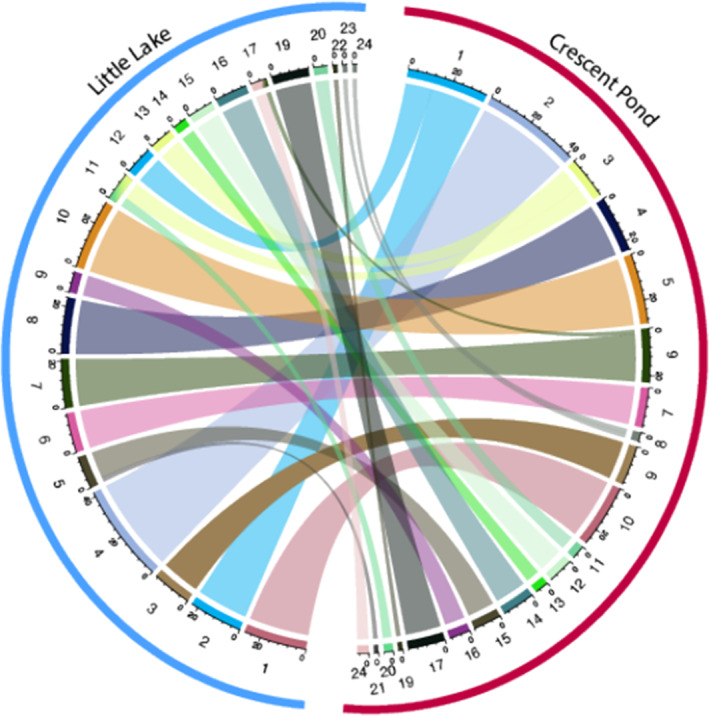
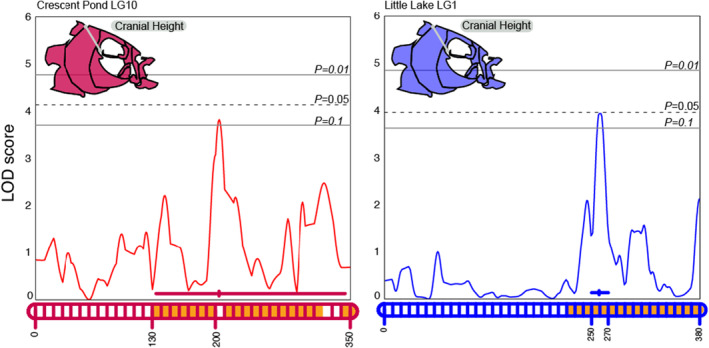
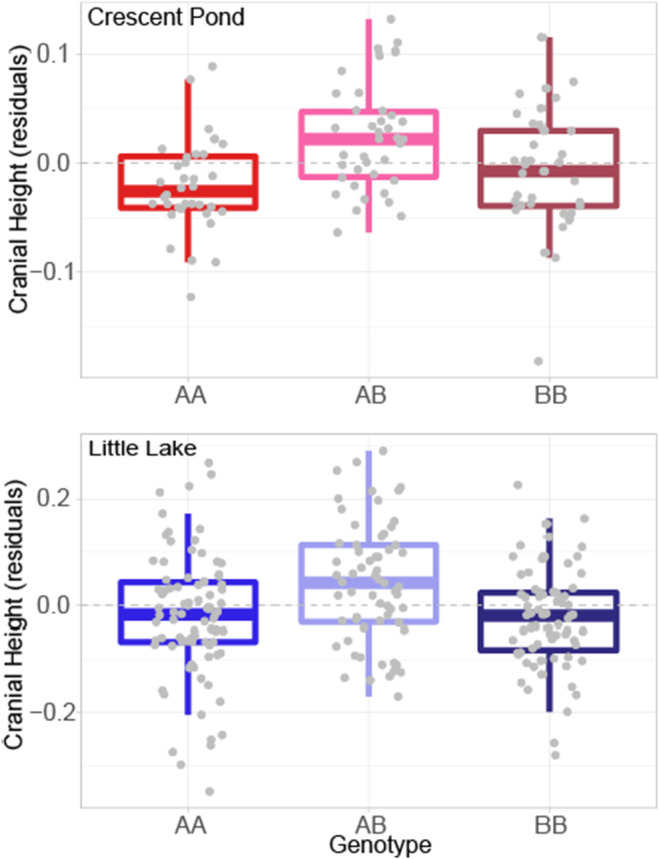
Populations may adapt to similar environments via parallel or non-parallel genetic changes, but the frequency of these alternative mechanisms and underlying contributing factors are still poorly understood outside model systems. We used QTL mapping to investigate the genetic basis of highly divergent craniofacial traits between the scale-eater () and molluscivore () pupfish adapting to two different hypersaline lake environments on San Salvador Island, Bahamas. We lab-reared F2 scale-eater x molluscivore intercrosses from two different lake populations, estimated linkage maps, scanned for significant QTL for 29 skeletal and craniofacial traits, female mate preference, and sex. We compared the location of QTL between lakes to quantify parallel and non-parallel genetic changes. We detected significant QTL for six craniofacial traits in at least one lake. However, nearly all shared QTL loci were associated with a different craniofacial trait within each lake. Therefore, our estimate of parallel evolution of craniofacial genetic architecture could range from one out of six identical trait QTL (low parallelism) to five out of six integrated trait QTL (high parallelism). We suggest that pleiotropy and trait integration can affect estimates of parallel evolution, particularly within rapid radiations. We also observed increased adaptive introgression in shared QTL regions, suggesting that gene flow contributed to parallel evolution. Overall, our results suggest that the same genomic regions may contribute to parallel adaptation across integrated suites of craniofacial traits, rather than specific traits, and highlight the need for a more expansive definition of parallel evolution.
种群可能通过平行或非平行的基因变化适应相似的环境,但在模型系统之外,这些替代机制的频率和潜在的促成因素仍知之甚少。我们利用数量性状基因座(QTL)定位来研究巴哈马圣萨尔瓦多岛上适应两种不同高盐湖泊环境的食鳞鱼()和食软体动物鱼()幼鱼之间高度分化的颅面特征的遗传基础。我们从两个不同湖泊种群的实验室饲养的F2食鳞鱼×食软体动物鱼杂交后代中,估计连锁图谱,扫描29个骨骼和颅面特征、雌性交配偏好和性别的显著QTL。我们比较了不同湖泊之间QTL的位置,以量化平行和非平行的基因变化。我们在至少一个湖泊中检测到六个颅面特征的显著QTL。然而,几乎所有共享的QTL位点在每个湖泊中都与不同的颅面特征相关。因此,我们对颅面遗传结构平行进化的估计范围可以从六个相同性状QTL中的一个(低平行度)到六个综合性状QTL中的五个(高平行度)。我们认为,基因多效性和性状整合会影响平行进化的估计,特别是在快速辐射过程中。我们还观察到共享QTL区域的适应性基因渗入增加,这表明基因流促进了平行进化。总体而言,我们的结果表明,相同的基因组区域可能有助于跨颅面特征综合组的平行适应,而不是特定特征,并强调需要对平行进化进行更广泛的定义。