Shakhova Olga, Cheng Phil, Mishra Pravin J, Zingg Daniel, Schaefer Simon M, Debbache Julien, Häusel Jessica, Matter Claudia, Guo Theresa, Davis Sean, Meltzer Paul, Mihic-Probst Daniela, Moch Holger, Wegner Michael, Merlino Glenn, Levesque Mitchell P, Dummer Reinhard, Santoro Raffaella, Cinelli Paolo, Sommer Lukas
Cell and Developmental Biology, Institute of Anatomy, University of Zurich, Zurich, Switzerland.
Department of Dermatology, University Hospital Zurich, Zurich, Switzerland.
PLoS Genet. 2015 Jan 28;11(1):e1004877. doi: 10.1371/journal.pgen.1004877. eCollection 2015 Jan.
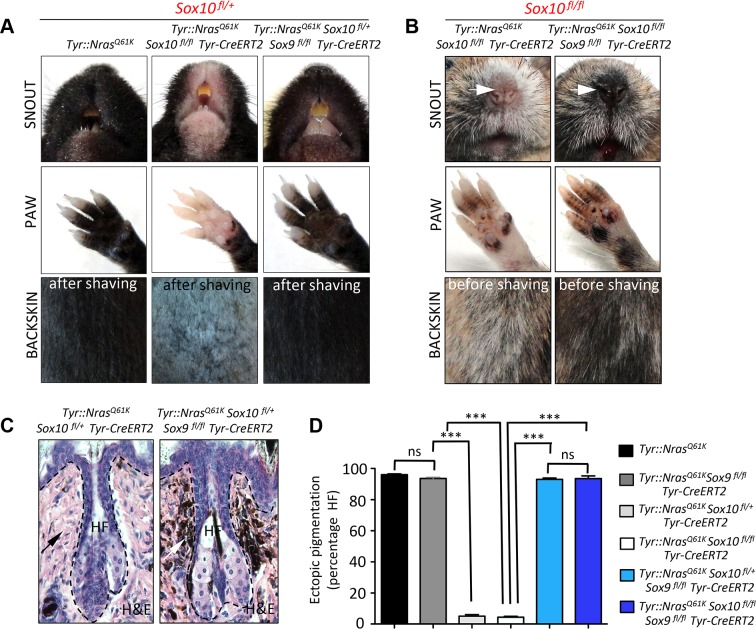
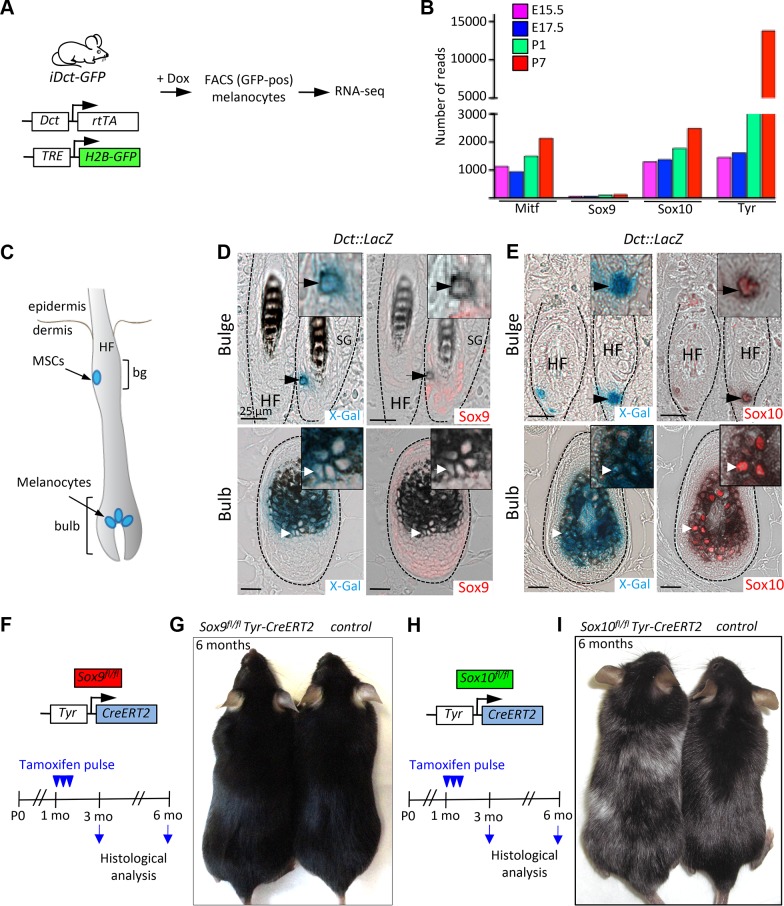
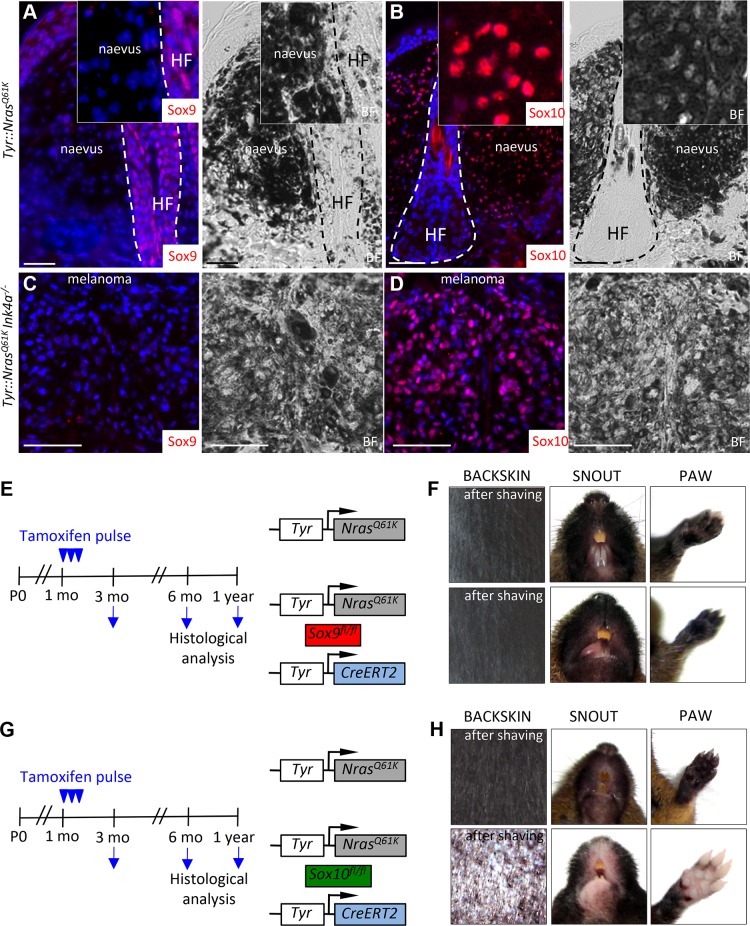
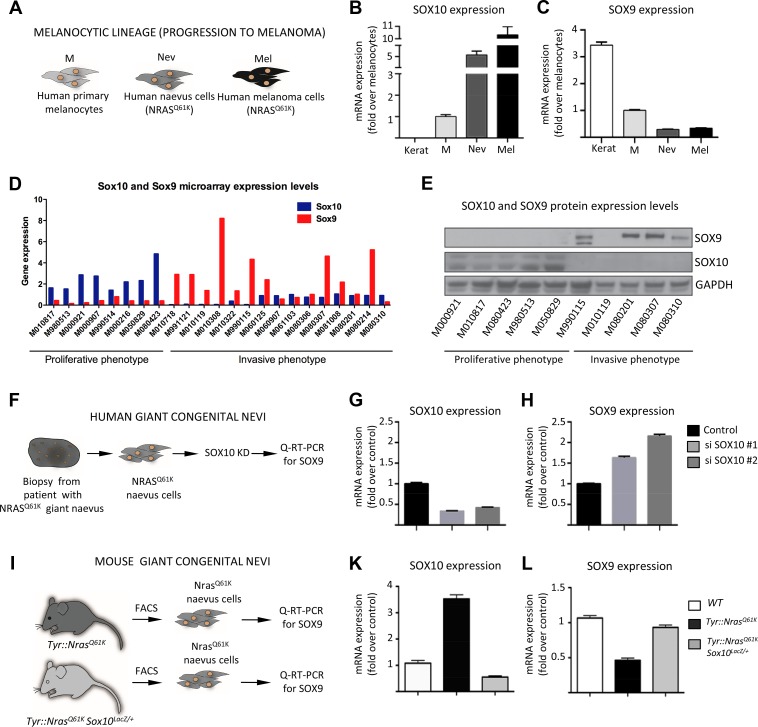
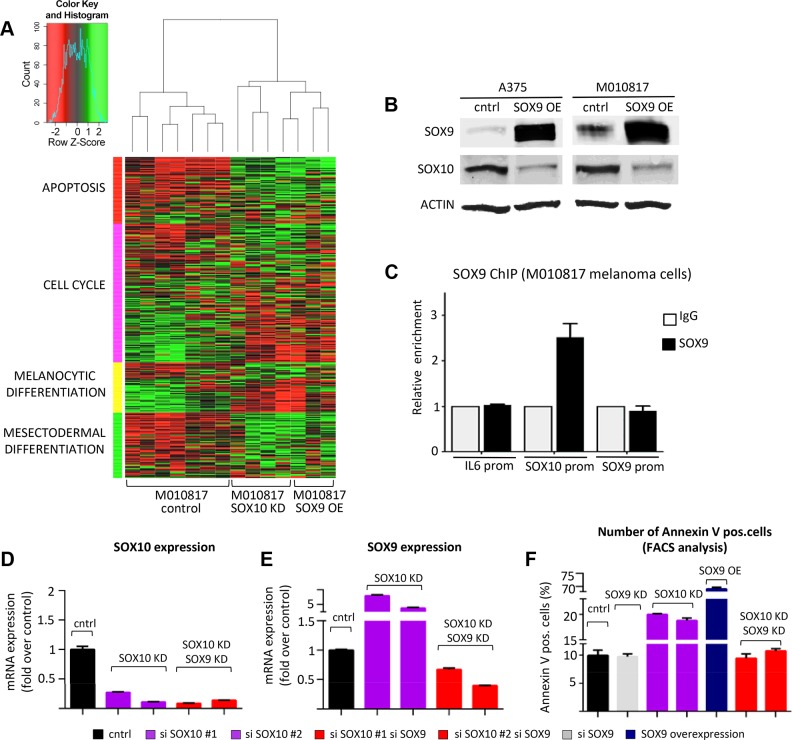
Melanoma is the most fatal skin cancer, but the etiology of this devastating disease is still poorly understood. Recently, the transcription factor Sox10 has been shown to promote both melanoma initiation and progression. Reducing SOX10 expression levels in human melanoma cells and in a genetic melanoma mouse model, efficiently abolishes tumorigenesis by inducing cell cycle exit and apoptosis. Here, we show that this anti-tumorigenic effect functionally involves SOX9, a factor related to SOX10 and upregulated in melanoma cells upon loss of SOX10. Unlike SOX10, SOX9 is not required for normal melanocyte stem cell function, the formation of hyperplastic lesions, and melanoma initiation. To the contrary, SOX9 overexpression results in cell cycle arrest, apoptosis, and a gene expression profile shared by melanoma cells with reduced SOX10 expression. Moreover, SOX9 binds to the SOX10 promoter and induces downregulation of SOX10 expression, revealing a feedback loop reinforcing the SOX10 low/SOX9 high ant,m/ii-tumorigenic program. Finally, SOX9 is required in vitro and in vivo for the anti-tumorigenic effect achieved by reducing SOX10 expression. Thus, SOX10 and SOX9 are functionally antagonistic regulators of melanoma development.
黑色素瘤是最致命的皮肤癌,但这种毁灭性疾病的病因仍知之甚少。最近,转录因子Sox10已被证明可促进黑色素瘤的起始和进展。在人类黑色素瘤细胞和基因工程黑色素瘤小鼠模型中降低SOX10表达水平,可通过诱导细胞周期停滞和凋亡有效消除肿瘤发生。在此,我们表明这种抗肿瘤作用在功能上涉及SOX9,SOX9是一种与SOX10相关的因子,在SOX10缺失时在黑色素瘤细胞中上调。与SOX10不同,SOX9对于正常黑素细胞干细胞功能、增生性病变的形成和黑色素瘤的起始并非必需。相反,SOX9过表达导致细胞周期停滞、凋亡以及与SOX10表达降低的黑色素瘤细胞共有的基因表达谱。此外,SOX9与SOX10启动子结合并诱导SOX10表达下调,揭示了一个反馈环,加强了SOX10低/SOX9高的抗肿瘤程序。最后,在体外和体内,降低SOX10表达所实现的抗肿瘤作用需要SOX9。因此,SOX10和SOX9是黑色素瘤发展的功能拮抗调节因子。