Zahavi Eitan Erez, Ionescu Ariel, Gluska Shani, Gradus Tal, Ben-Yaakov Keren, Perlson Eran
Department of Physiology and Pharmacology, Sackler Faculty of Medicine, and the Sagol School of Neuroscience, Tel Aviv University, Tel Aviv 69978, Israel.
Department of Physiology and Pharmacology, Sackler Faculty of Medicine, and the Sagol School of Neuroscience, Tel Aviv University, Tel Aviv 69978, Israel
J Cell Sci. 2015 Mar 15;128(6):1241-52. doi: 10.1242/jcs.167544. Epub 2015 Jan 27.
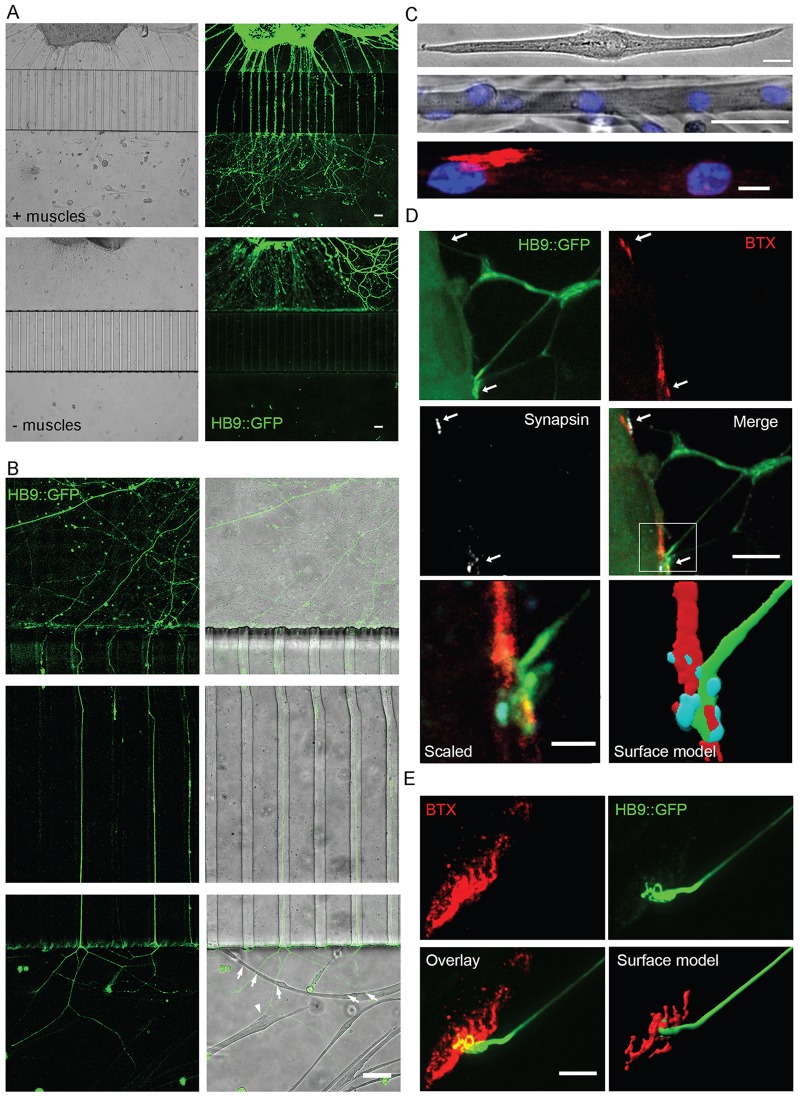
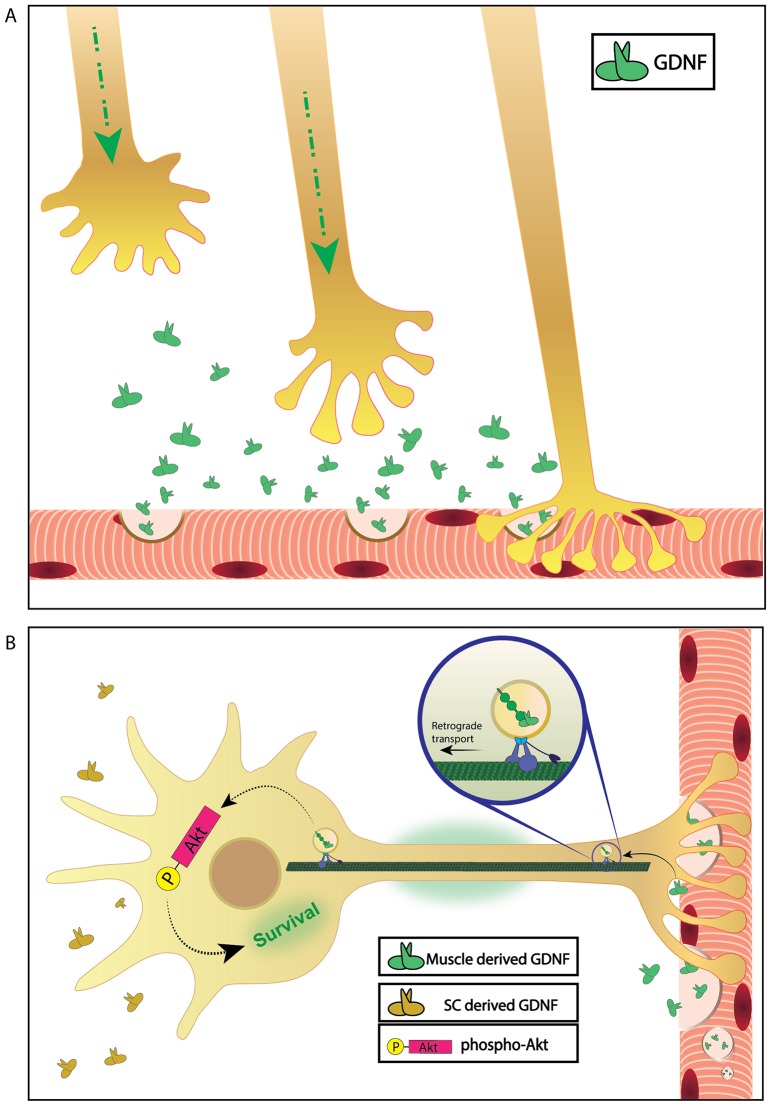
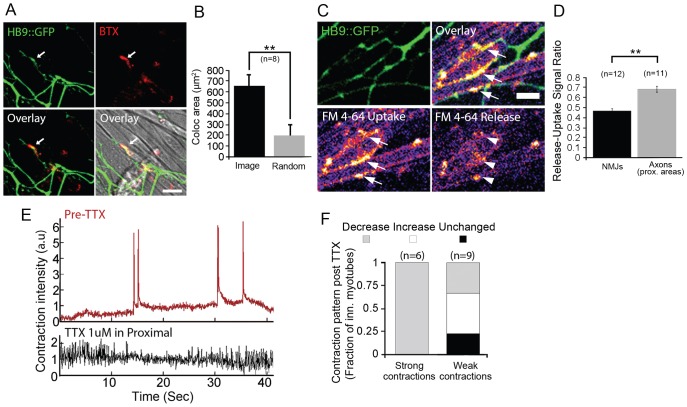
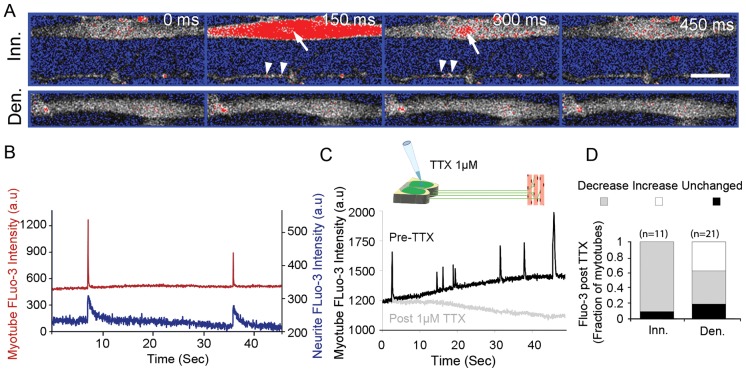
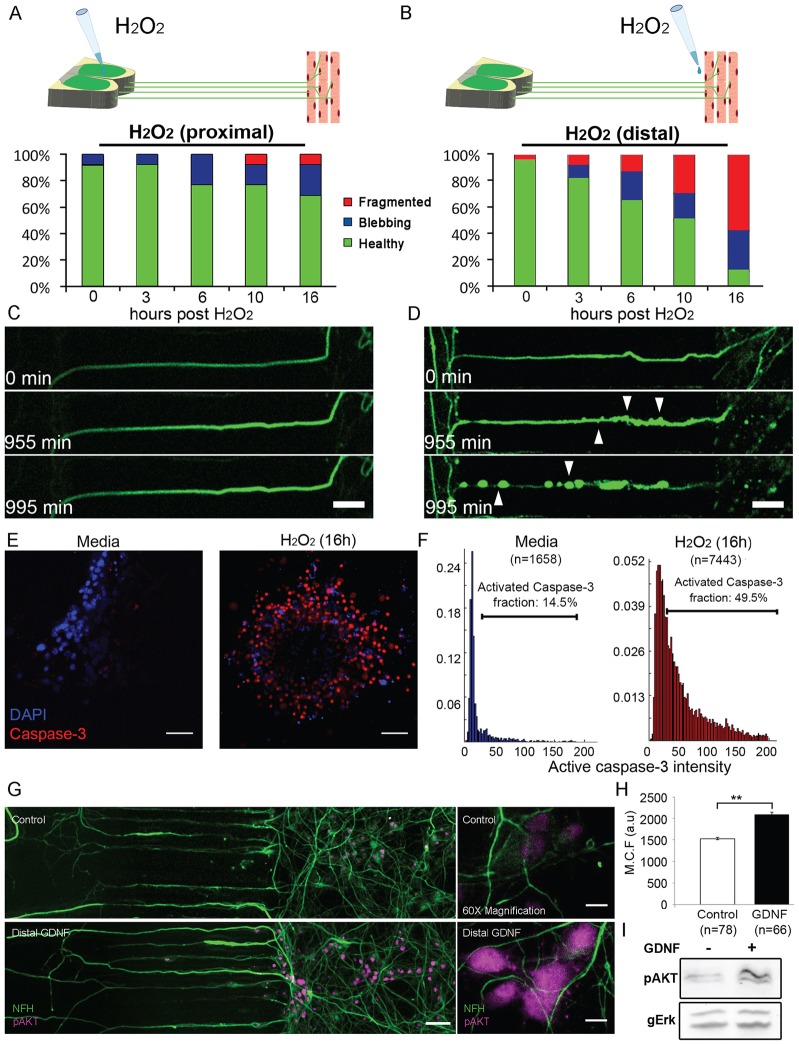
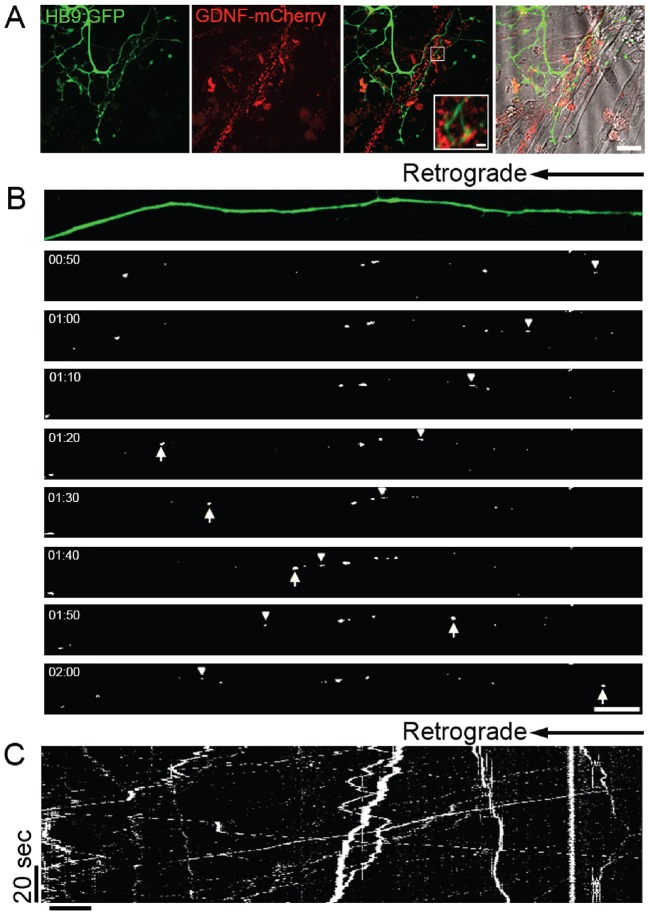
Bidirectional molecular communication between the motoneuron and the muscle is vital for neuromuscular junction (NMJ) formation and maintenance. The molecular mechanisms underlying such communication are of keen interest and could provide new targets for intervention in motoneuron disease. Here, we developed a microfluidic platform with motoneuron cell bodies on one side and muscle cells on the other, connected by motor axons extending through microgrooves to form functional NMJs. Using this system, we were able to differentiate between the proximal and distal effects of oxidative stress and glial-derived neurotrophic factor (GDNF), demonstrating a dying-back degeneration and retrograde transmission of pro-survival signaling, respectively. Furthermore, we show that GDNF acts differently on motoneuron axons versus soma, promoting axonal growth and innervation only when applied locally to axons. Finally, we track for the first time the retrograde transport of secreted GDNF from muscle to neuron. Thus, our data suggests spatially distinct effects of GDNF--facilitating growth and muscle innervation at axon terminals and survival pathways in the soma.
运动神经元与肌肉之间的双向分子通讯对于神经肌肉接头(NMJ)的形成和维持至关重要。这种通讯背后的分子机制备受关注,并且可能为运动神经元疾病的干预提供新的靶点。在这里,我们开发了一种微流控平台,一侧是运动神经元细胞体,另一侧是肌肉细胞,通过延伸穿过微槽的运动轴突连接以形成功能性神经肌肉接头。使用这个系统,我们能够区分氧化应激和胶质细胞源性神经营养因子(GDNF)的近端和远端效应,分别证明了逆行性退变和顺行性促生存信号的传递。此外,我们表明GDNF对运动神经元轴突和胞体的作用不同,仅在局部应用于轴突时才促进轴突生长和神经支配。最后,我们首次追踪了分泌型GDNF从肌肉到神经元的逆行运输。因此,我们的数据表明GDNF具有空间上不同的作用——促进轴突末端的生长和肌肉神经支配以及胞体中的生存途径。