Phillips-Caesar Erica G, Winston Ginger, Peterson Janey C, Wansink Brian, Devine Carol M, Kanna Balavanketsh, Michelin Walid, Wethington Elaine, Wells Martin, Hollenberg James, Charlson Mary E
Division of Clinical Epidemiology and Evaluative Science Research, Weill Cornell Medical College 338 East 66th Street New York, NY 10065; School of Applied Economics and Management, Cornell University 201 Warren Hall Cornell University, Ithaca, NY 14853-7801.
George Washington University, Department of Medicine, Foggy Bottom South Pavilion, 22nd & I Street, NW Washington DC 20037.
Contemp Clin Trials. 2015 Mar;41:118-28. doi: 10.1016/j.cct.2015.01.003. Epub 2015 Jan 26.
Obesity is a major health problem that disproportionately affects Black and Hispanic adults. This paper presents the rationale and innovative design of a small change eating and physical activity intervention (SC) combined with a positive affect and self-affirmation (PA/SA) intervention versus the SC intervention alone for weight loss.
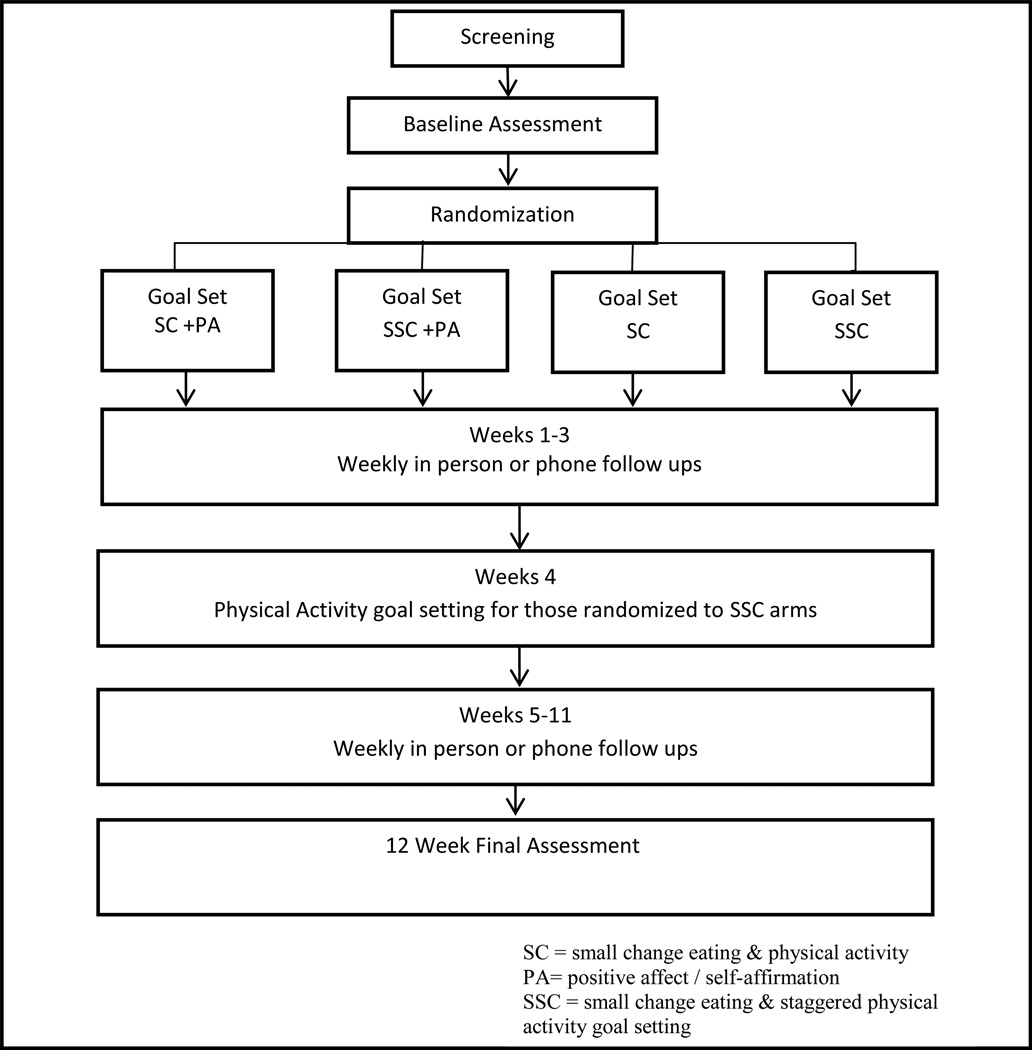
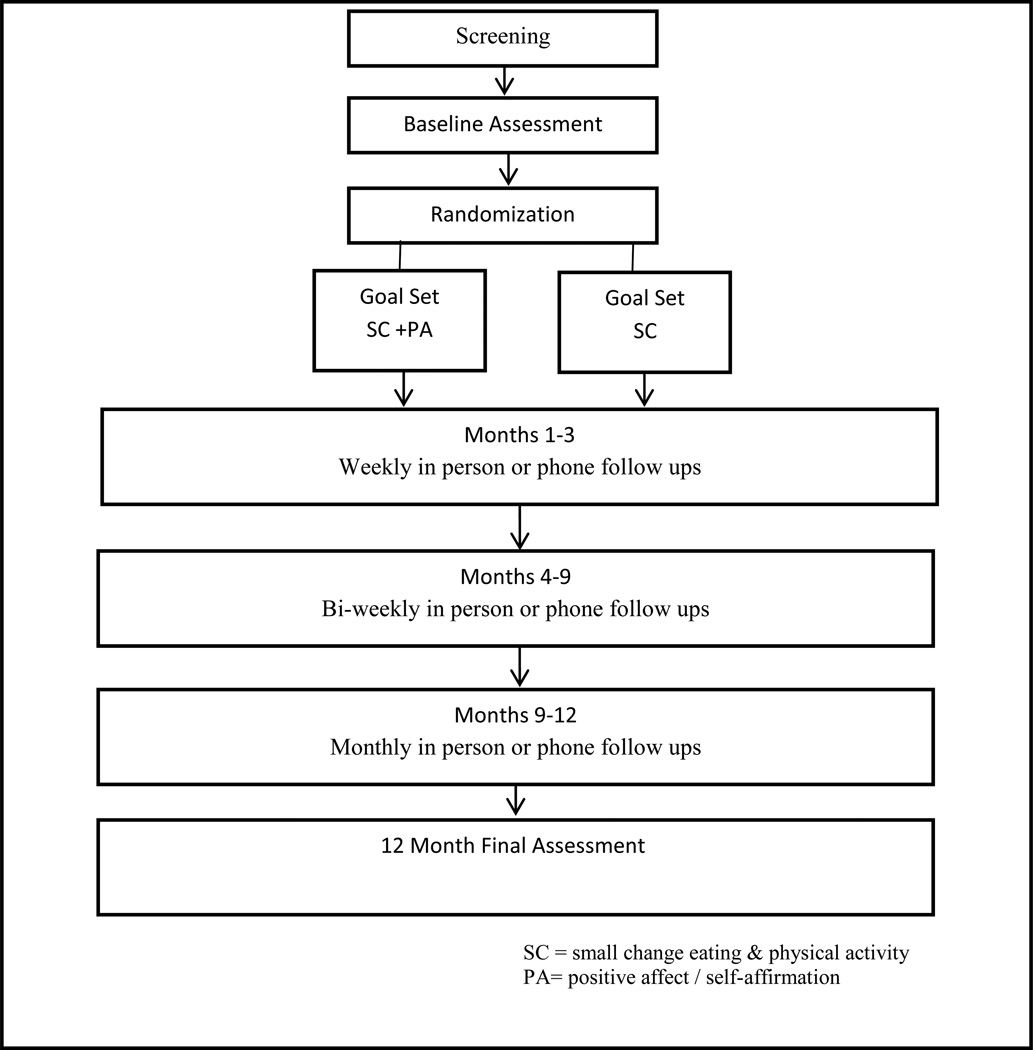
Using a mixed methods translational model (EVOLVE), we designed and tested a SC approach intervention in overweight and/ or obese African American and Hispanic adults. In Phase I, we explored participant's values and beliefs about the small change approach. In Phase II, we tested and refined the intervention and then, in Phase III we conducted a RCT. Participants were randomized to the SC approach with PA/SA intervention vs. a SC approach alone for 12 months. The primary outcome was clinically significant weight loss at 12 months.
Over 4.5 years a total of 574 participants (67 in Phase I, 102 in Phase II and 405 in Phase III) were enrolled. Phase I findings were used to create a workbook based on real life experiences about weight loss and to refine the small change eating strategies. Phase II results shaped the recruitment and retention strategy for the RCT, as well as the final intervention. The RCT results are currently under analysis.
The present study seeks to determine if a SC approach combined with a PA/SA intervention will result in greater weight loss at 12 months in Black and Hispanic adults compared to a SC approach alone.
肥胖是一个严重的健康问题,对黑人和西班牙裔成年人的影响尤为严重。本文介绍了一种小改变饮食和身体活动干预(SC)与积极情感和自我肯定(PA/SA)干预相结合的减肥干预措施与单独的SC干预措施相比的基本原理和创新设计。
我们使用混合方法转化模型(EVOLVE),在超重和/或肥胖的非裔美国人和西班牙裔成年人中设计并测试了一种SC方法干预措施。在第一阶段,我们探讨了参与者对小改变方法的价值观和信念。在第二阶段,我们对干预措施进行了测试和完善,然后在第三阶段进行了一项随机对照试验。参与者被随机分为接受SC方法与PA/SA干预组和单独接受SC方法组,为期12个月。主要结局是12个月时具有临床意义的体重减轻。
在4.5年多的时间里,共招募了574名参与者(第一阶段67名,第二阶段102名,第三阶段405名)。第一阶段的研究结果被用于创建一本基于减肥现实生活经历的工作手册,并完善小改变饮食策略。第二阶段的结果塑造了随机对照试验的招募和保留策略以及最终干预措施。随机对照试验的结果目前正在分析中。
本研究旨在确定与单独的SC方法相比,SC方法与PA/SA干预相结合是否会使黑人和西班牙裔成年人在12个月时体重减轻更多。