Ohta Katsuya, Hoshino Hiromitsu, Wang Jinhua, Ono Shigeshi, Iida Yuuki, Hata Keisuke, Huang Sharon K, Colquhoun Steven, Hoon Dave S B
Department of Molecular Oncology, John Wayne Cancer Institute at Providence Saint John's Health Center, Santa Monica, CA, USA.
Liver Disease and Transplant Center, Cedars-Sinai Medical Center, Beverly Hills, CA, USA.
Oncotarget. 2015 Feb 20;6(5):3211-24. doi: 10.18632/oncotarget.3085.
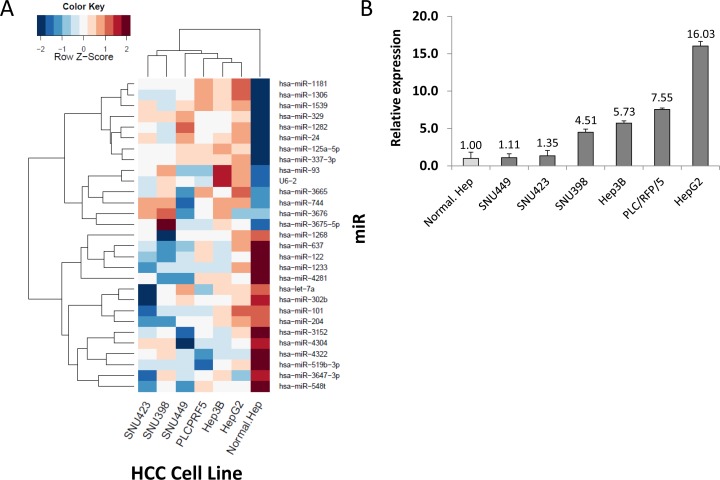
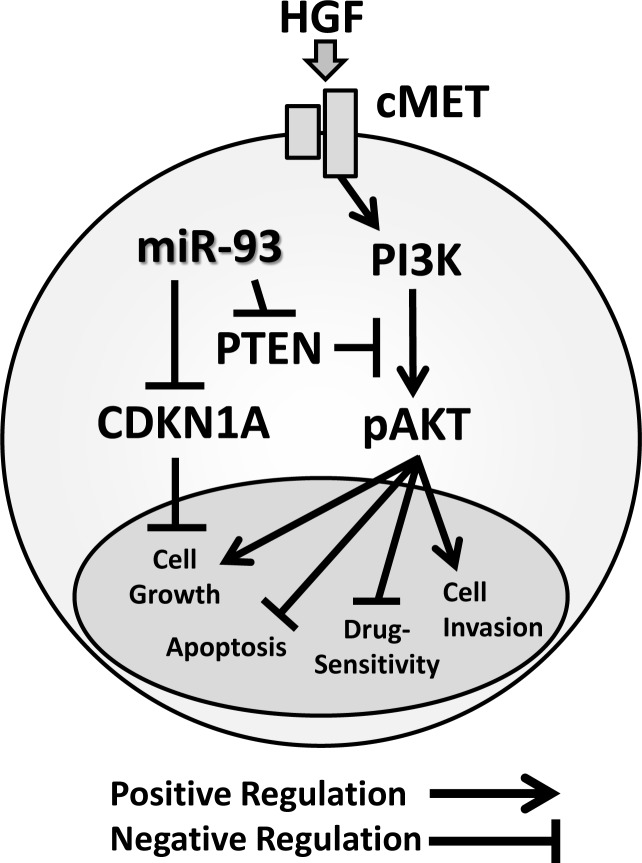
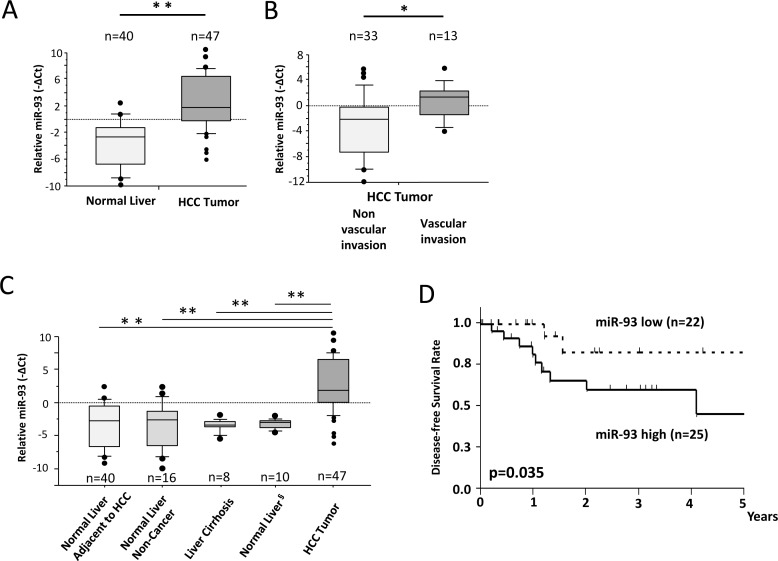
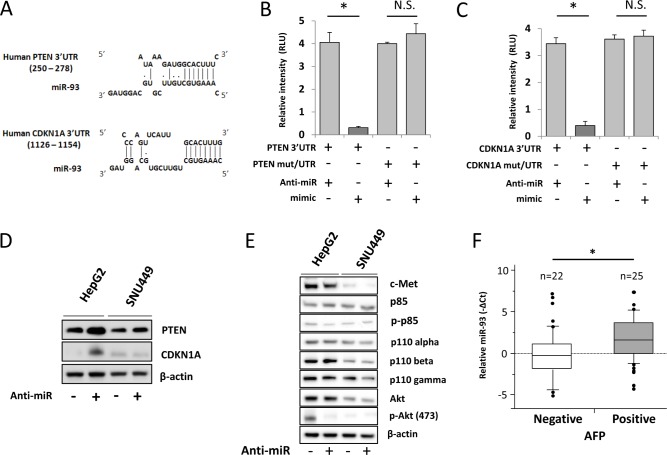
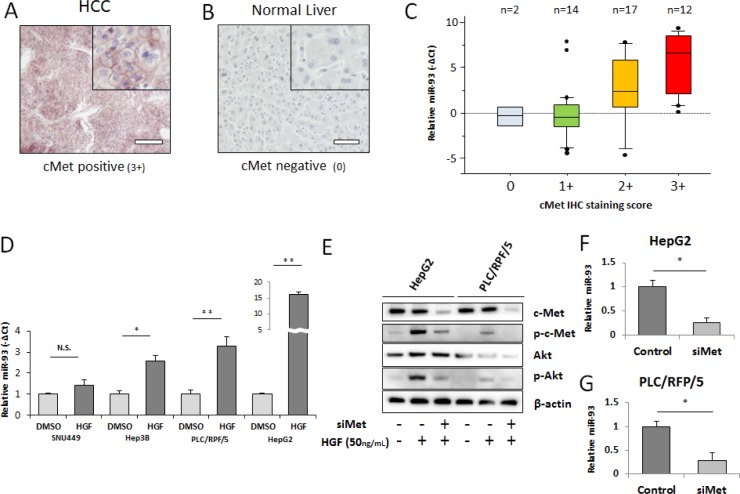
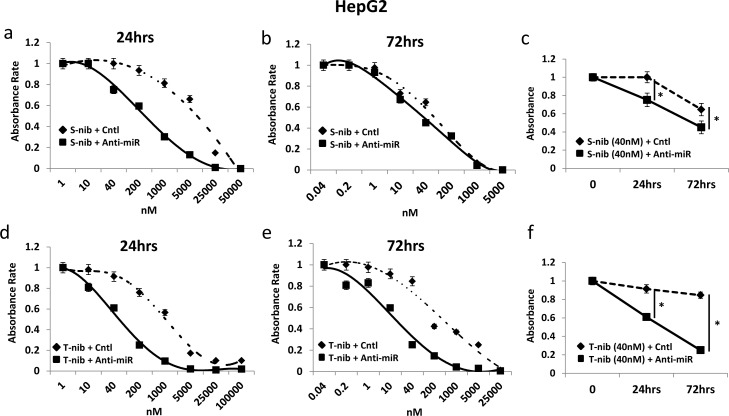
To assess the role of microRNAs (miR) in hepatocellular carcinoma (HCC), we performed comprehensive microRNA expression profiling using HCC cell lines and identified miR-93 as a novel target associated with HCC. We further verified miR-93 expression levels in advanced HCC tumors (n=47) by a direct PCR assay and found that elevated miR-93 expression level is significantly correlated with poor prognosis. Elevated miR-93 expression significantly stimulated in vitro cell proliferation, migration and invasion, and additionally inhibited apoptosis. We confirmed that miR-93 directly bound with the 3' untranslated regions of the tumor-suppressor genes PTEN and CDKN1A, respectively,and inhibited their expression. As a result of this inhibition, the c-Met/PI3K/Akt pathway activity was enhanced. IHC analysis of HCC tumors showed significant correlation between c-Met protein expression levels and miR-93 expression levels. Knockdown of c-Met inhibited the activation of the c-Met/PI3K/Akt pathway regardless of hepatocyte growth factor (HGF) treatment, and furthermore reduced the expression of miR-93 in these HCC cells. miR-93 also rendered cells to be more sensitive to sorafenib and tivantinib treatment. We concluded that miR-93 stimulated cell proliferation, migration, and invasion through the oncogenic c-Met/PI3K/Akt pathway and also inhibited apoptosis by directly inhibiting PTEN and CDKN1A expression in human HCC.
为了评估微小RNA(miR)在肝细胞癌(HCC)中的作用,我们利用肝癌细胞系进行了全面的微小RNA表达谱分析,并鉴定出miR-93是一种与肝癌相关的新靶点。我们通过直接PCR检测进一步验证了晚期肝癌肿瘤(n = 47)中miR-93的表达水平,发现miR-93表达水平升高与预后不良显著相关。miR-93表达升高显著促进体外细胞增殖、迁移和侵袭,并抑制细胞凋亡。我们证实miR-93分别直接与肿瘤抑制基因PTEN和CDKN1A的3'非翻译区结合,并抑制它们的表达。这种抑制作用导致c-Met/PI3K/Akt信号通路活性增强。肝癌肿瘤的免疫组化分析显示c-Met蛋白表达水平与miR-93表达水平之间存在显著相关性。敲低c-Met可抑制c-Met/PI3K/Akt信号通路的激活,而与肝细胞生长因子(HGF)处理无关,并且进一步降低了这些肝癌细胞中miR-93的表达。miR-93还使细胞对索拉非尼和替凡替尼治疗更敏感。我们得出结论,miR-93通过致癌性c-Met/PI3K/Akt信号通路刺激细胞增殖、迁移和侵袭,并通过直接抑制人肝癌中PTEN和CDKN1A的表达来抑制细胞凋亡。