Nishida Haruto, Daa Tsutomu, Kashima Kenji, Arakane Motoki, Urabe Shogo, Yoshikawa Yasuji, Gamachi Ayako, Yokoyama Shigeo
*Department of Diagnostic Pathology, Faculty of Medicine, Oita University, Yufu, Japan; †Central Laboratory, Oita Prefectural Hospital, Oita, Japan; ‡Department of Pathology, Beppu Medical Center, National Hospital Organization, Oita, Japan; and §Central Laboratory, Almeida Memorial Hospital, Beppu, Japan.
Am J Dermatopathol. 2015 Dec;37(12):898-905. doi: 10.1097/DAD.0000000000000301.
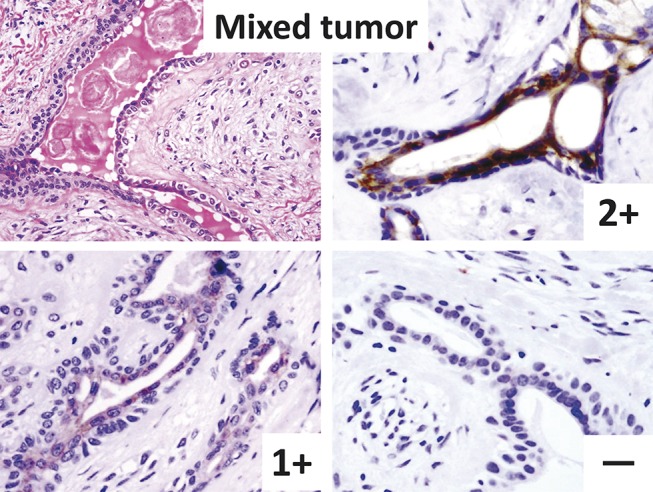
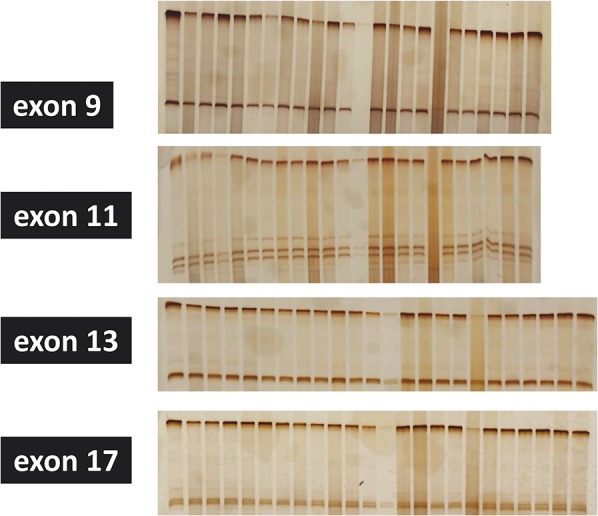
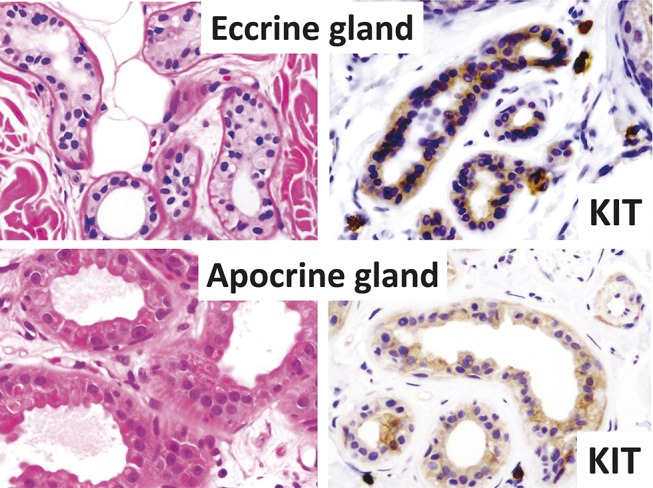
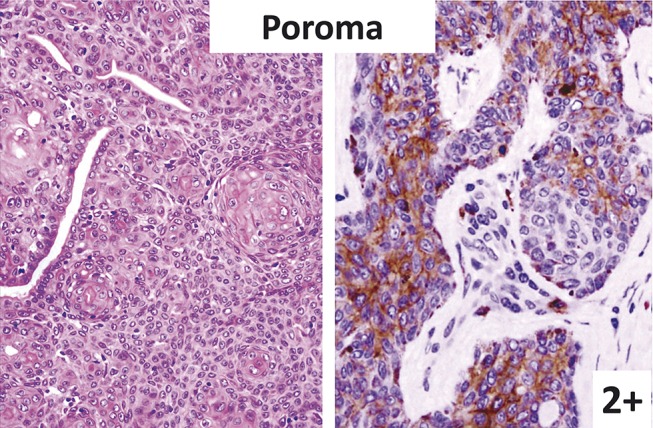
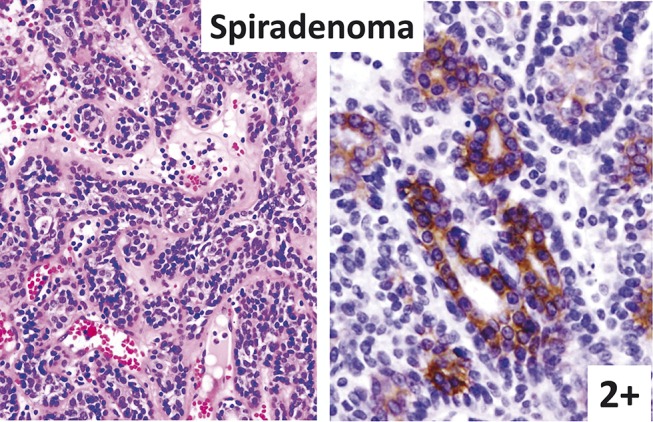
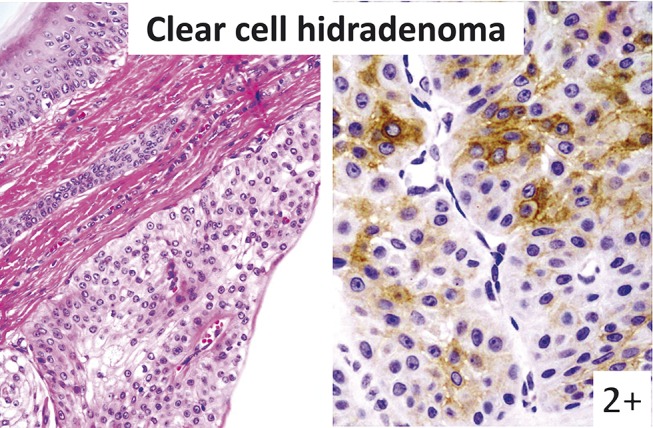
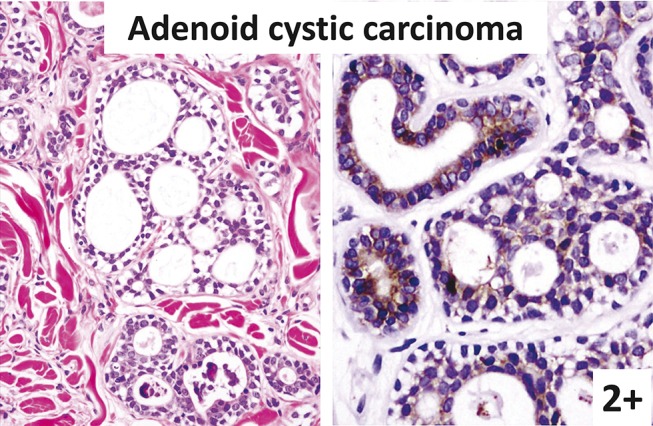
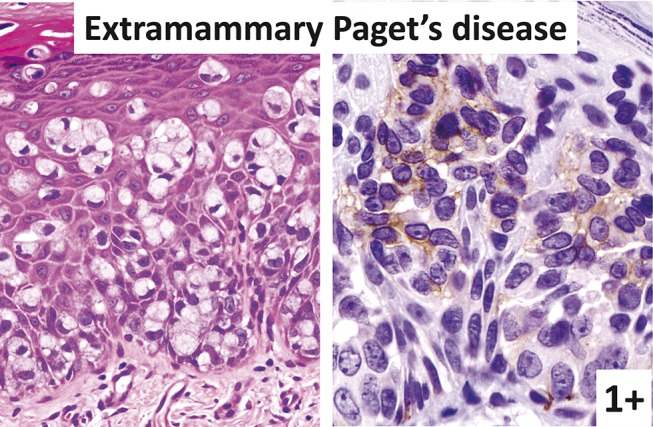
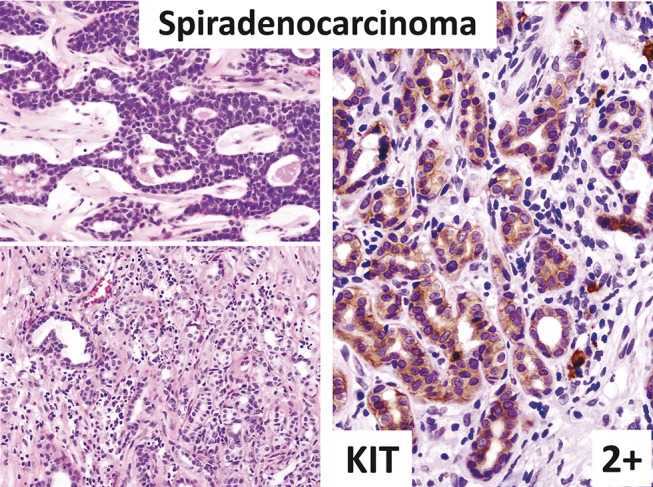
KIT (CD117, c-kit) is a receptor tyrosine kinase involved in the tumorigenesis of several neoplasms. KIT is expressed by the secretory cells of normal sweat glands. We studied the KIT expression and KIT mutational status in various benign and malignant tumors of eccrine and apocrine glands. We included a total of 108 cases comprising 10 benign and 6 malignant sweat gland tumors, and KIT expression was immunohistochemically detected (positive rate): 10 syringomas (0%), 8 poromas (25%), 20 mixed tumors (40%), 21 spiradenomas (43%), 1 cylindroma (0%), 5 hidradenomas (40%), 7 syringocystadenoma papilliferum cases (0%), 1 papillary hidradenoma (100%), 2 tubulopapillary hidradenomas (50%), 8 hidrocystomas (29%), 2 adenoid cystic carcinomas (100%), 5 porocarcinomas (20%), 6 apocrine carcinomas (33%), 10 extramammary Paget diseases (30%), 1 spiradenocarcinoma (100%), and 1 syringocystadenocarcinoma papilliferum (0%). Most KIT-positive cells were luminal cells, arising from glandular structures. We performed polymerase chain reaction-single-strand conformation polymorphism for detecting KIT mutational status. All cases showed no mutations at hot spots for KIT (exons 9, 11, 13, and 17). KIT mutation does not seem to be mechanism for KIT expression, but the expression may be from native sweat glands.
KIT(CD117,c-kit)是一种受体酪氨酸激酶,参与多种肿瘤的发生。KIT在正常汗腺的分泌细胞中表达。我们研究了小汗腺和大汗腺各种良性和恶性肿瘤中的KIT表达及KIT突变状态。我们共纳入108例病例,包括10例良性和6例恶性汗腺肿瘤,并通过免疫组织化学检测KIT表达(阳性率):10例汗管瘤(0%)、8例汗孔瘤(25%)、20例混合瘤(40%)、21例螺旋腺瘤(43%)、1例圆柱瘤(0%)、5例汗腺腺瘤(40%)、7例乳头状汗管囊腺瘤(0%)、1例乳头状汗腺腺瘤(100%)、2例管状乳头状汗腺腺瘤(50%)、8例汗管囊肿瘤(29%)、2例腺样囊性癌(100%)、5例汗孔癌(20%)、6例大汗腺癌(33%)、10例乳腺外Paget病(30%)、1例螺旋腺癌(100%)和1例乳头状汗管囊腺癌(0%)。大多数KIT阳性细胞是来自腺结构的管腔细胞。我们进行聚合酶链反应-单链构象多态性检测KIT突变状态。所有病例在KIT热点区域(外显子9、11、13和17)均未显示突变。KIT突变似乎不是KIT表达的机制,但其表达可能来自天然汗腺。